



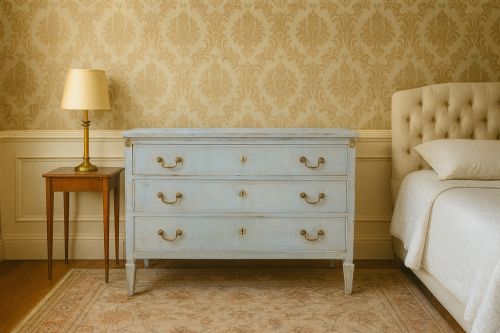


Scandinavian Painted Pine Chest
A Scandinavian painted pine chest brings rural utility and folk artistry together, offering robust storage finished in historic paint.
Scandinavian Painted Pine Chest
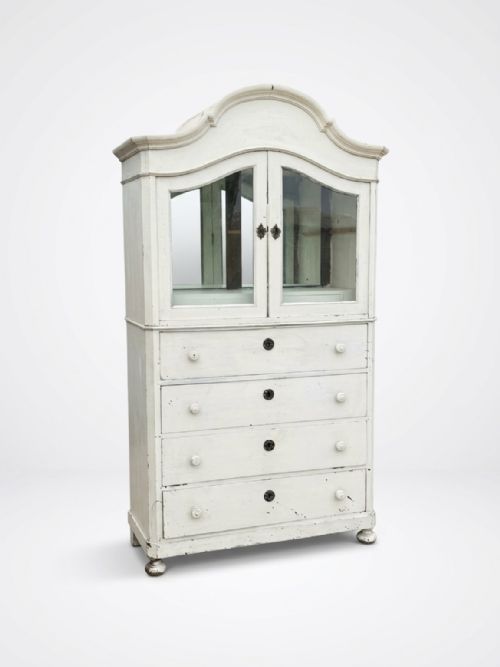
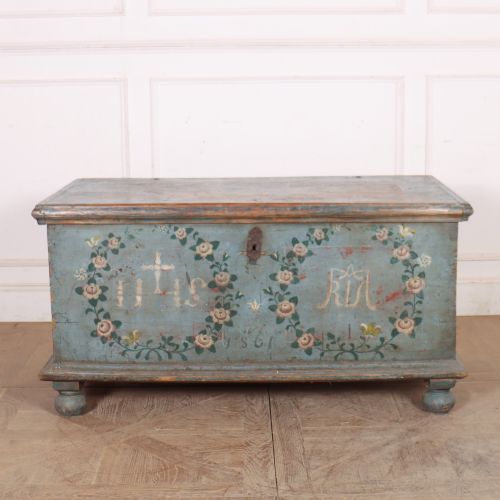
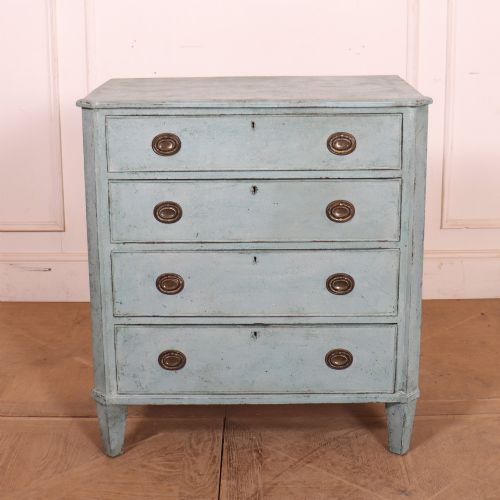
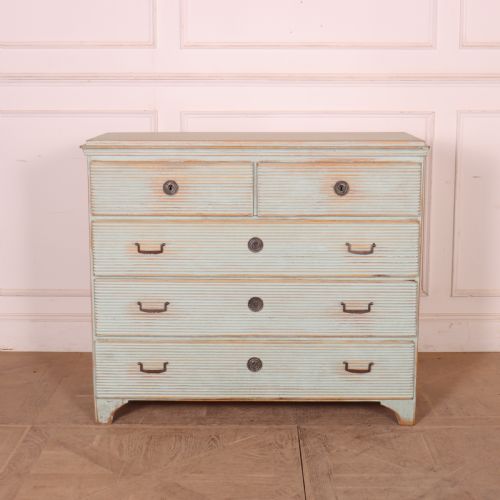
A Scandinavian painted pine chest is a functional storage piece originating mainly from nineteenth-century rural and folk traditions. These pieces include blanket boxes, marriage chests, and larger chests of drawers built for everyday domestic use.
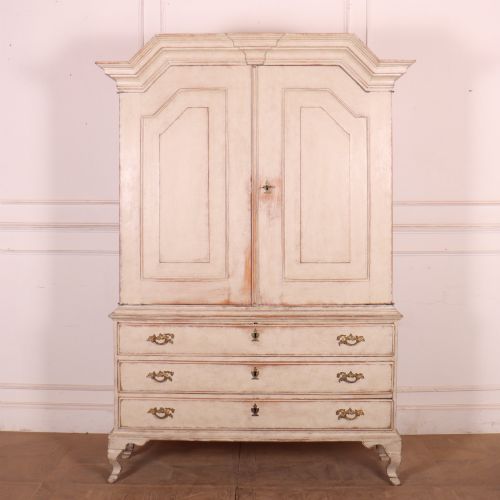
Buyers will frequently encounter nineteenth-century examples alongside earlier eighteenth-century items spanning Swedish country and Gustavian styles. Forms range from simple lidded coffers to sophisticated serpentine commodes and storage boxes.
The aesthetic bridges utilitarian necessity and decorative craft, serving as both a practical household container and a focal point for painted woodwork. Their survival in original paint surfaces makes them distinct additions to traditional and modern interiors alike.
How they were made
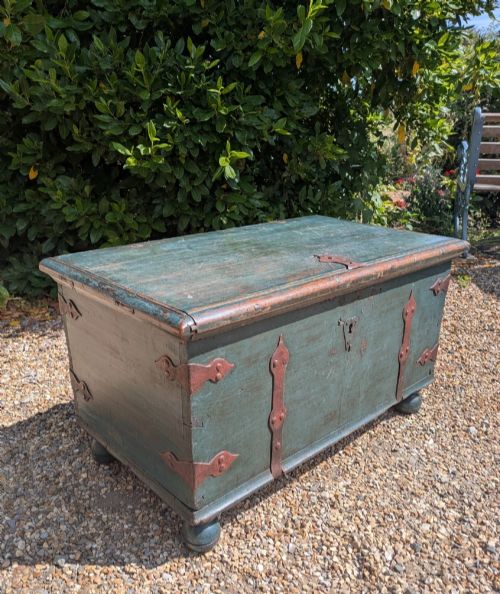
Construction relies primarily on pine timbers, selected for abundance and workability in regional workshops. Joinery is reinforced with hand-forged iron strapwork or brass hardware depending on the period and regional style.
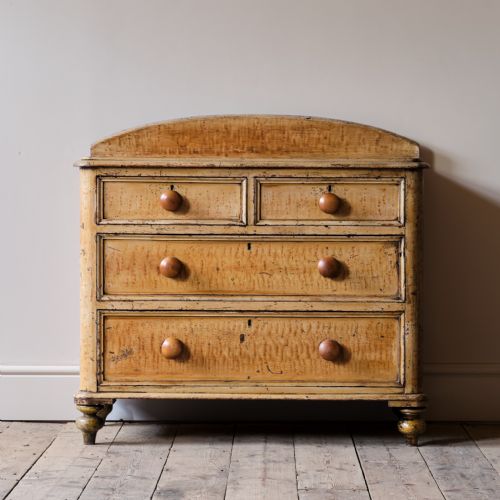
Surfaces receive layers of oil or water-based paint, sometimes manipulated to simulate more expensive materials like birch. Traditional hand painting gives each piece individual character through decorative motifs and distressed patination.
Some nineteenth-century strong boxes feature complex internal locking mechanisms hidden behind thick iron strapwork to deter opportunistic thieves.
What varies in quality
Quality rests heavily on the integrity of the original paint surface and the subtlety of decorative brushwork. Pieces retaining untouched historical pigment command greater appreciation than those stripped or heavily repainted over time.
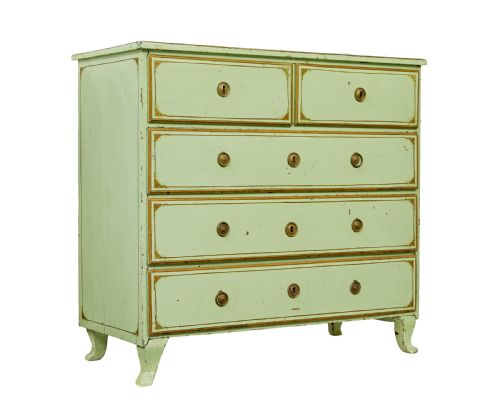
Structural refinement also distinguishes the range, separating utilitarian strong boxes from sophisticated neoclassical commodes with shaped fronts and fluted drawer details. The harmony between original hardware, like hand-forged iron straps, and the timber body completes the evaluation.
Gemla Fabrikers
The Scandinavian Painted Pine Chest Glossary
- Commode
- A decorative chest of drawers or low cabinet originating from French influence adapted into Swedish furniture design. These pieces often feature shaped fronts or serpentine profiles.
- Coffer
- A large box with a hinged lid traditionally used for storing valuable possessions or linens. Many surviving examples feature dome tops and hand-forged iron hardware.
- Gustavian
- The Swedish neoclassical style spanning the late eighteenth century, named after King Gustav III. It is characterised by lighter proportions, restrained ornamentation, and pale painted finishes.
- Strapwork
- Decorative metal bands, often hand-forged from iron, used to reinforce and adorn the corners and lids of storage chests. This technique provides both structural security and visual contrast against painted pine.
Scandinavian Painted Pine Chest: Frequently Asked Questions
Where were these chests used?
These pieces served primarily in rural homes across Sweden and broader Scandinavia for storing textiles, blankets, and personal valuables.
They stood in bedrooms, hallways, and living spaces as both furniture and secure storage.
How do I care for original paint?
Keep painted pine pieces away from direct sunlight and fluctuating humidity to protect the historical surface from fading or flaking.
Dust gently with a dry cloth and avoid harsh chemical cleaners that strip aged pigments.
What is a marriage chest?
Marriage chests were traditional gifts commissioned to celebrate weddings, often inscribed with dates or initials alongside folk art motifs.
Families used them to hold the bride's dowry linens and household textiles.
How do I spot original paint?
Original paint shows natural craquelure, wear patterns consistent with age, and layered patination built up over decades of use.
Under magnification, older mineral pigments lack the uniform flatness found in modern synthetic coatings.