
19th Century Marble
19th century marble brings together classical sculpture, heavy commodes with veined stone tops, and gilt-bronze clock garnitures shaped by revival styles.
19th Century Marble
When you search for 19th century marble, you encounter a diverse range of decorative objects and furniture where stone forms either the primary structural element or a functional surface. The selection spans utilitarian furniture with fitted tops to decorative mantel clocks and sculptural works.
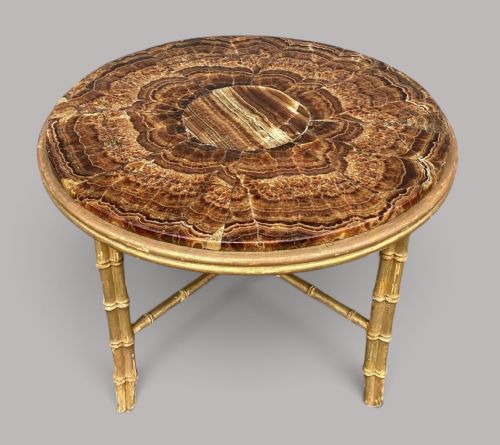
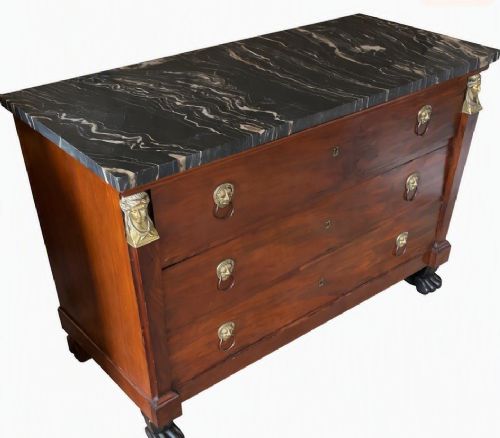
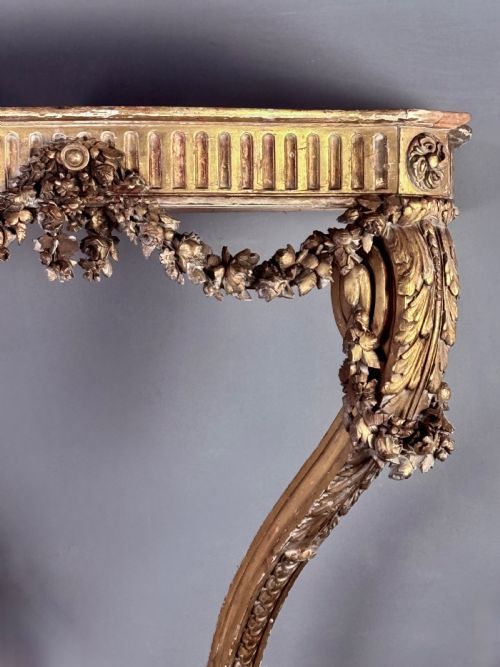
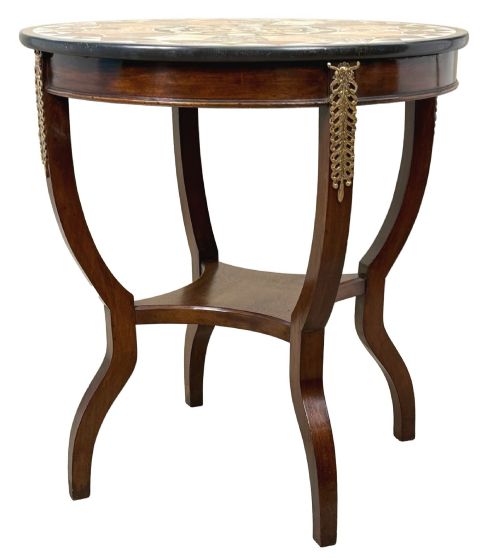
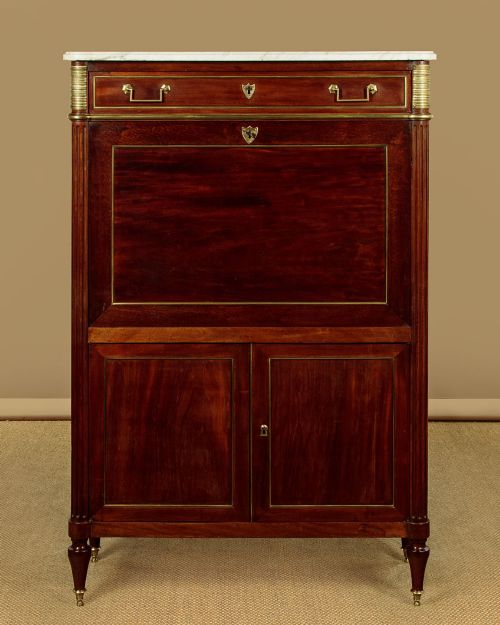
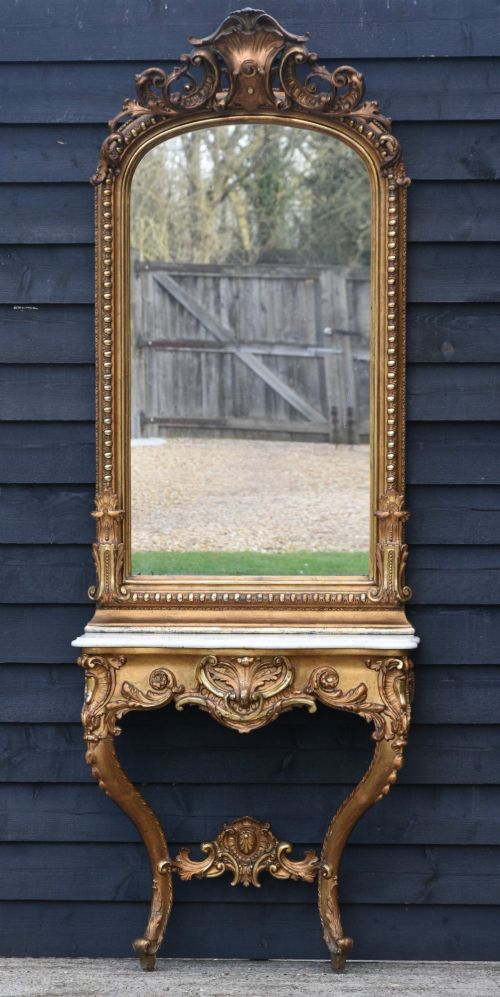
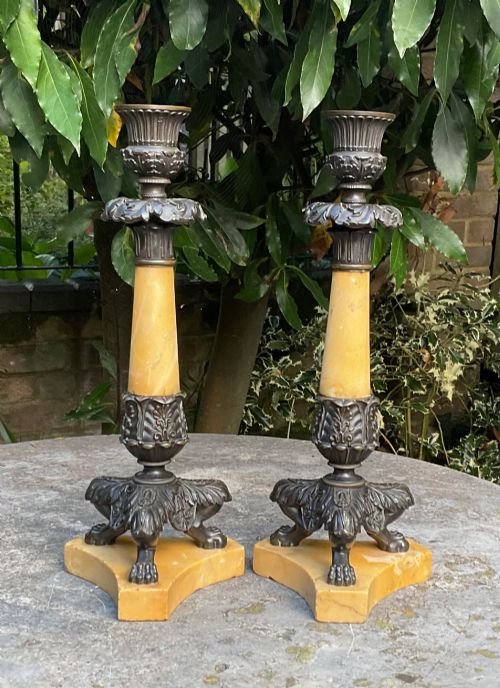
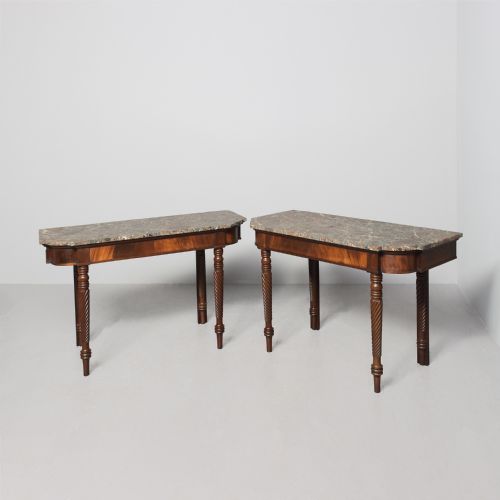
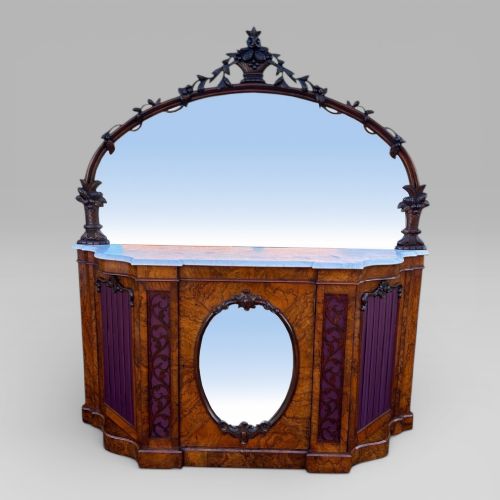
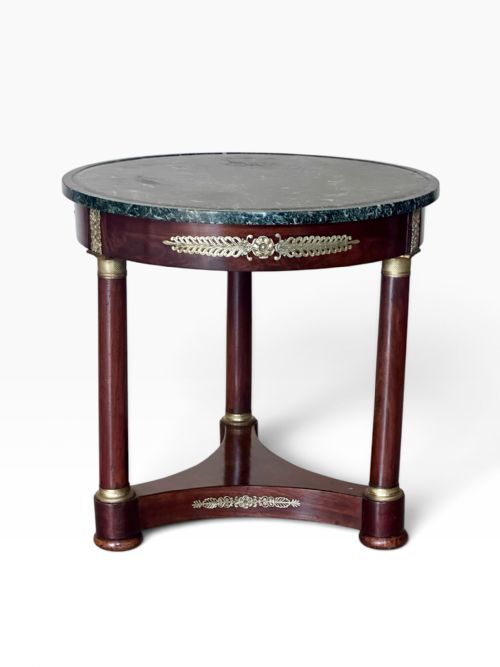
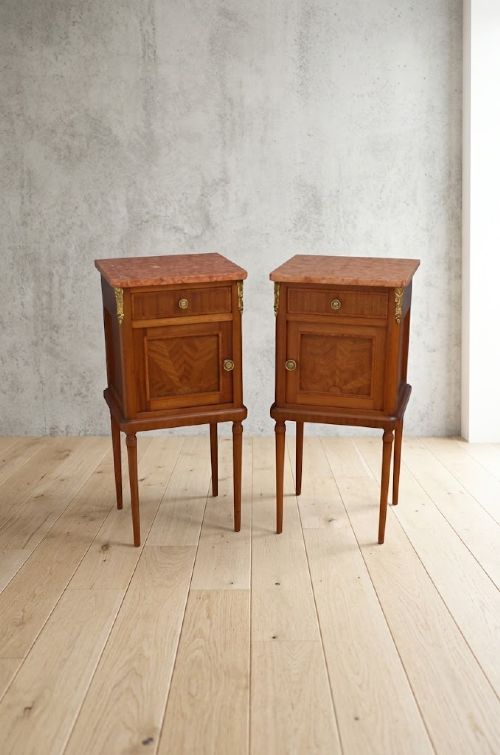
The most frequent items meeting this description include French commodes, gueridon tables, and console tables fitted with white, grey, or rouge marble slabs. Alongside these furniture forms appear candelabra, cassolettes, and mantel clocks mounted with bronze and ormolu.
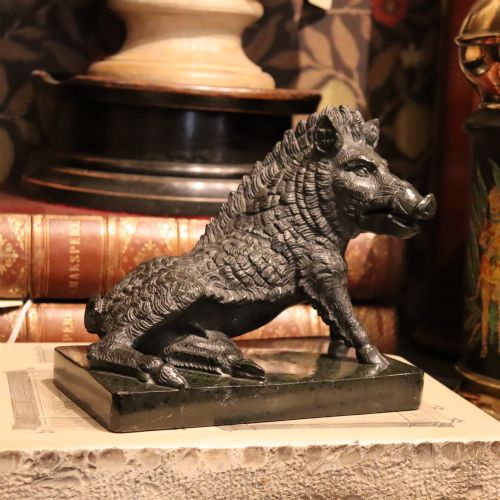
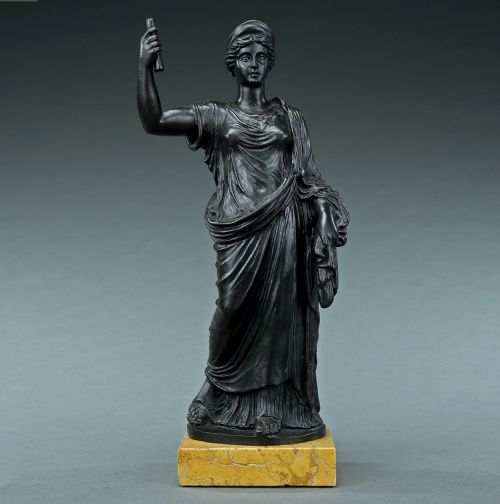
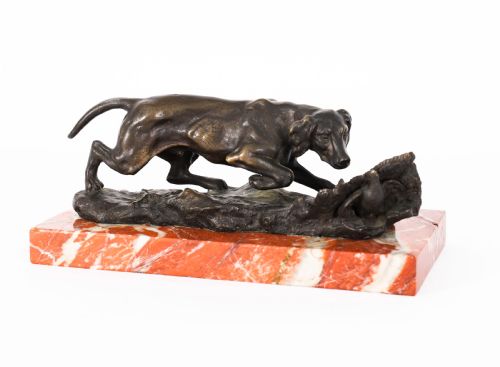
Sculptural pieces form another major category, ranging from Grand Tour reductions of classical deities to carved busts, animal figures, and architectural obelisks in black Ashford marble or specimen stone. These items cross several historical aesthetics including Neoclassical, French Empire, and Victorian revivalism.
Materials and Construction
The physical presence of these pieces relies on the combination of dense quarried stone with cabinet timbers like mahogany, walnut, and rosewood, or cast metalwork in bronze, brass, and ormolu. Marble slabs were selected for their specific veining and polished by hand to achieve a smooth, reflective finish.
Metal mounts, clock movements, and decorative candelabra components were produced through lost-wax bronze casting or spelter moulding, then finished with mercury gilding or patination. Stone elements such as columns, obelisks, and mortars were turned on lathes or carved directly before being assembled with wooden carcasses or metal fittings.
Listings feature 19th century marble combined with mahogany, walnut, rosewood, bronze, brass, and ormolu across furniture and decorative objects.
Evaluating Quality and Execution
The distinction between standard commercial output and finer workshop production rests on the crispness of the bronze chasing, the weight and selection of the marble slab, and the integration of components. Superior pieces exhibit deeply chiselled mounts, carefully matched stone grain, and solid cabinet-making techniques.
Lesser examples rely on mass-produced castings with softer surface detail and thinner secondary timbers, whereas top-tier items feature signed clock movements by makers like Japy Frères or detailed sculptural carvings attributed to established studios.
Carl Kauba·Barbedienne·Japy Frères·Charles à Orléans·Carlo Albacini
The 19th Century Marble Glossary
- Gueridon
- A small French round table supported by a central pillar or multiple legs, frequently topped with marble. These tables served various domestic functions in nineteenth-century drawing rooms.
- Ormolu
- Gilded bronze ornamentation applied to furniture, clocks, and candelabra. The technique involves coating metal with a mercury-gold amalgam and heating it to drive off the mercury.
- Cassolette
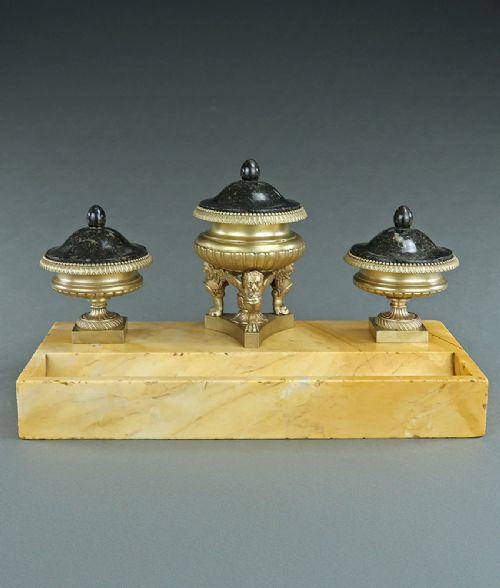
- A decorative vessel shaped like a vase or urn, often featuring a reversible lid that functions either as an incense burner or a solid finial. They appear frequently in pairs executed in marble and bronze.
- Scagliola
- A composite material made from selenite, glue, and pigments, embedded to imitate natural inlaid marbles and pietre dure. Artisans applied this paste to surfaces to create elaborate decorative columns and table tops.
- Grand Tour
- A cultural journey undertaken by wealthy Europeans to study classical antiquities, generating a market for bronze reductions, marble busts, and specimen stone obelisks.
19th Century Marble: Frequently Asked Questions
What is Grand Tour marble?
Grand Tour pieces are smaller souvenirs purchased by travellers visiting classical sites in Italy during the nineteenth century. They often reproduce famous ancient sculptures or architectural elements using local marbles and bronze.
These objects include miniature obelisks, architectural models, and desk weights made from specimen marbles or alabaster.
How do I identify French Empire style?
French Empire pieces display strict symmetry, militaristic motifs, and classical architectural proportions inspired by ancient Rome and Greece. Look for mahogany surfaces contrasted with bright ormolu mounts depicting sphinxes, laurels, and swans.
The marble tops on these tables and commodes are typically thick and fitted precisely into the wooden frames.
Are clock garnitures complete?
A clock garniture consists of a central mantel clock accompanied by matching side pieces such as cassolettes, candelabra, or urns. When all items share the same marble base and bronze mounts, they form a unified decorative set.
Complete sets require matching materials and patination across every component to confirm they were produced together.