



19th Century Mahogany Footstool
These 19th century mahogany footstool options bring sturdy timber frames and traditional upholstery to a sitting room.
19th Century Mahogany Footstool
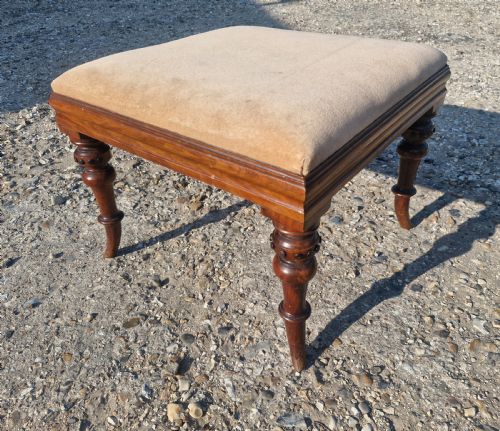
A 19th century mahogany footstool serves as a low seat or rest for the feet, shaped across several decades into forms ranging from simple upholstered blocks to sculptural x-frame designs. Buyers searching for a 19th century mahogany footstool encounter pieces produced during the Regency, Victorian, and William IV eras, utilising dark tropical timber for structural durability.
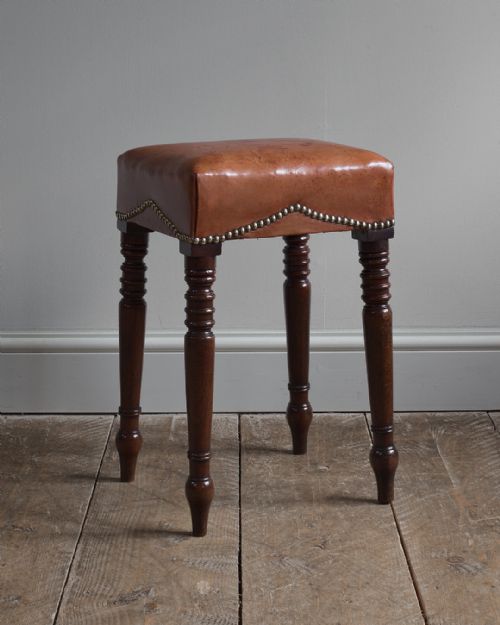
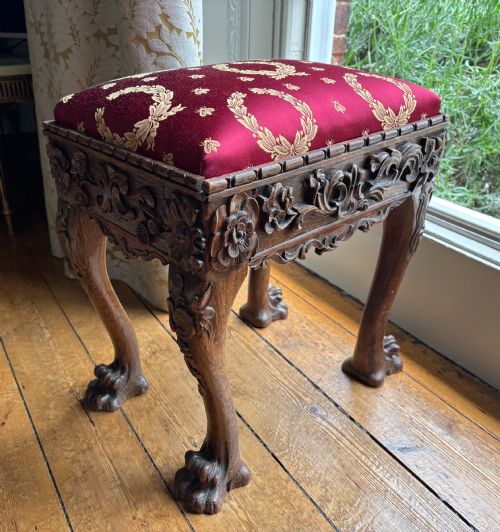
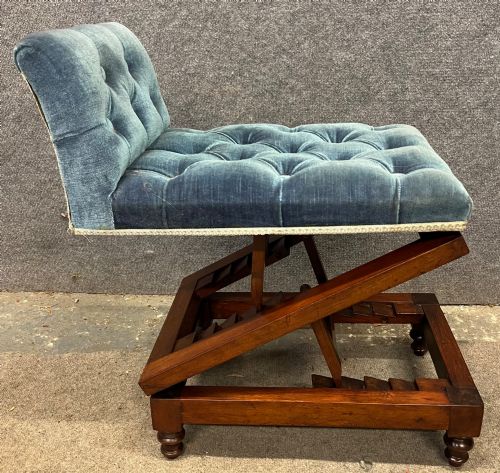
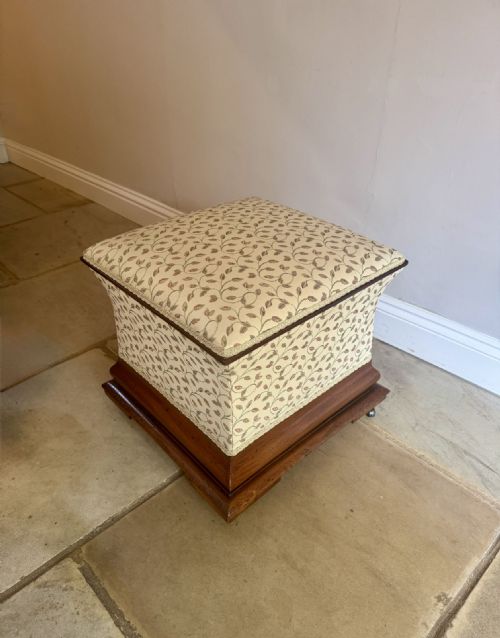
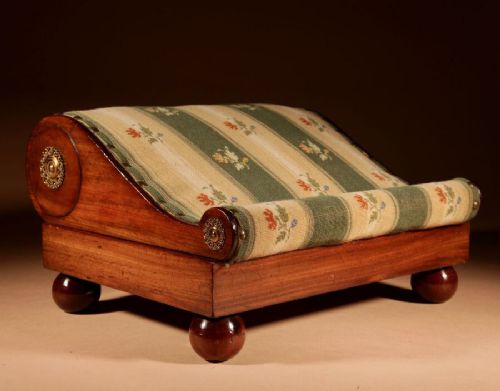
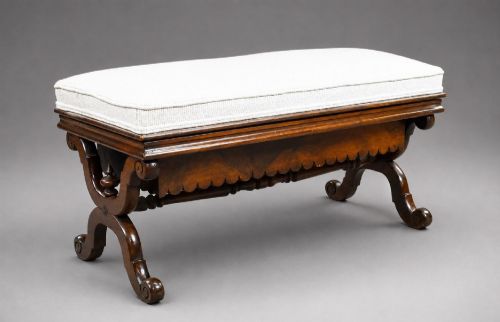
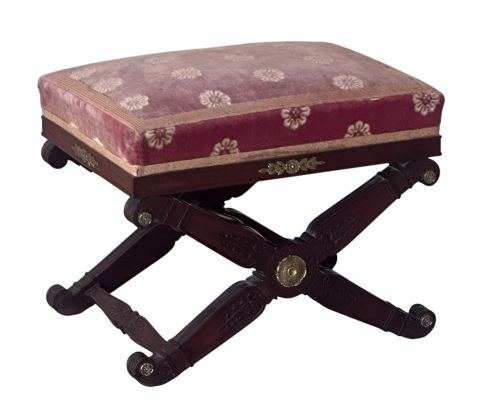
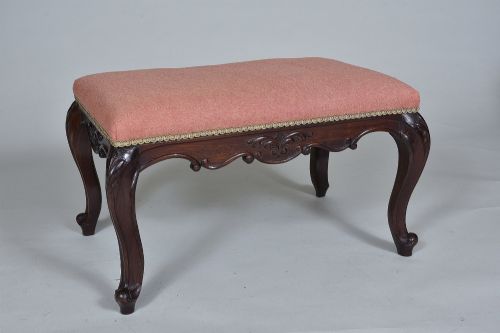
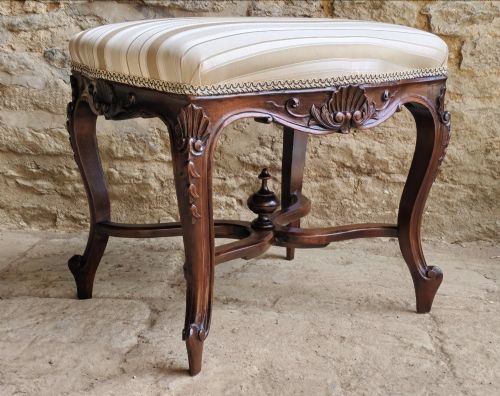
The prevailing examples on this page include rectangular footstools, ottomans, and specialised gout stools supported on carved cabriole legs, sabre legs, or lions paw feet. These pieces often feature exposed mahogany frames alongside top surfaces finished in period fabric, needlepoint, tapestry, leather, or silk.
Makers of the period adapted earlier furniture patterns, leading to Chippendale Revival, French Empire, Biedermeier, and Rococo Revival influences within a single category of low seating.
Materials and construction
Makers relied primarily on solid mahogany for the structural frames, often shaping the timber into curved x-frames, scroll tops, and waisted ottomans using traditional joinery. Brass studs appear as functional and decorative elements securing upholstery edges, while cane seating and carved wooden frames demonstrate alternative methods of top construction.
The soft elements depend on textiles such as velvet, wool, silk, and modern Liberty fabric applied over padding, alongside original needlepoint and tapestry panels worked by hand. Leather surfaces also occur on specific functional variants like gout stools designed for comfort.
19th Century Mahogany Footstool Retail Price Guide 2026
Typical asking prices for 19th century mahogany footstool among the pieces listed under this phrase on Sellingantiques today, from the lower quarter to the upper quarter. They describe what is for sale here now, not the wider market.
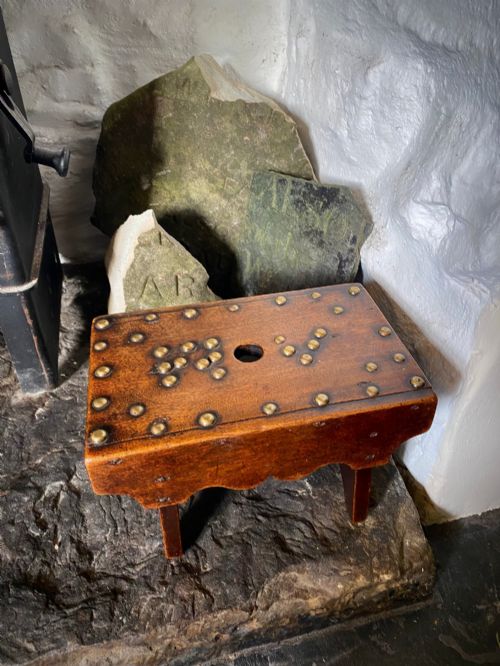
An unusual survival includes initials stamped in brass studs on the timber frame, hinting at a forgotten love token.
Distinctions in quality
The caliber of a 19th century mahogany footstool rests upon the crispness of the timber carving and the architectural ambition of the frame, such as complex x-frames or defined lions paw feet. Simpler rectilinear stools sit at the accessible end, while pieces bearing specific design book origins or regional attribution show greater sculptural confidence.
The integrity of the timber joins and the survival of original upholstery elements, including needlepoint or brass studding, separate standard utilitarian seating from pieces retaining higher decorative ambition.
Mathew Gregson
The 19th Century Mahogany Footstool Glossary
- Mahogany
- A durable tropical hardwood imported for high-end furniture production throughout the period. Its deep reddish-brown tone darkens naturally with age.
- X-frame
- A structural furniture base formed by intersecting diagonal wooden members creating an X shape when viewed from the side. This classical form supports many Regency and French Empire stools.
- Gout stool
- An adjustable or angled foot rest designed to elevate the foot for those suffering from joint ailments. These items typically feature leather tops and tilting mechanisms.
- Ottoman
- A low, upholstered seat or bench without a back or arms, frequently incorporating internal storage space or blanket box construction.
- Needlepoint
- Hand-stitched canvas work utilising wool or silk yarn to create pictorial or geometric patterns on seat covers.
19th Century Mahogany Footstool: Frequently Asked Questions
What is a 19th century mahogany footstool used for?
These low seats provided a comfortable prop for feet while sitting in armchairs or supported individuals suffering from restricted mobility.
They also functioned as small standalone seats in drawing rooms and parlours where space was limited.
How do you style a 19th century mahogany footstool?
Place a stool before a fireside armchair or position an ottoman at the foot of a bed to introduce rich timber tones and textile texture.
Their compact scale allows them to sit easily beneath tables or beside bookshelves when not actively used for seating.
How do I date a 19th century mahogany footstool?
Examine the stylistic cues in the woodwork, such as heavy scroll tops and sabre legs characteristic of the Regency period, or more exuberant carving typical of Victorian Rococo Revival.
Construction marks and the nature of the upholstery webbing beneath can offer further clues to the decade of manufacture.
Are these footstools sturdy enough for daily use?
Solid mahogany frames built with traditional joinery remain remarkably robust and capable of supporting regular weight.
Historic upholstery webbing may require professional tightening or replacement if the seating surface has softened over generations.