

19th Century Jewellery Casket
A 19th century jewellery casket brings tactile history to a dressing table, offering a secure and decorative home for small valuables.
19th Century Jewellery Casket
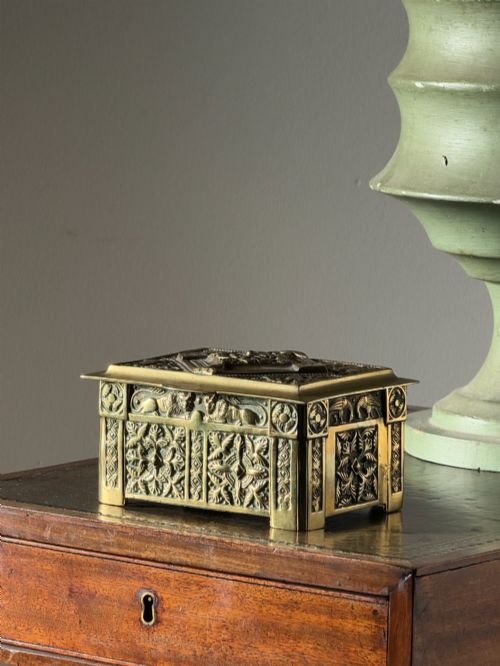
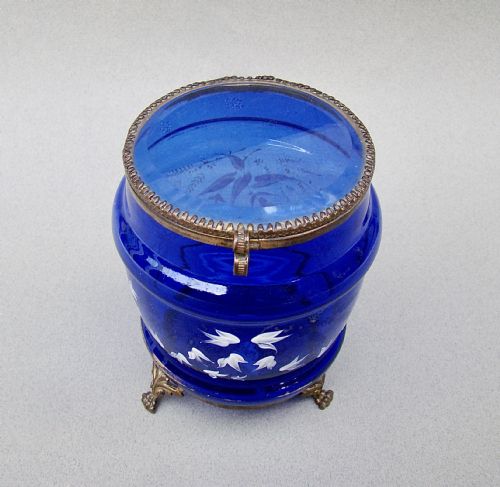
Makers utilised distinct regional styles, such as French ormolu and porcelain mounts, English burr walnut and rosewood boxes with brass details, and Italian pietra dura work. These pieces often feature fitted interiors designed to organise rings, necklaces, and watches.
Materials and Technique
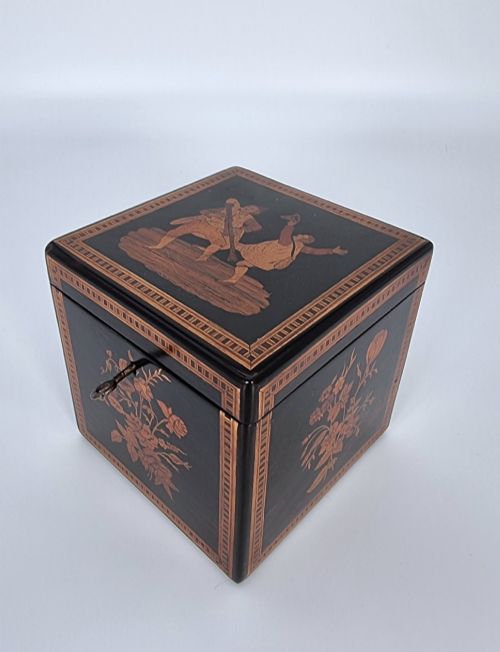
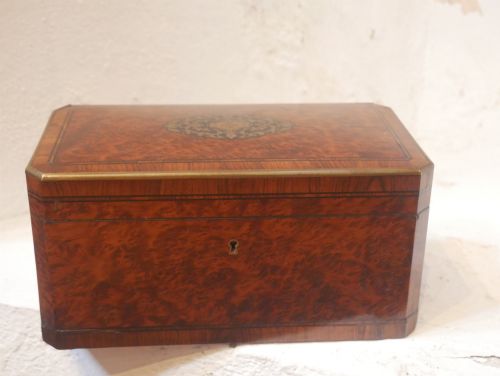
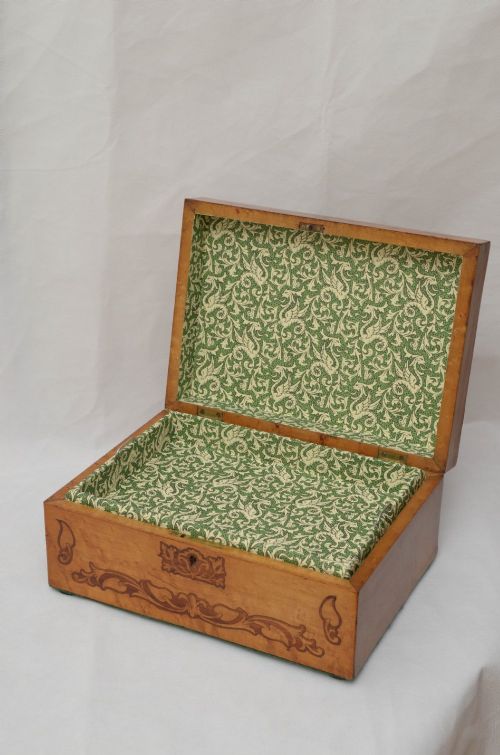
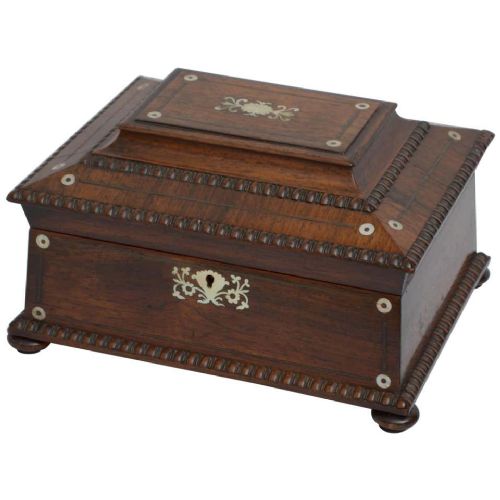
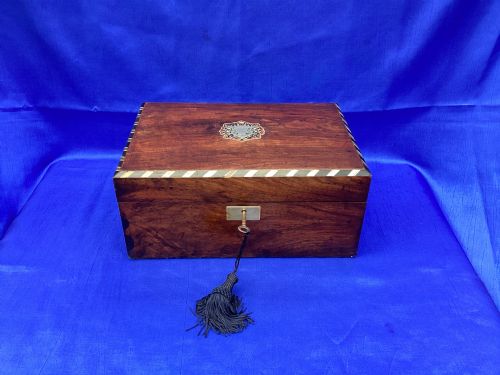
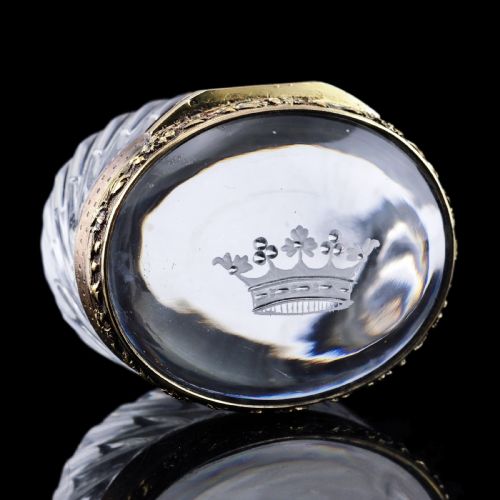
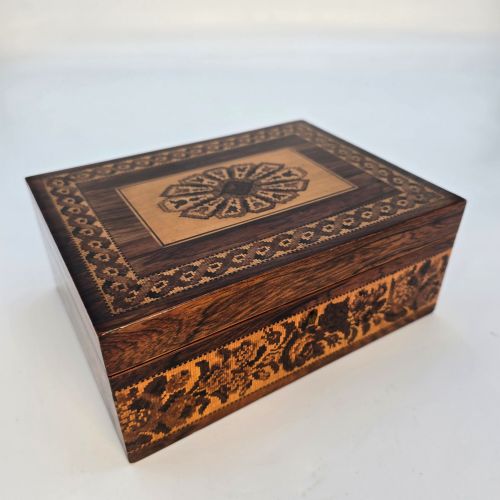
Wood serves as the primary structural foundation for many English examples, employing dense timbers such as rosewood, coromandel, and burr walnut, often enhanced with mother-of-pearl inlay or Tunbridge Ware marquetry. Artisans also constructed frames from brass, bronze, and ormolu to mount crystal, glass, and porcelain panels.
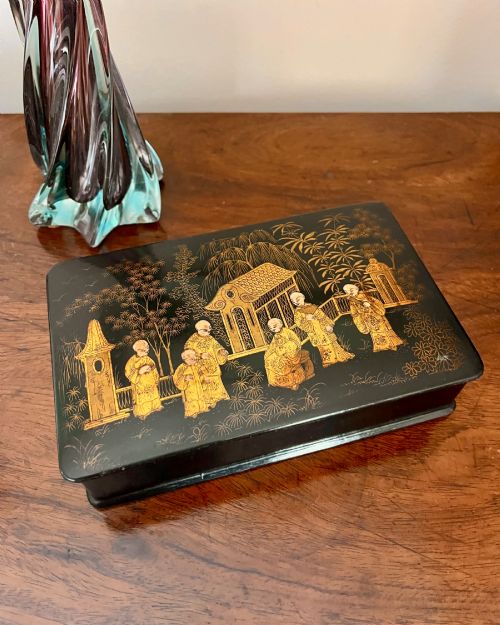
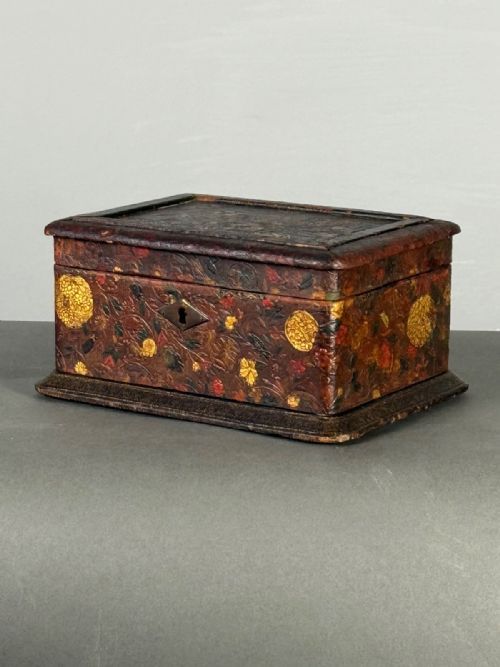
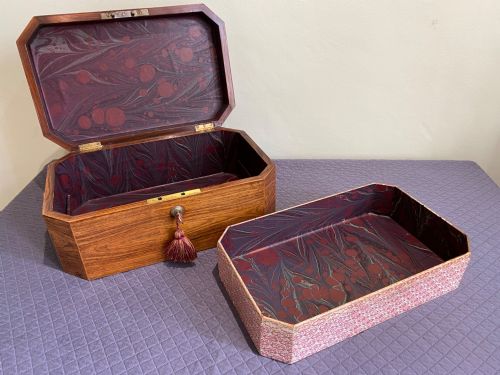
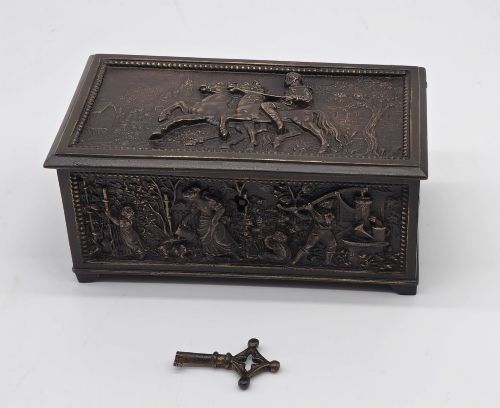
Decorative finishes rely on hand-painted porcelain, leather coverings, and stone inlays like pietra dura. Metal mounts are cast and chased, whilst interiors are lined with velvet, silk, or leather to protect stored ornaments.
19th Century Jewellery Casket Retail Price Guide 2026
Typical asking prices for 19th century jewellery casket among the pieces listed under this phrase on Sellingantiques today, from the lower quarter to the upper quarter. They describe what is for sale here now, not the wider market.
Listings feature woods including rosewood, coromandel, burr walnut, and amboyna alongside porcelain and ormolu.
Design and Execution
Quality rests in the precision of the cabinetwork and the weight of the metal mounts. Superior pieces display seamless veneer matching, tight joinery, and finely chased ormolu rather than simple stamped brass.
The sophistication of internal fittings distinguishes high-end examples. Boxes that retain original working locks, keys, mirrored compartments, and intact silk or velvet linings represent the upper tier of manufacture.
Tahan Paris·Susse Freres Paris·Edmund Nye·Toulmin and Gale·W and J Milne Makers Edinburgh
The 19th Century Jewellery Casket Glossary
- Ormolu
- Gilded bronze or brass applied as decorative mounts on furniture and boxes. This technique was widely utilised by French makers during the period.
- Pietra dura
- An artistic technique using cut and fitted polished coloured stones to create pictorial designs. It frequently appears on Italian caskets.
- Tunbridge Ware
- Woodworking craftsmanship involving tiny mosaic tiles of natural coloured woods to form geometric or floral patterns. Edmund Nye practiced this specialty in England.
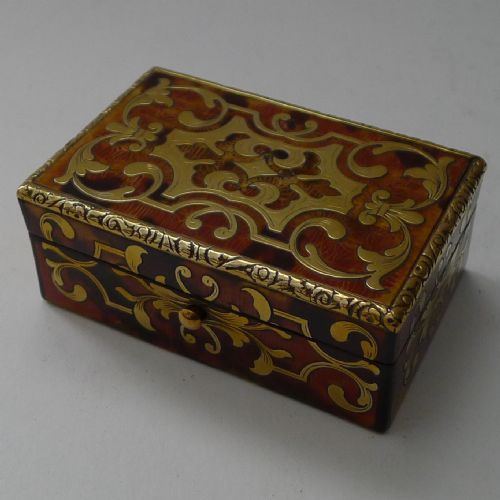
- Boulle
- A style of marquetry using tortoiseshell and brass inlaid in a distinctive ornamental pattern. It is commonly found on French trinket boxes.
- Coromandel
- A dense, heavily figured timber imported from Asia and utilised for luxury nineteenth-century boxes.
19th Century Jewellery Casket: Frequently Asked Questions
How do I care for a wooden box?
Keep timber pieces away from direct sunlight and dramatic changes in humidity to protect the delicate veneers and prevent splitting.
Dust gently with a dry, soft cloth and avoid commercial polishes that can build up on inlaid surfaces.
Are original keys common?
Original working keys are uncommon because they were easily lost over the generations. Many pieces survive without their matching key.
Specialist antique locksmiths can sometimes source or fit a period-appropriate replacement if required.
How can I tell French from English boxes?
French caskets frequently feature gilt ormolu mounts, Sevres porcelain panels, and glazed glass elements. They often lean towards ornate revival styles.
English examples tend to focus on the natural grain of figured woods like rosewood and burr walnut, accented with brass banding or mother-of-pearl.
What were these caskets used for originally?
Owners stored valuable personal adornments, rings, brooches, and pocket watches inside these velvet-lined compartments. Wealthy travellers also utilised smaller versions as portable dressing companions.
Later Victorian iterations often doubled as stationary boxes or sewing cabinets for use in the parlour.