



19th Century Ironstone Bowls
These 19th century ironstone bowls are heavy, durable ceramic tablewares spanning the Victorian, Regency, and Georgian eras.
19th Century Ironstone Bowls
When you search for 19th century ironstone bowls, you encounter robust vessels designed for both heavy domestic service and formal dining. The selection includes soup bowls, pedestal bowls, and sugar bowls, alongside related utilitarian forms like tureens, jugs, and basins.
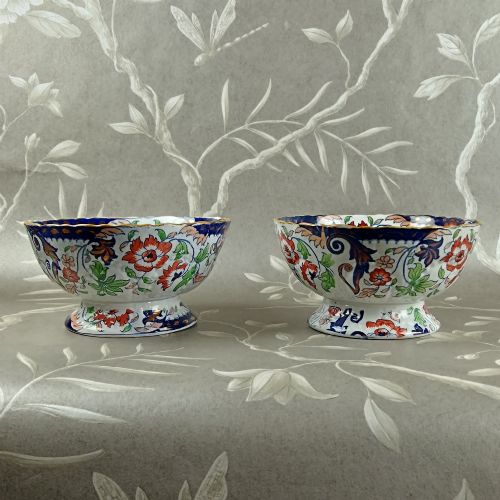
The pieces on this page originate from the nineteenth century, encompassing Georgian, Regency, and Victorian periods. Makers such as Minton, Mason's, Copeland, and Coalbrookdale produced these substantial ceramics to withstand daily use while incorporating decorative styles like Chinoiserie Mandarin, Victorian Imari, and flow blue.
How they were made
Potters utilised ironstone, a dense earthenware body patented to achieve the durability of porcelain at a lower cost. This ceramic base was shaped into bowls, tureens, and pedestal vessels, often featuring moulded details such as lion mask handles.
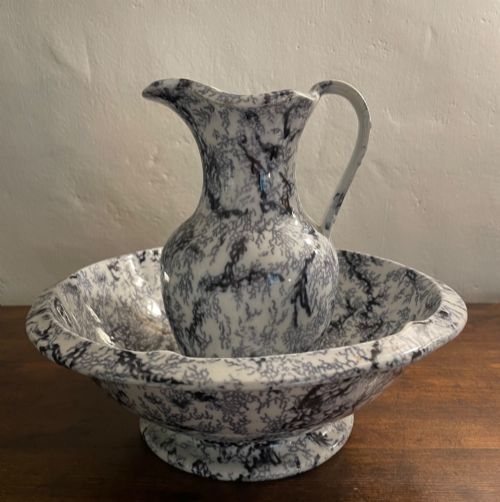
Surface decoration involved applied glazes, enamel colours, and occasional gold leaf or gilt highlights. Techniques like flow blue printing allowed cobalt pigments to blur slightly during firing, creating a soft, bleeding effect across the ceramic surface.
19th Century Ironstone Bowls Retail Price Guide 2026
Typical asking prices for 19th century ironstone bowls among the pieces listed under this phrase on Sellingantiques today, from the lower quarter to the upper quarter. They describe what is for sale here now, not the wider market.
Royal Navy officers required robust diningware, leading to dedicated mess bowls that survived the rigours of nineteenth-century naval life.
What varies in quality
The distinction between standard utility vessels and superior pieces rests on the crispness of the moulding and the execution of the hand-painted enamels. Finer examples display meticulous application of gold leaf and complex patterns such as Chinoiserie Mandarin or Imari palettes.
Design complexity also defines the range, moving from plain glazed ceramic bodies to elaborate pedestal bowls and covered sugar bowls with sculptural elements like lion mask handles. The reputation of the pottery, from Mason's to Minton, further influences the standing of individual pieces.
Minton·Copeland·Coalbrookdale
The 19th Century Ironstone Bowls Glossary
- Ironstone
- A heavy, durable type of ceramic patented in the nineteenth century to imitate Chinese porcelain while offering greater strength. It forms the structural body for the bowls and tureens found in this category.
- Flow blue
- A printing technique where cobalt blue pigment diffused into the glaze during the kiln firing. This produced a characteristic hazy, bleeding outline on the ceramic surface.
- Chinoiserie
- A decorative style employing European interpretations of Chinese and East Asian artistic motifs. It frequently appears in hand-painted patterns on nineteenth-century tablewares.
- Pedestal bowl
- A vessel elevated on a short foot or base rather than resting flat on the surface. These pieces often served decorative or centrepiece functions in formal settings.
- Imari
- A decorative style inspired by Japanese export ceramics featuring iron red, cobalt blue, and gilt. Victorian interpretations combined these contrasting hues on ironstone bodies.
19th Century Ironstone Bowls: Frequently Asked Questions
What is ironstone?
Ironstone is a dense, hard-wearing ceramic body developed in the nineteenth century as a tougher alternative to porcelain. It combines ball clay, feldspar, and slag to create a heavy material suited to daily kitchen and dining use.
This durable composition allowed potteries to produce thick-walled bowls, tureens, and jugs that resisted chipping better than standard earthenware while holding complex printed and painted decorations.
How do I care for ironstone bowls?
These nineteenth-century ceramics require gentle handling, particularly pieces featuring delicate enamel colours or gold leaf highlights. Hand washing in warm water with mild detergent preserves the glaze and prevents abrasion.
Avoid subjecting them to sudden temperature changes, such as placing cold vessels into hot water, to protect the historic ceramic body from thermal shock and hairline cracking.
Were these bowls used daily?
Many ironstone vessels served practical functions in nineteenth-century households, from officers' mess tables to domestic kitchens and dining rooms. Soup bowls and sugar bowls endured regular service before entering the collector market.
More ornate pedestal bowls and decorative vases likely fulfilled display roles in formal rooms, reflecting the duality of ironstone as both a utilitarian and decorative medium.
How do I distinguish Victorian from Georgian pieces?
Georgian and Regency examples tend to feature restrained forms and specific decorative motifs influenced by early nineteenth-century neoclassical and Chinoiserie tastes. Copeland and early Mason's pieces from this phase often display distinct transfer-printed borders.
Victorian ironstone, produced after eighteen thirty-seven, frequently embraces bolder polychrome palettes, Victorian Imari designs, and heavier relief moulding such as lion mask handles on covered sugar bowls.