


19th Century Indian Metalwork
These pieces of 19th century indian metalwork bring tangible weight and rich regional iconography straight into a room.
19th Century Indian Metalwork
When you search for 19th century indian metalwork, you encounter sculptural figures, storage boxes, wall plaques, and vases. The selections span the 19th Century, including specific decades such as 1800, 1860, 1880, and 1890.
The regional styles represented here include South Indian, Anglo-Indian, Indo-Persian, and Indian Folk Art. You will frequently meet Hindu deities, animal sculptures like elephants and peacocks, and utilitarian containers such as pandan boxes.
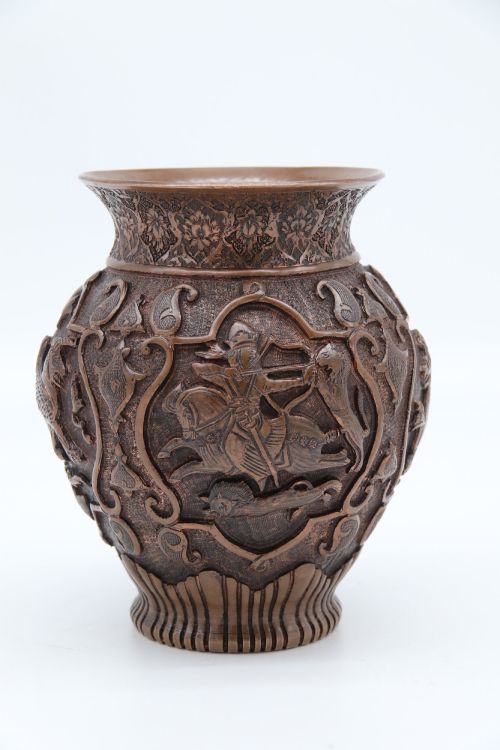
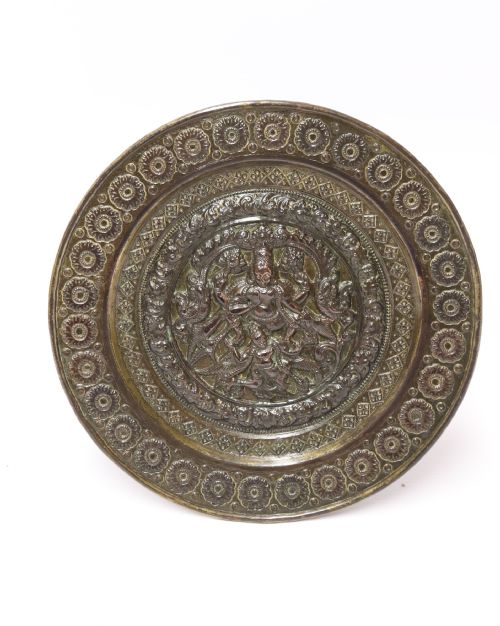
Objects range from large bronze statues and engraved elephant sculptures to smaller repoussé copper vessels and wall plaques. Each piece reflects the diverse craftsmanship of the Indian Raj period and traditional regional workshops.
How they were made
These items rely primarily on copper, brass, bronze, silver, and silver plate, often worked through casting, hand carving, and chasing. Artisans shaped molten copper and bronze into statues and vases before refining the surfaces with detailed tooling.
Repoussé techniques allowed makers to hammer copper and silver into raised relief patterns on vases and boxes. Engraved and chased decorations provide intricate surface textures on bronze sculptures and plaques, showing deep manual engagement with the metal.
What varies in quality
Material weight and substance also differentiate the items, particularly among cast bronze statues and heavy copper vases. The integration of decorative motifs across complex animal and human forms dictates the visual success of each piece.
The 19th Century Indian Metalwork Glossary
- Repoussé
- A metalworking technique where a design is hammered into relief from the reverse side. This method creates dimensional ornamentation on copper vases.
- Chasing
- Working metal from the front by sinking the surface with punches to refine details. Artisans use this to add texture after initial casting.
- Indo-Persian
- A stylistic cross-current blending Indian and Persian artistic traditions. It frequently appears on plaques and decorative metalwork.
- Bronze
- An alloy primarily of copper combined with tin. It serves as the primary medium for statues of Hindu deities and animal sculptures.
19th Century Indian Metalwork: Frequently Asked Questions
What are these metal objects?
They are decorative and ritual items produced in the subcontinent during the nineteenth century, encompassing statues, vases, and boxes.
They reflect diverse regional traditions and techniques including bronze casting and copper repoussé work.
Where do these pieces originate?
The items originate from various regions across the subcontinent, reflecting distinct local workshops and stylistic traditions.
Styles range from South Indian forms to Anglo-Indian and Indo-Persian aesthetics.
How do I care for antique metalwork?
Keep the metal away from direct moisture and clean only with a soft, dry cloth to preserve the patina.
Avoid abrasive polishes that can wear away historic chased or engraved surface details.