

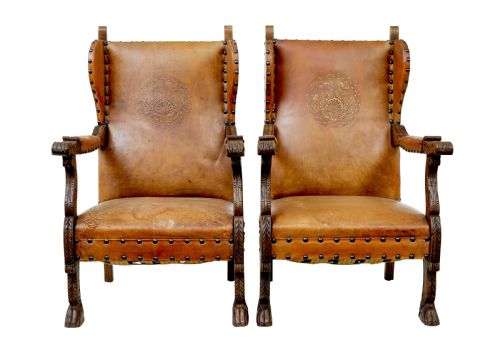
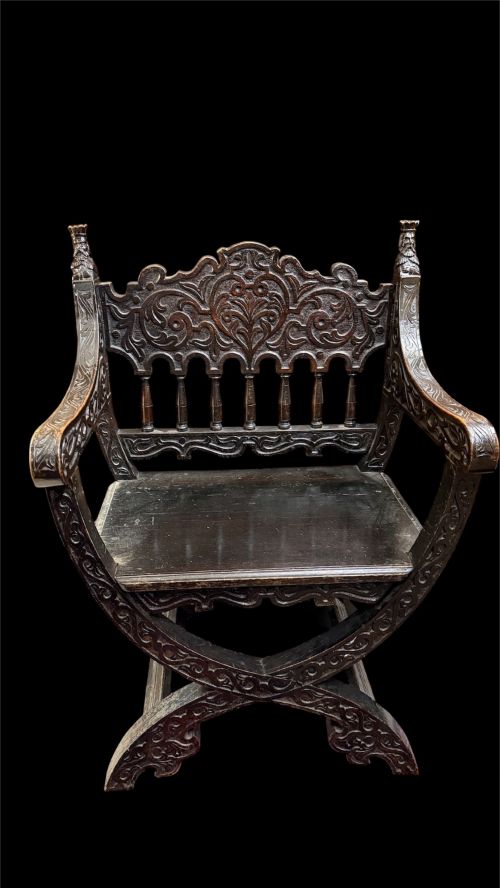
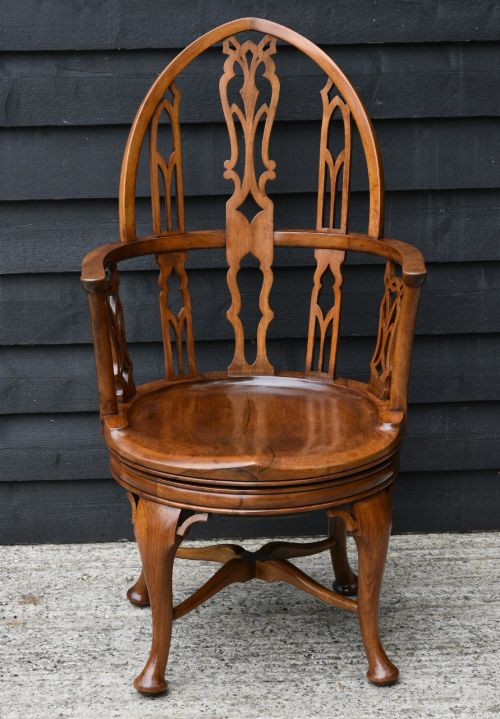
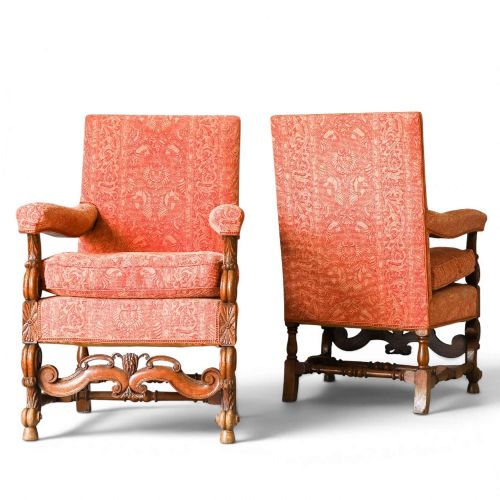
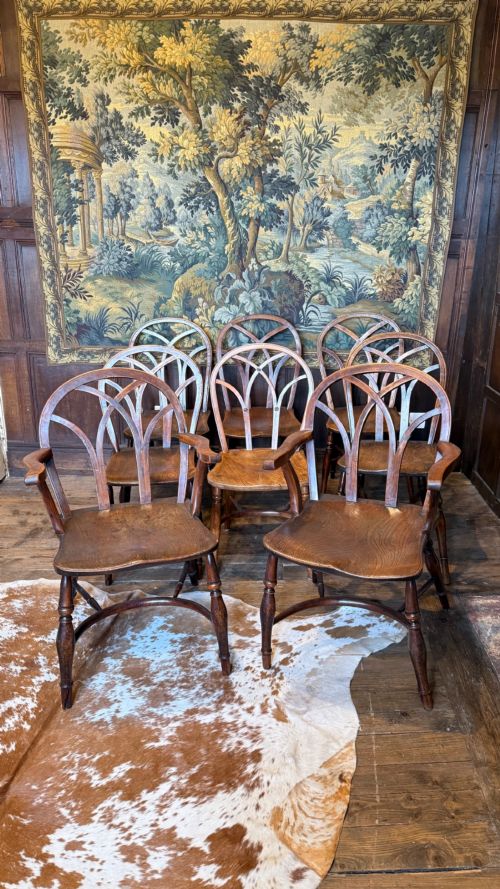


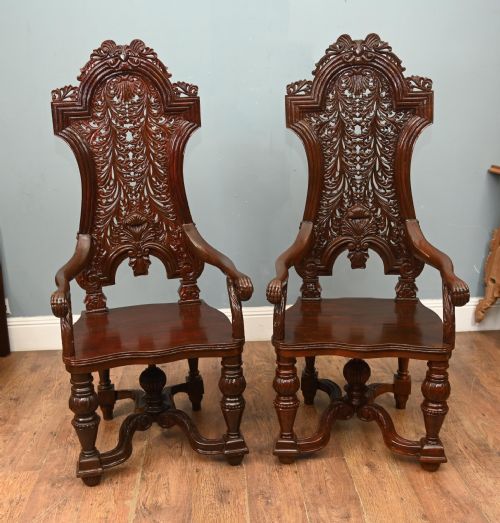


19th Century Gothic Armchair
A 19th century gothic armchair brings medieval verticality and sturdy timber presence into a modern room, offering commanding seating rooted in historic architectural revival.
How they were made
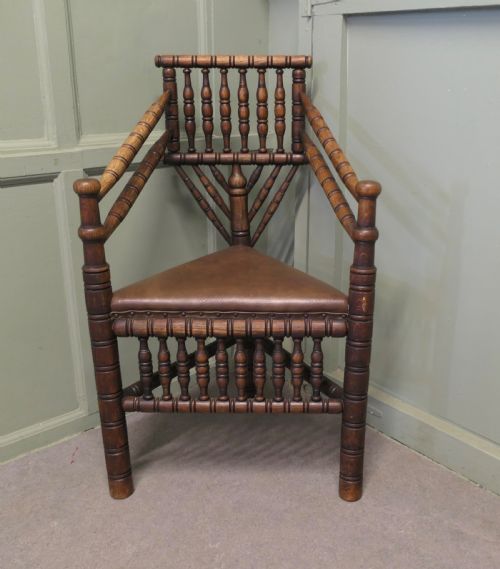
Makers relied predominantly on solid oak, walnut, and pitch pine, selecting dense timbers capable of supporting deep hand-carving and structural joinery. Elements such as turned spindles, peg construction, and heavy framing define the physical build of these seats.
Surface detailing combines chip carving, linenfold panels, and applied brass studwork securing embossed leather or buttoned upholstery. Timber surfaces are finished to highlight natural grain, sometimes incorporating ebonised accents or painted treatments.
What varies in quality
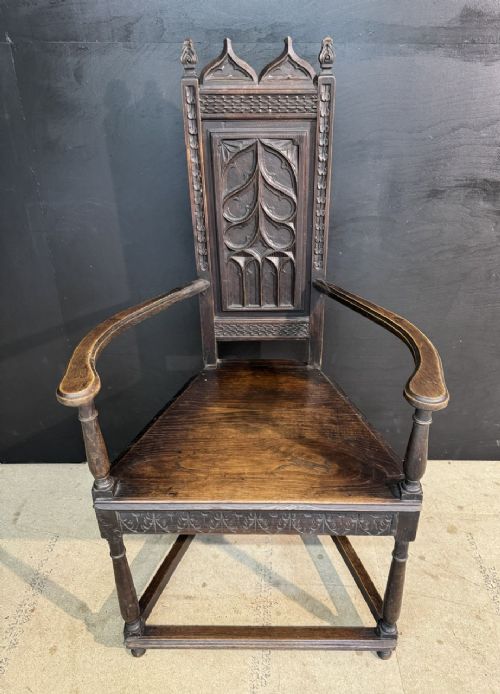
Depth and crispness of the hand-carving separate standard production seating from exhibition pieces, where animal figures, tracery, and linenfold motifs show meticulous depth and relief. The calibre of the timber selection, such as figured oak or richly grained walnut, dictates the baseline dignity of the frame.
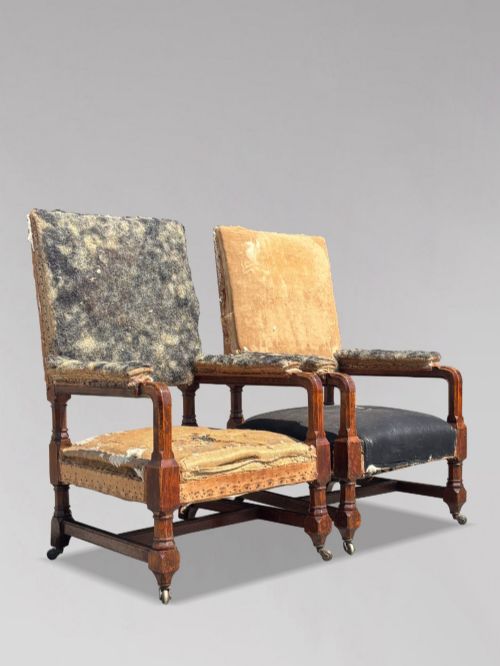
Proportion and structural integrity also divide the range, as generous library armchairs with balanced X-frames or heavy wainscot panels demonstrate superior architectural harmony compared to simpler vernacular forms. Original upholstery details, including period leather and traditional buttoning, elevate the integrity of surviving examples.
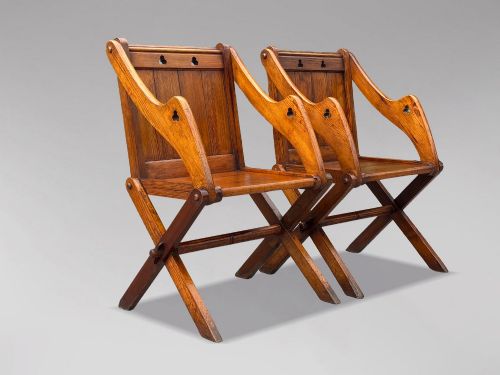
The inventory records specialised seating forms including Glastonbury X-framed chairs, revolving desk chairs, and high-backed library thrones.
A.W.N. Pugin·Collier and Plucknett·Alfred Waterhouse·Charles Bevan·Ben Gilling·G Tilley of Birmingham
The 19th Century Gothic Armchair Glossary
- Gothic Revival
- An architectural and decorative movement drawing inspiration from medieval forms, pointed arches, and ecclesiastical design. This style heavily influences nineteenth-century seating through pointed motifs and heavy timber construction.
- Wainscot chair
- A solid wooden armchair featuring panelled backrests and sturdy arm supports, originating in earlier centuries and widely revived during the Victorian era. These pieces offer an enclosed, architectural seating experience.
- Glastonbury chair
- A distinctive folding X-framed chair with a sloping back and panel seat, based on medieval monastic designs. Nineteenth-century versions frequently employ solid oak with carved ecclesiastical inscriptions.
- Caquetoire
- A light, high-backed armchair originating in the sixteenth century and revived in the nineteenth century, featuring a narrow trapezoidal body designed for conversation. These seats typically showcase slender uprights and carved wooden panels.
- Tracery
- Openwork architectural ornamentation based on intersecting ribwork, commonly carved into the wooden backs of gothic revival seating. This detail mimics the stone window designs of medieval churches.
19th Century Gothic Armchair: Frequently Asked Questions
How do I identify a gothic armchair?
Look for architectural motifs such as pointed arches, quatrefoils, linenfold panelling, and heavy timber construction. These elements directly reference medieval stone and woodwork translated into domestic furniture.
Notice the use of solid oak or walnut alongside leather upholstery and deep relief carving, which distinguish these pieces from standard Victorian seating forms.
Where were these armchairs used originally?
Gothic armchairs typically occupied libraries, studies, grand hallways, and ecclesiastical settings where their imposing vertical lines commanded attention. They served as authoritative seating for reading and writing.
In domestic spaces today, they function effectively as accent chairs or desk seats that anchor a room with historic character.
Are these chairs comfortable for daily use?
Many examples feature generous proportions, upholstered pads, and supportive high backs designed for extended periods of reading or working at a desk. Models with buttoned leather provide a supportive seat.
Solid wood versions without padding offer firmer upright posture, reflecting the medieval and revival preferences for structured seating.
How should I care for historic oak furniture?
Maintain the timber by keeping it away from direct heat sources and sudden humidity changes to prevent wood splitting. Dust regularly with a soft, dry cloth to protect the carved surfaces.
Feed leather elements with appropriate conservation wax when necessary, avoiding modern chemical polishes that can degrade nineteenth-century finishes.