



19th Century Gold Necklace
A 19th century gold necklace is a piece of historical jewellery worn to mark status, sentiment, or fashion, combining precious metals with gemstones.
19th Century Gold Necklace
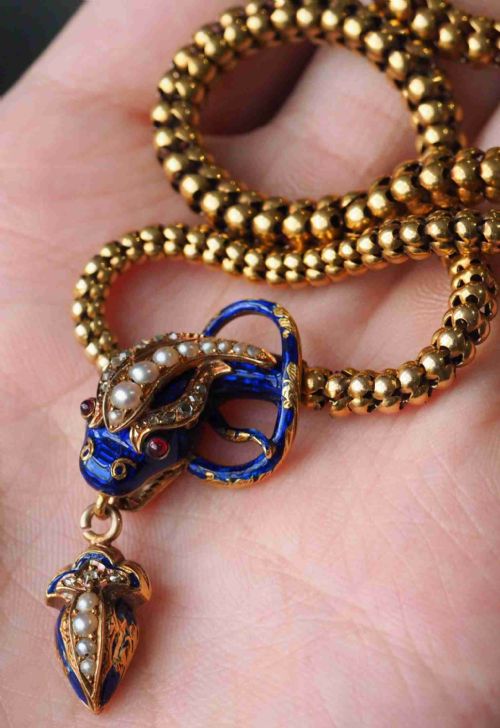
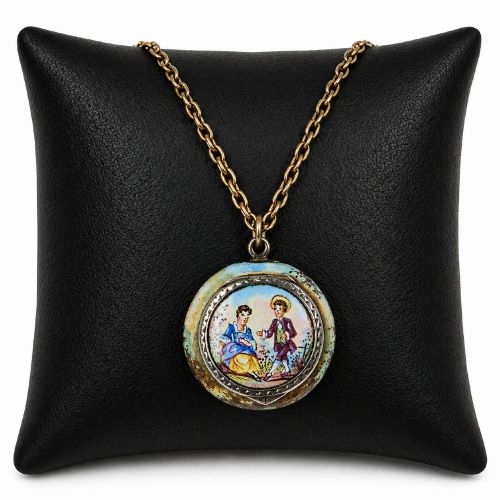
When you search for a 19th century gold necklace, you encounter items predominantly from the Victorian period alongside Regency examples, featuring designs like snake motifs, crosses, lavalieres, and mourning lockets.
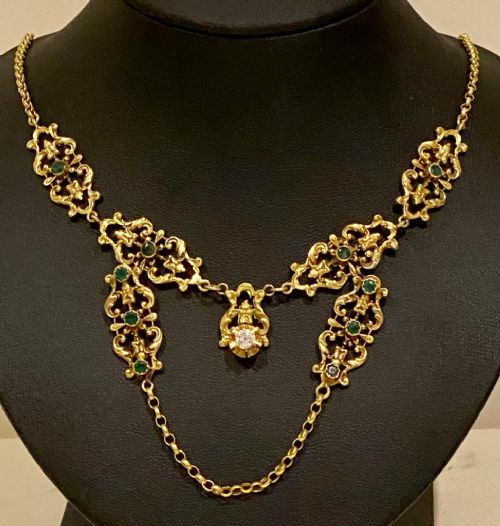
The pieces on this page include pendants, necklaces, pendant brooches, and longuard chains, often incorporating pearls, diamonds, rubies, turquoise, and enamel.
You are most likely to meet Victorian gold necklaces set with coloured stones or diamonds, reflecting the sentimental and revivalist tastes of the nineteenth century.
Materials and technique
Maker's workshops utilised varied grades of gold, including 9K, 14K, and 18K yellow gold, frequently paired with silver to securely mount old-cut diamonds.
Craftsmen combined precious stones such as turquoise, rubies, pearls, and coral with hand-applied enamel work and detailed metal designs like the floral acanthus pattern.
The listings show periods spanning the Regency era and the Victorian period, utilising gold, silver, diamonds, rubies, pearls, turquoise, coral, and enamel.
Distinctions in quality
Quality rests on the selection and matching of natural gemstones, such as Burma rubies or pearls, and the precision of handcrafting seen in chased or enamelled gold work.
The sophistication of the design, whether an Egyptian Revival pendant or a detailed snake serpent motif, separates standard production from exceptional examples.
Henry Jacob Burch
The 19th Century Gold Necklace Glossary
- Lavaliere
- A pendant necklace featuring a central drop stone or ornament suspended from a shorter chain. This style gained popularity during the late nineteenth century.
- Mourning locket
- A piece of jewellery designed to hold hair or a miniature portrait in memory of a deceased person. These often incorporated black enamel and gold.
- Longuard chain
- A long chain worn around the neck, often used to suspend watches, lockets, or pendants. They appear frequently in nineteenth-century pearl variations.
- Acanthus
- A decorative plant motif used in classical art and replicated in nineteenth-century metalwork. It frequently decorates gold pendant mounts and frames.
19th Century Gold Necklace: Frequently Asked Questions
How were these necklaces worn?
Owners wore them around the neck as personal adornments to display wealth, sentiment, or fashionable taste during social occasions.
Many designs served multiple functions, operating as both pendants and brooches depending on the wearer's attire.
How do I care for antique gold jewellery?
Care requires gentle handling, storing pieces separately to avoid scratching softer gems like pearls or turquoise, and avoiding harsh chemical cleaners.
Professional inspection of settings helps ensure that old-cut diamonds and gemstones remain secure in their gold and silver mounts.
How can I tell Victorian pieces apart?
Victorian pieces often display specific motifs like snakes, crosses, or acanthus leaves, alongside characteristic materials such as enamel and mourning glass.
Stylistic movements within the era, such as Egyptian Revival or Grand Regency, provide further clues to dating an item accurately.