
19th Century Gilded Frame Picture
These 19th century gilded frame picture examples combine period oils, watercolours, and silhouettes with ornate surrounds.
19th Century Gilded Frame Picture
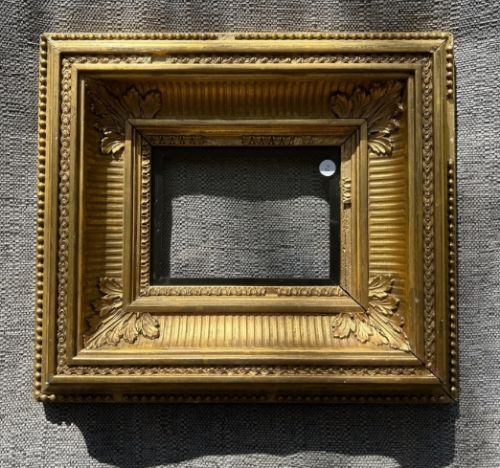
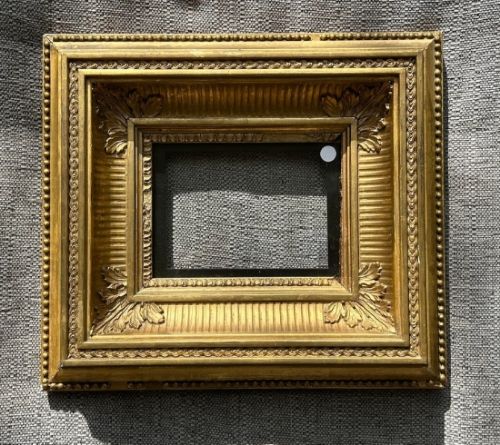
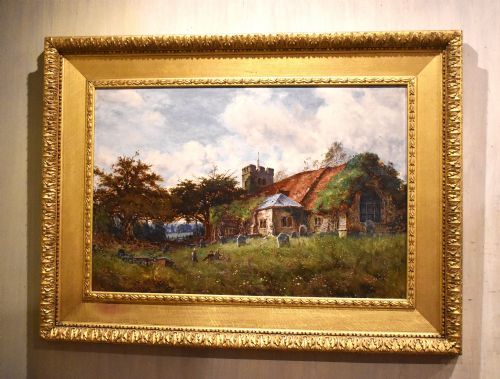
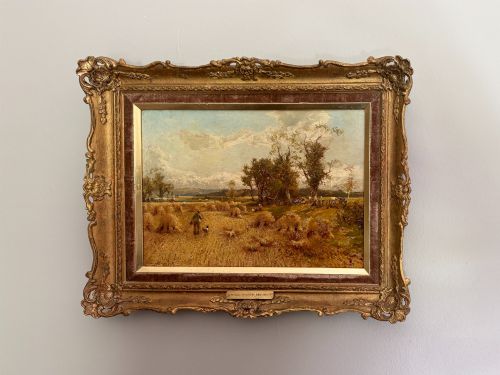
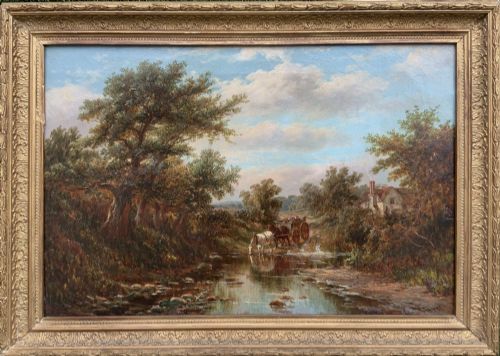
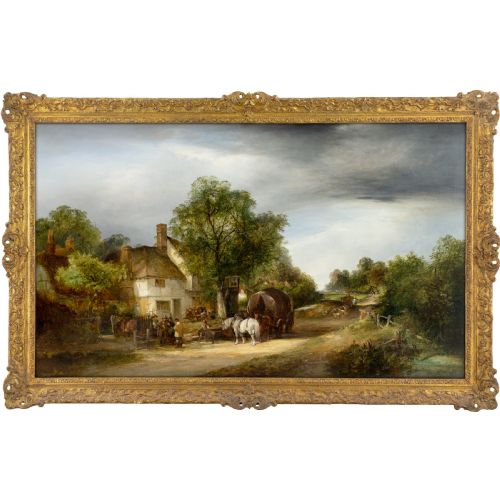
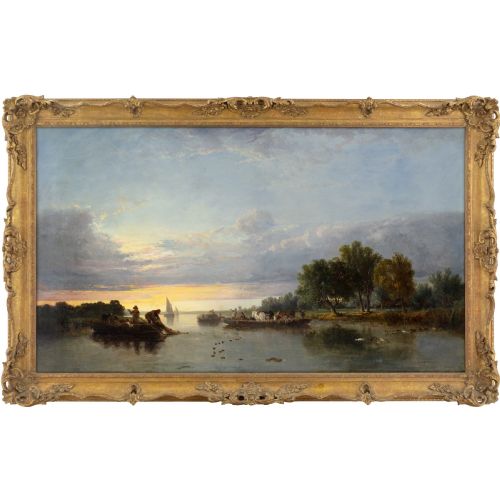
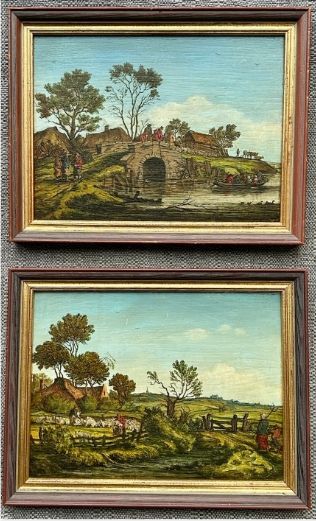
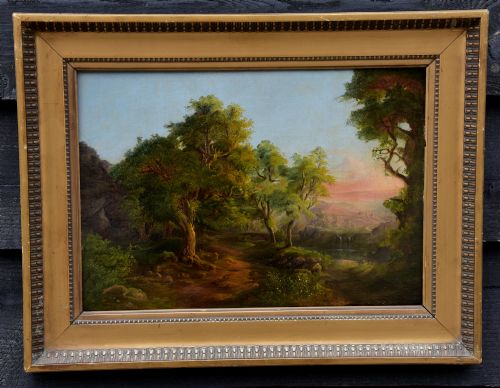
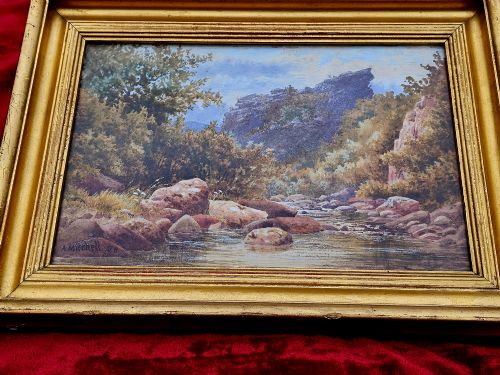
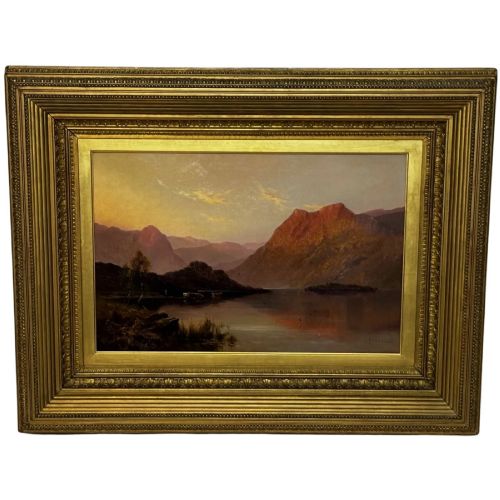
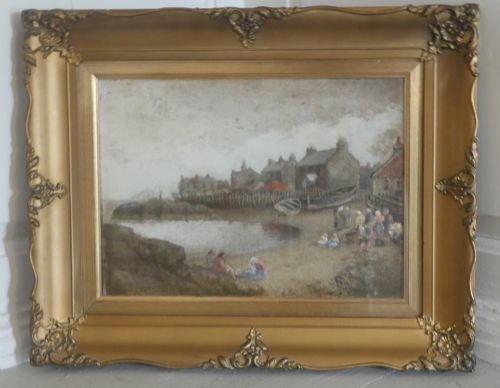
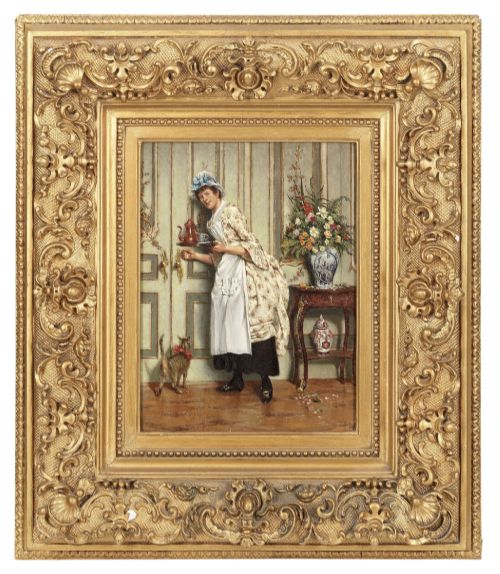
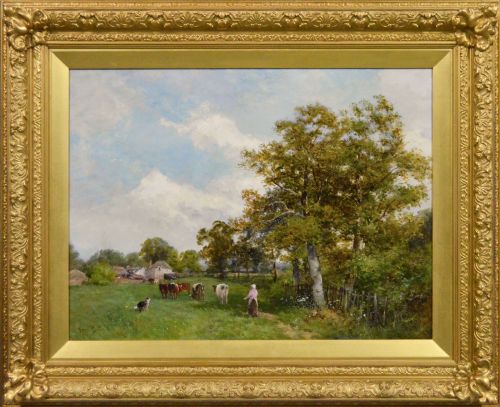
A 19th century gilded frame picture brings together oil paintings, watercolours, silhouettes, and mirrors enclosed within period surrounds. The selection on this page leans heavily toward Victorian landscape oil paintings, framed prints, and deep giltwood and gesso housings.
Makers and artists range from named Royal Academy painters to regional British and European schools working in portraiture, pastoral scenes, and genre subjects. These works represent the domestic and formal tastes of the Victorian and Georgian eras, preserved with their original or period-matched frames.
How They Were Made
Frames rely on carved wood, heavy gesso moulding, and applied gold leaf to achieve their characteristic metallic sheen. Canvases, wood panels, paper, and board serve as the primary supports for oil, watercolour, and pastel pigments.
Moulded ornamentation, fluting, and deep hollow profiles define the construction of the picture frames, while the artwork itself employs traditional glazing, varnish layers, and hand-mixed pigments.
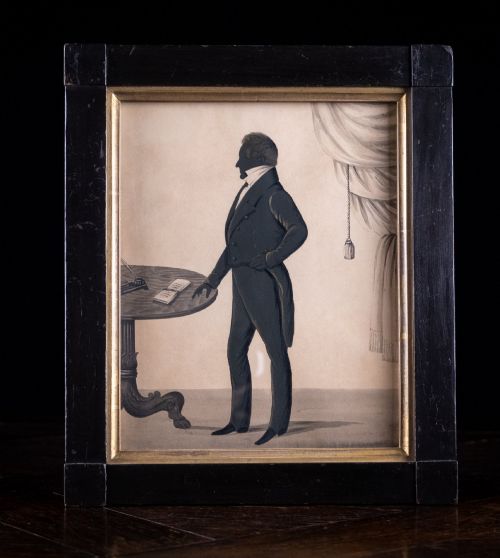
One gentleman's silhouette wears a gaze so stern it likely frightened the local pigeons.
What Varies in Quality
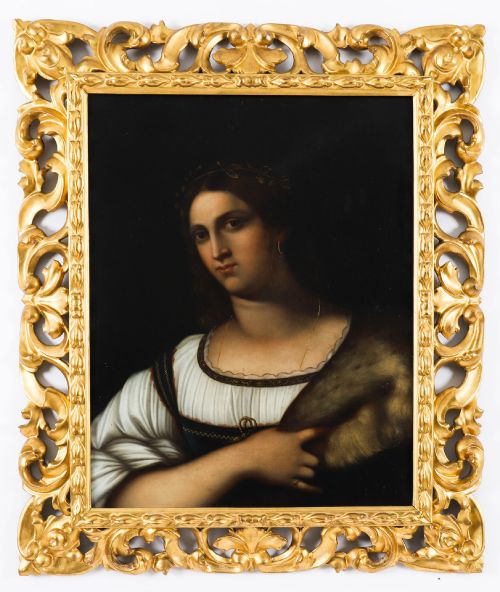
Depth of carving and the crispness of the gesso mouldings separate standard frames from exceptional ones, particularly in deep fluted and Florentine designs. The handling of paint, fidelity of the canvas support, and the presence of artist signatures dictate the standing of the pictorial work.
The harmony between the artwork and its enclosure plays a major role, as period-correct matching enhances both historical integrity and visual presence.
James Elliot·William Manners·Thomas Thomas·Edward Charles Williams·William Shayer·Edward Williams·W Klombeck·A. Mitchell·Alfred Fontville de Breanski Jr·Edward Mills·Stephen Samuel Lewin·David Bates·P. Ruiz·Robert Thorne Waite·Sir John Gilbert·Joseph H Barnes·Henrietta Rae·Robert Watson·John Wilson Carmichael·Edwin Steele·Fred Fitzpatrick·Thomas Gainsborough·Thomas Kent Pelham·T. Bergman·Henry Schouten
The 19th Century Gilded Frame Picture Glossary
- Giltwood
- Wood that has been coated with a thin layer of gold leaf. This technique provides a durable and reflective metallic finish on period frames.
- Gesso
- A plaster-like mixture applied to wood frames to create a smooth surface for carving and gilding. It allows for intricate relief ornamentation.
- Oleograph
- A type of chromolithograph printed on canvas to imitate an oil painting. These appeared frequently in the nineteenth century for popular art reproduction.
- Silhouette
- A portrait profile cut from paper or painted in solid dark tones on a light background. Early examples often feature gilded highlights.
- Overmantle
- A large mirror or picture designed to hang directly above a fireplace mantelpiece. They typically feature wide gilt frames suited to principal reception rooms.
19th Century Gilded Frame Picture: Frequently Asked Questions
Are the frames original to the paintings?
Many pieces retain their original or contemporary period frames, particularly those featuring deep giltwood and gesso housings.
Over the decades, some works have been paired with complementary frames from the same era to match the style of the artwork.
How should I hang a heavy gilt frame?
Due to the dense wood and gesso construction of these pieces, secure wall fixings directly into wall studs or use heavy-duty picture hooks rated for the weight.
Ensuring stable support protects both the structural integrity of the heavy gilt frame and the wall surface.
What is the difference between oil on canvas and oil on board?
Oil on canvas utilises a flexible fabric stretched over a wooden frame, which was standard for larger landscape and portrait works.
Oil on board employs a rigid wooden or composition support, frequently found in smaller studies and regional paintings.
How do I care for antique giltwood?
Dust the carved surfaces gently with a soft, dry brush to prevent accumulation without disturbing the delicate gold leaf layers.
Avoid liquid cleaners and modern chemicals, which can strip the thin metallic leaf and damage the underlying gesso.