

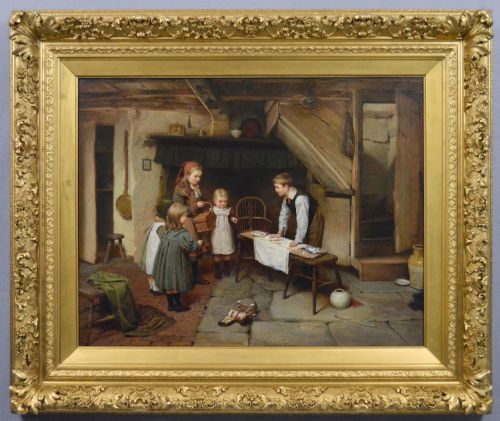


19th Century Genre Picture
A 19th century genre picture captures everyday life through oils and watercolours, offering a direct window into historical domestic scenes and human stories.
19th Century Genre Picture
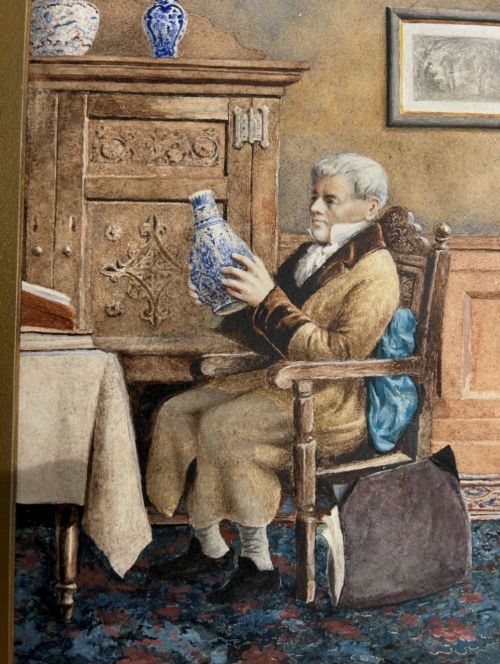
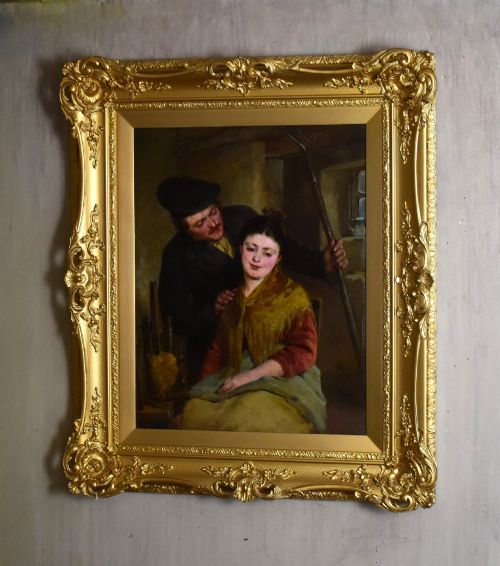
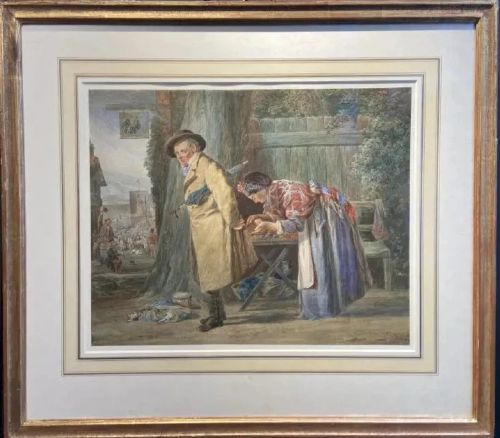
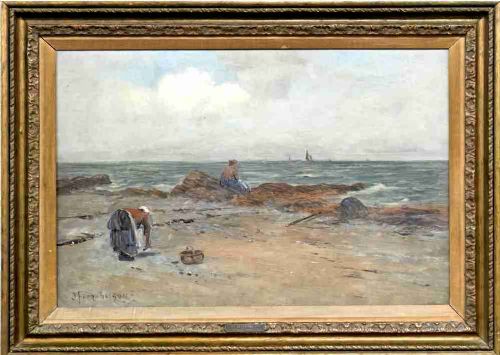
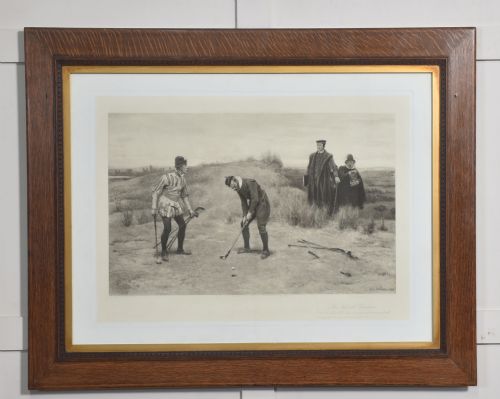
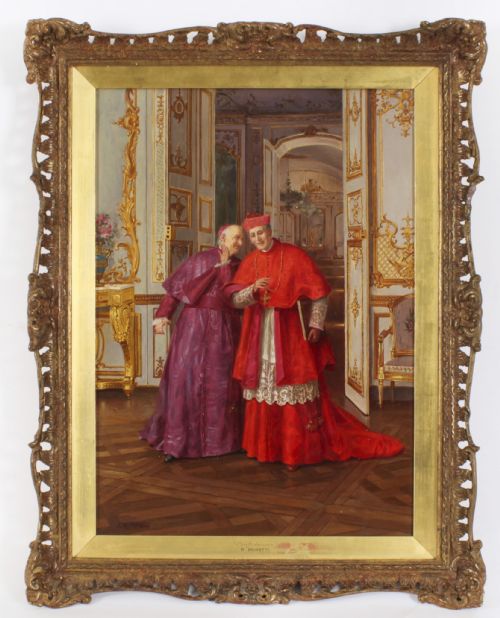
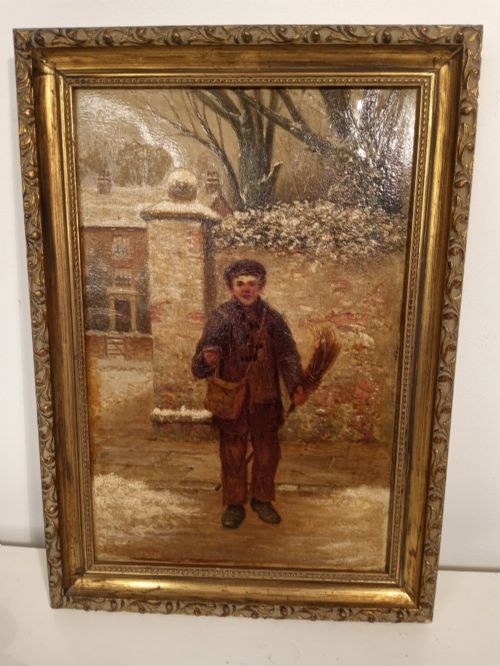
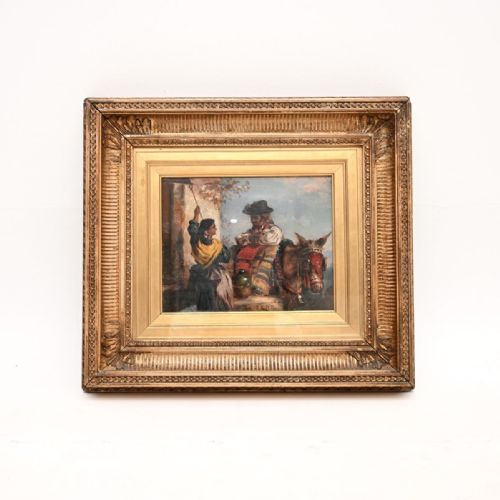
A 19th century genre picture depicts everyday scenes, domestic interiors, and human interactions rather than grand historical or mythological narratives. These works range from watercolours on paper to detailed oil paintings on canvas and panel.
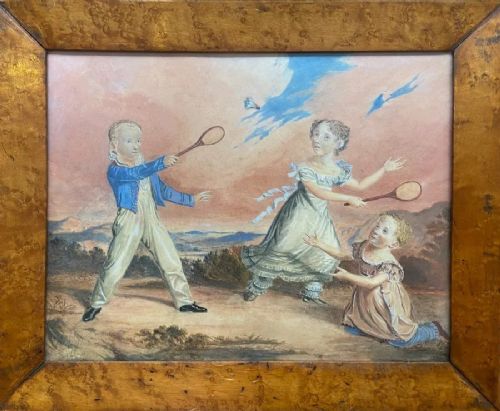
Buyers frequently encounter Victorian examples featuring children, country houses, or quiet domestic moments executed by British and continental European artists. The subjects capture the social character and daily routines of the period.
The category encompasses oil paintings, watercolours, framed engravings, mezzotints, and crystoleoms housed in period frames of giltwood or burr maple. Most pieces date from the Victorian era up to the turn of the twentieth century.
Materials and Technique
Artists painted primarily in oils on canvas or wood panel, or applied watercolour pigments to paper, utilising skilled brushwork to render fabrics, expressions, and interior light. Engravings and mezzotints offered printed interpretations of popular compositions.
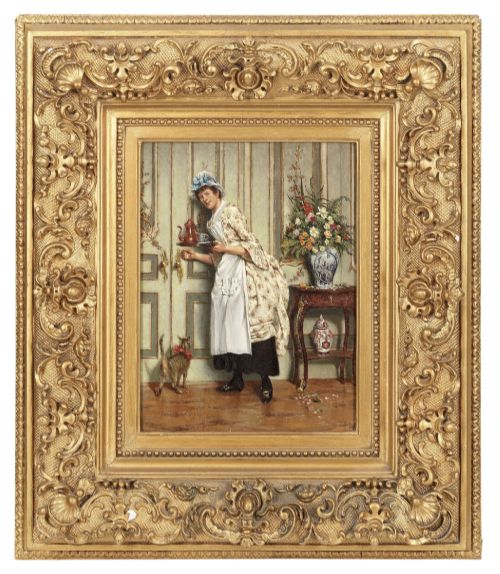
Frames are integral to the presentation, incorporating carved gesso, gold leaf, and giltwood or featuring burr maple veneers that complement the tones of the artwork.
Represented styles include Victorian genre painting, academic realism, and the nineteenth-century French school.
Variations in Quality
Quality rests upon the artist's command of anatomy, facial expression, and spatial depth within the composition, distinguishing accomplished academic works from simpler decorative pieces. The handling of light and texture in fabrics and surfaces separates superior paintings from routine studio output.
The preservation of the original pigment and the integrity of the support, whether canvas, panel, or paper, influence the visual impact. Period frames featuring original giltwood or gesso enrich the overall survival of the piece.
Stephen Samuel Lewin·Howard Helmick·Joseph Farquharson·Thomas Kent Pelham·Charles Burton Barber
The 19th Century Genre Picture Glossary
- Genre Painting
- Depiction of aspects of everyday life by portraying ordinary people engaged in common activities. These works focus on domestic scenes, street life, and social narratives rather than formal portraiture.
- Mezzotint
- A printmaking process of the drypoint method, allowing smooth gradations of tone and dark fields. It was frequently used in the period to reproduce popular paintings.
- Crystoleom
- A photograph applied to convex glass, hand-painted in oil or watercolour, and made transparent. This technique produced a luminous portrait or genre scene popular in the Victorian era.
- Gesso
- A plaster mix applied as a surface for painting or moulded to form decorative relief on frames. It provided a smooth base for subsequent gilding with gold leaf.
- Giltwood
- Wood carved and covered with leaf gold or a metallic substitute. It was the standard material for framing fine nineteenth-century artworks.
19th Century Genre Picture: Frequently Asked Questions
What subjects appear in these paintings?
These works depict domestic interiors, children playing, country scenes, and quiet moments of daily life. Artists observed ordinary people at home, at work, or engaged in leisure.
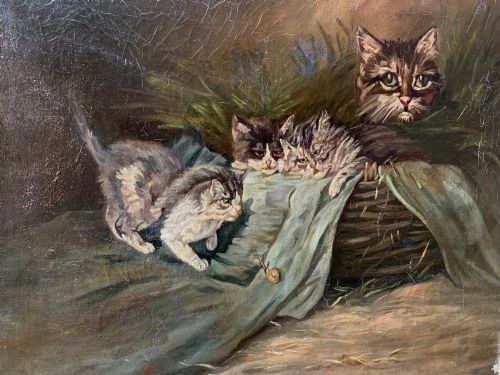
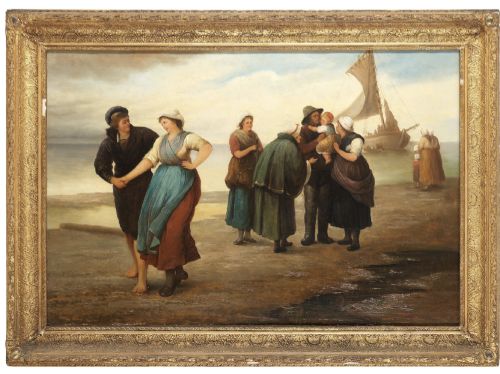
Subjects also include coastal views, animal interactions, and narrative encounters between figures in period attire.
How do I display a genre painting?
Hang the piece away from direct sunlight and damp environments to protect the canvas, paper, and gilt frame. Adequate wall space allows the details of the brushwork and the surrounding frame to be appreciated.
Pairing the artwork with period furnishings enhances the historical context of the room.
Are watercolours as durable as oils?
Watercolours on paper require protection behind glass to prevent fading and damage from moisture. They are sensitive to direct light exposure compared to robust oil paintings on canvas or panel.
Proper framing with acid-free mounts ensures watercolours survive in stable condition.
How are periods identified?
Dating relies upon artist signatures, exhibition records, costume details, and framing styles characteristic of the nineteenth century. Victorian pieces often reflect mid-to-late nineteenth-century aesthetic preferences.
Materials such as burr maple frames and specific printing techniques like mezzotints offer further chronological clues.