





19th Century Games Board
A 19th century games board brings tactile parlour pastimes into a room, offering inlaid wood and folding boxes designed for social play.
19th Century Games Board
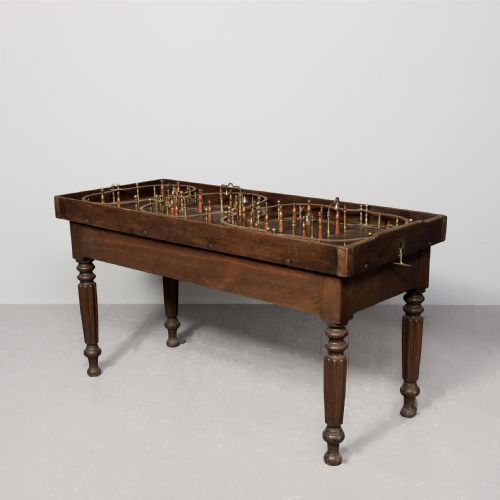
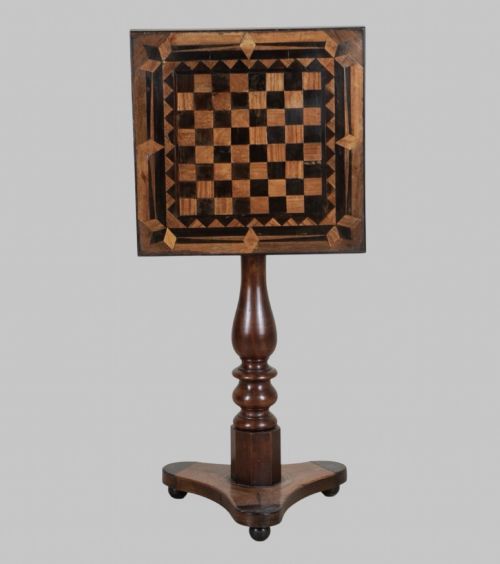
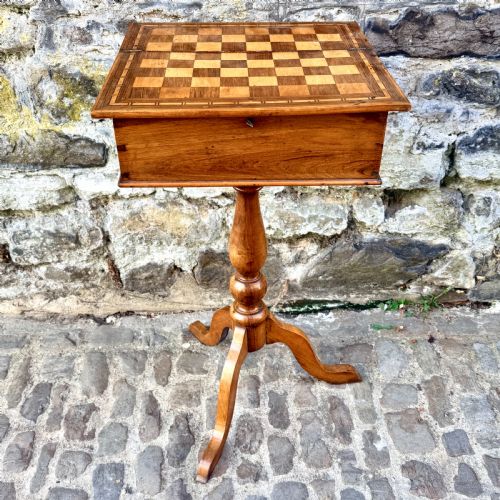
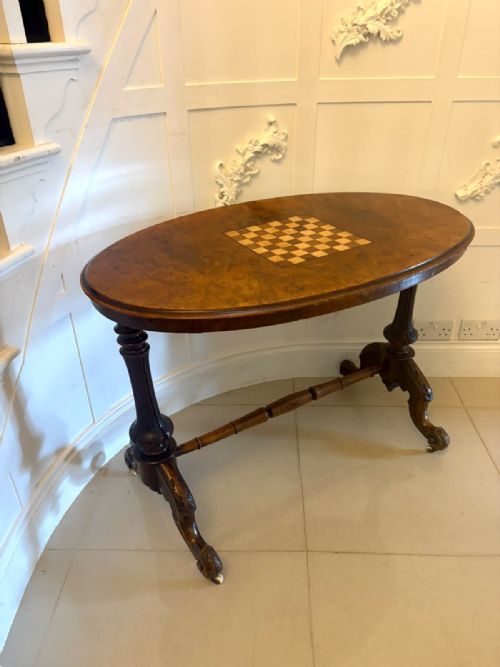
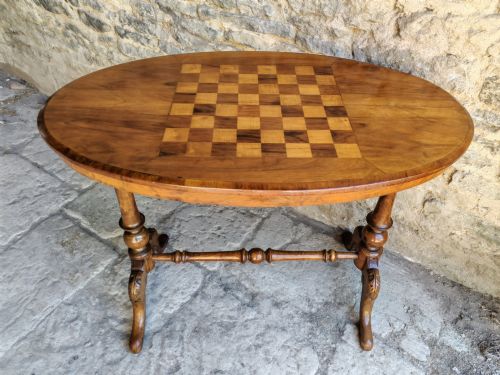
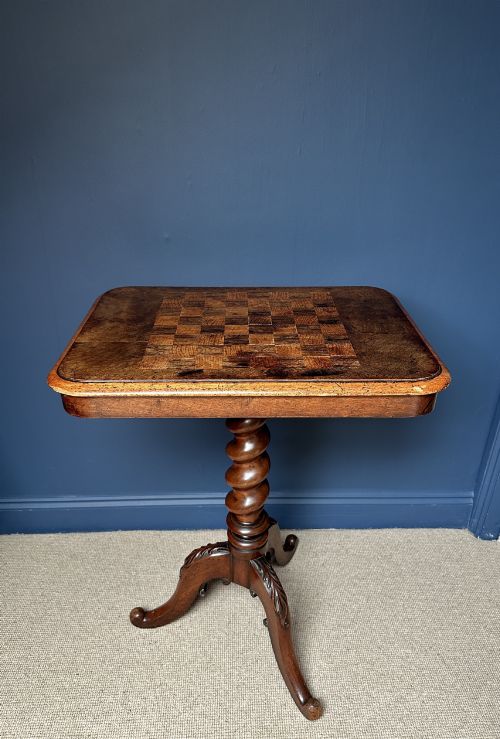
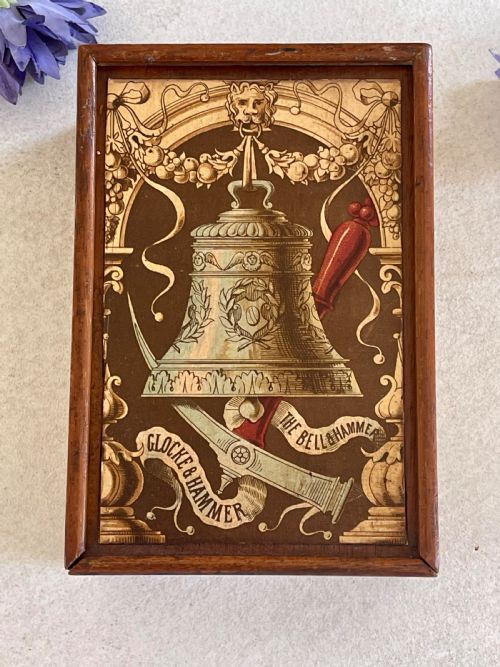
A 19th century games board encompasses folding boxes, occasional tables with inlaid tops, and dedicated boards designed for chess, backgammon, cribbage, and solitaire. These pieces range from simple wooden boards and folk art to elaborate freestanding tables and compendiums housing multiple pastimes.
Buyers encountering this phrase most frequently meet Victorian and Regency examples, particularly occasional tables and folding boxes that double as decorative furniture when not in use. Many incorporate dual-purpose surfaces, pairing a chess top with an internal backgammon layout or sewing storage.
How They Were Made
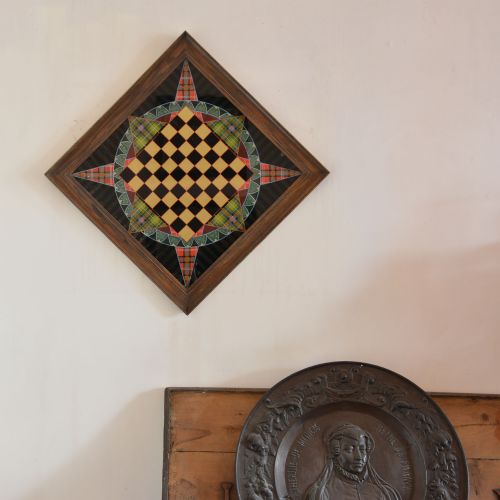
Cabinetmakers constructed these pieces using dense hardwoods such as mahogany, walnut, rosewood, and oak, often applying contrasting veneers like boxwood and sycamore for inlay work. Specialised surface decoration included intricate penwork and reverse glass painting.
Components extended beyond wood to incorporate bone, mother-of-pearl, and brass fittings for hinges, scoreboards, and game sets. Construction methods prioritized both the durability of playing surfaces and the refined joinery expected of parlour furniture.
Prisoners of war carved intricate domino sets from stray cattle bone, turning hours of captivity into delicate gaming pieces.
What Varies in Quality
Quality rests in the precision of the inlay work, the choice of timber grain, and the integrity of structural joints across folding mechanisms and table pedestals. Finer examples display meticulous geometric alignment in contrasting woods rather than surface painted substitutes.
The sophistication of the internal mechanisms, such as removable boards, fitted compartments, and specialised scoreboards, distinguishes standard utility pieces from high workshop productions. Completeness of original components, from dominoes to cribbage pegs, also shapes the standard of a survival.
Gillows·Thurston and Co·George Merrifield·Cox and Yeman
The 19th Century Games Board Glossary
- Penwork
- A decorative technique using fine ink lines to draw motifs, strapwork, or borders onto wood surfaces before varnishing.
- Cribbage board
- A narrow board with drilled tracks and metal pegs used to score points during card games.
- Compendium
- A fitted box containing the equipment and boards for multiple different parlour games in one portable unit.
- Solitaire
- A single-player board game played by jumping marbles or pegs over one another to clear the board.
- Backgammon
- A two-player board game involving dice and counters, frequently found integrated into the interior of folding chess tables.
19th Century Games Board: Frequently Asked Questions
How were 19th century games boards used?
These pieces served as both functional equipment for evening parlour entertainment and decorative items of furniture within the home.
Many doubled as occasional tables, sewing boxes, or portable compendiums stored away when guests departed.
What games do these boards accommodate?
Surviving examples primarily support chess, backgammon, cribbage, and solitaire, while larger formats handle billiards and snooker.
Multipurpose tables frequently combine chess tops with internal backgammon layouts or sliding scoreboards.
How do I identify a Regency period board?
Regency pieces often display distinct penwork decoration, rosewood timbers, and neoclassical silhouettes associated with the early decades of the century.
Cabinet work from this era emphasises contrasting light and dark wood inlays and delicate occasional table designs.
What materials are common in Victorian boards?
Victorian examples frequently utilise burr walnut, mahogany, and rosewood, often enhanced with mother-of-pearl or inlaid boxwood details.
Scoreboards and specialised sets from this period also incorporate brass fixtures, glass panels, and turned bone elements.
Are game pieces usually included?
Some listings preserve original sets of dominoes, carved bone pieces, or cribbage pegs, while others consist solely of the board or table.
Compositions vary from complete compendiums with instructions to standalone boards designed for everyday play.