





Antique Folding Games Board
An antique folding games board offers a clever way to keep pastimes close at hand.

Antique Folding Games Board
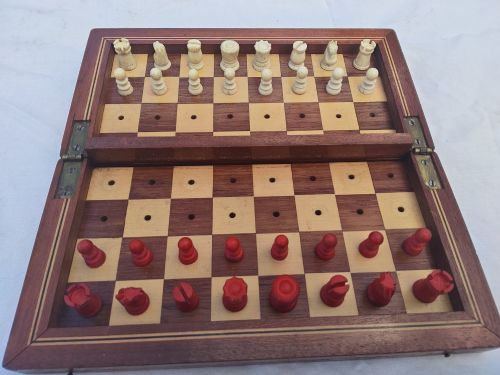
An antique folding games board provides a surface for pursuits such as chess, backgammon, and bagatelle, folding neatly for storage or travel. These pieces emerge primarily from the nineteenth century, the Victorian era, and the Edwardian period, reflecting the domestic leisure habits of past generations.
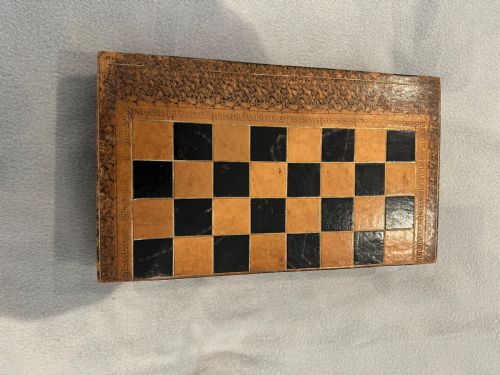
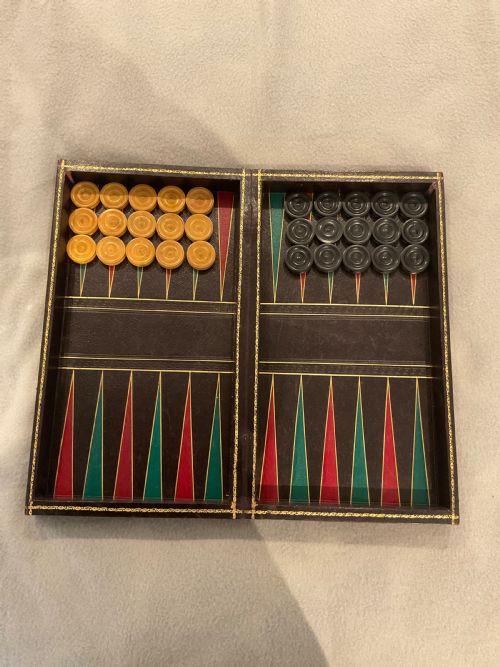
The most common formats on this page include leather-bound faux book boards, wooden folding boards, and comprehensive compendium boxes with backgammon interiors. Materials range from mahogany and burr walnut to boxwood, bone, and mother-of-pearl.
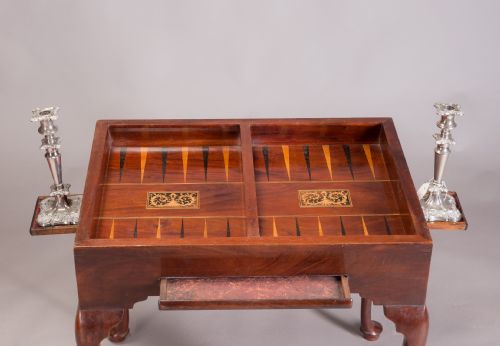
Buyers also encounter travelling sets housed in compact leather cases, alongside traditional English tables and Ottoman Revival designs. Each form serves the dual purpose of utility and decorative charm in a modern room.
Materials and construction
Carpenters utilised timber such as mahogany and burr walnut to build the primary structures of these boards and boxes, employing sturdy hinges to allow smooth folding. Marquetry and inlaid woods delineate the playing squares with precision.
Book-style boards wrap rigid cores in leather, often enhanced with gold leaf tooling to mimic the appearance of a library volume. Interior compartments utilise contrasting light and dark woods, bone, or mother-of-pearl for chess pieces and draughts markers.
Antique Folding Games Board Retail Price Guide 2026
Typical asking prices for folding games board among the pieces listed under this phrase on Sellingantiques today, from the lower quarter to the upper quarter. They describe what is for sale here now, not the wider market.
Listings feature items from the nineteenth century, Victorian era, Edwardian period, and up to 1930, utilising mahogany, burr walnut, and leather.
The markers of quality
Quality rests in the precision of the woodwork and the crispness of any leather tooling or gilt work. Finer examples display harmonious grain patterns in timbers like burr walnut and tight, even parquetry.
The integrity of the folding mechanism and hinges dictates how well a piece survives daily use. Complete sets retaining their original matching bone or wooden pieces command greater attention from collectors than modified examples.
Whittington Pattern
The Antique Folding Games Board Glossary
- Compendium
- A multi-game box containing equipment for several pastimes. These often feature lift-out trays and fitted interiors for chess, backgammon, and draughts.
- Staunton
- A standard style of chess piece design introduced in the mid-nineteenth century. Its pieces feature distinct, highly recognisable forms that remain the tournament standard today.
- Bagatelle
- A cue sport played on a board with holes, similar to billiards and pinball. Antique versions often take the form of folding wooden tables.
- Faux book
- A container disguised to look like a leather-bound volume for a bookshelf. Victorian makers frequently used this format to conceal games boards in studies and libraries.
- Parquetry
- A mosaic of wood geometric patterns used to decorate surfaces. On these boards, it creates the alternating dark and light playing squares.
Antique Folding Games Board: Frequently Asked Questions
How were folding games boards used?
These boards served families and travellers seeking entertainment in the home, on trains, or during long journeys.
They allowed players to pack away pieces securely inside the folded board or box when play concluded.
Are the chess pieces usually included?
Many listings include matching sets of chess pieces, bone draughts, or backgammon counters housed within the board or box.
Some boards appear by themselves, so checking individual descriptions confirms whether the playing pieces accompany the board.
How do I care for leather-bound boards?
Leather-bound faux book boards benefit from gentle dusting and protection from direct sunlight and excessive dryness.
Keeping them closed when not in use helps protect the interior playing surfaces and gold leaf tooling from wear.
What periods do these boards date from?
The pieces seen here span the nineteenth and early twentieth centuries, including Victorian, Edwardian, and circa 1850 to 1930 examples.
Stylistic cues, construction methods, and materials help indicate the specific era of manufacture.