




19th Century Fretwork Mirror
These 19th century fretwork mirror pieces bring pierced wooden frames and historical revival design to a wall, offering rich grain and carved silhouettes.
19th Century Fretwork Mirror
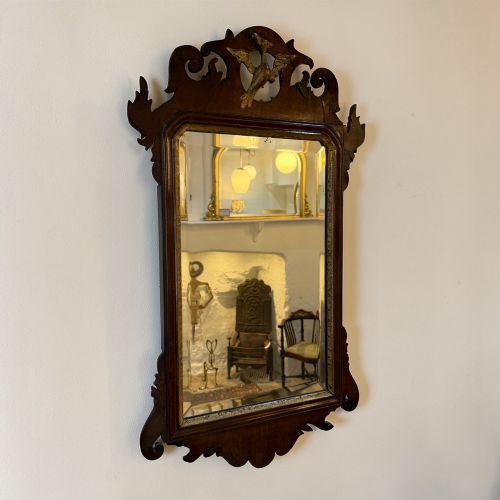
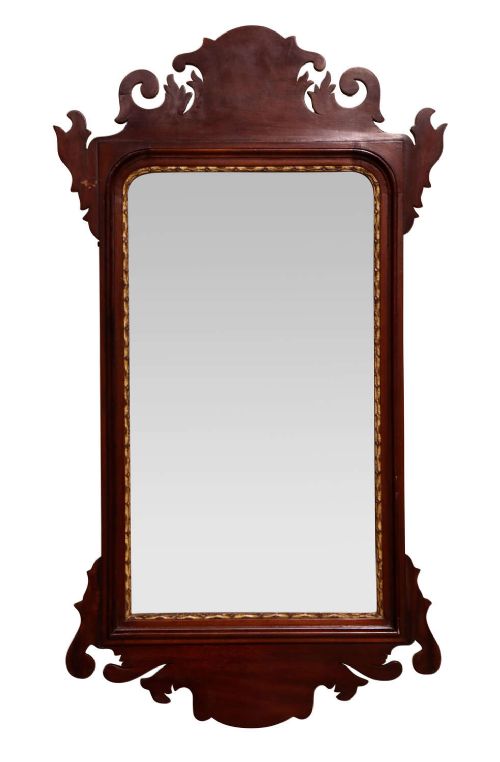
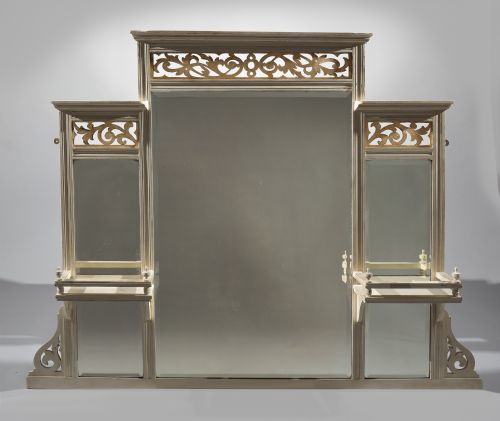
A 19th century fretwork mirror is a wall or overmantel hanging defined by its pierced wooden frame, drawing heavily on earlier revival styles. The pieces found here span the Victorian era, reaching from the middle decades through to 1900.
Mahogany and walnut form the core of the selection, accompanied by examples in yew wood, painted finishes, and giltwood. Most pieces arrive as wall mirrors or overmantels, frequently channelling Chippendale and George II designs through pierced scrollwork and classical motifs.
The dominant aesthetic looks back to the eighteenth century, resulting in revival interpretations that utilise intricate ear pieces and scroll-cut borders. Buyers encounter both compact wall mirrors and larger overmantel proportions designed for principal rooms.
What varies in quality
The precision and depth of the pierced fretwork set individual examples apart, as tighter scrolls and sharper interior angles demand greater skill from the maker. Simpler, broader fret patterns provide less intricate shadow play across the wall.
The choice of timber grain heavily influences the visual weight of the piece, with richly figured burr walnut or carefully selected mahogany offering superior depth compared to plain surfaces. Gilding technique also varies, from flat painted gold to burnished leaf applied over gesso grounds.
Listings feature mahogany, walnut, yew wood, and giltwood pieces spanning the nineteenth century, with strong representation from Chippendale and George II revival styles.
The 19th Century Fretwork Mirror Glossary
- Fretwork
- Openwork ornamentation cut from a thin board using a fretsaw. This technique creates intricate geometric or scroll patterns that define the silhouette of the frame.
- Parcel-gilt
- Partially gilded woodwork where gold leaf is applied only to specific carved details. This leaves the natural timber grain visible across the rest of the surface.
- Overmantel mirror
- A large horizontal mirror designed to hang specifically above a fireplace mantel. These pieces often feature extended frames to fill the wall space below the ceiling.
- Pier-glass
- A tall, narrow mirror designed to hang on the section of wall between windows. These mirrors reflect additional light into darker Victorian rooms.
19th Century Fretwork Mirror: Frequently Asked Questions
Where should I hang a fretwork mirror?
These mirrors suit principal reception rooms, hallways, or above a fireplace where the pierced wooden frame can catch the light against a contrasting wall.
Because many examples rely on delicate scrollwork at the edges, position them away from high-traffic corridors where the frame might suffer accidental knocks.
How do I identify a revival piece?
Revival pieces from the Victorian era combine eighteenth-century Chippendale or George II motifs with nineteenth-century timber preparation and construction methods.
Look closely at the saw marks on the reverse of the fretwork and the composition of the timber backing to confirm the nineteenth-century date.
What is the difference between wall and overmantel mirrors?
Wall mirrors are generally vertical or square formats designed for general room placement, whereas overmantel mirrors offer a wide landscape orientation.
Overmantel versions were built to span the physical width of a fireplace breast, dominating the wall above the mantelpiece.
How do I care for giltwood and mahogany frames?
Dust the pierced fretwork gently with a soft, dry brush to prevent dirt from lodging in the intricate carved crevices and corners.
Avoid liquid cleaners entirely, as moisture can damage old gilding and discolour the exposed timber grain on both mahogany and walnut surfaces.