




19th Century French Secretaire
A 19th century french secretaire brings concealed writing surfaces and refined cabinetry into a room, offering practical elegance for daily correspondence.
19th Century French Secretaire
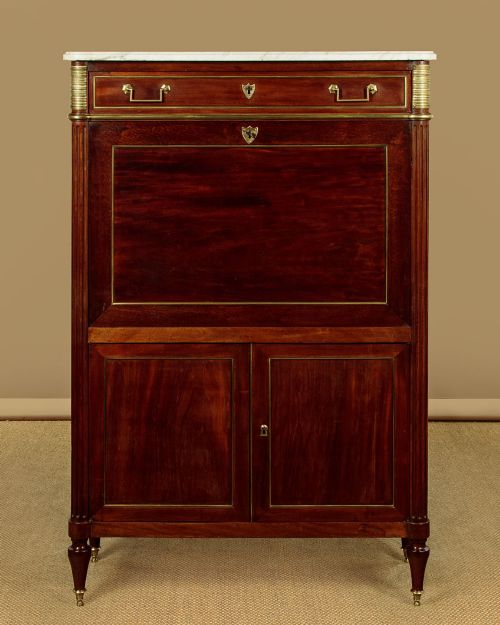
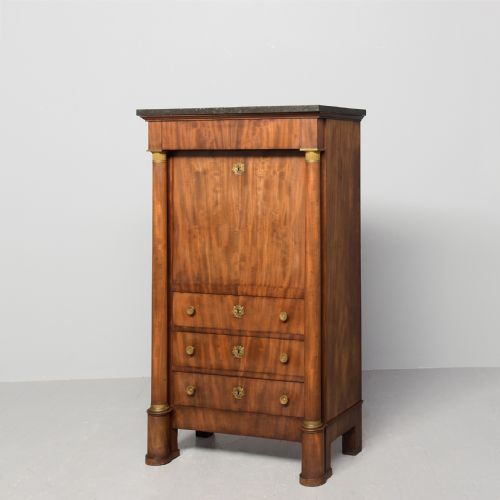
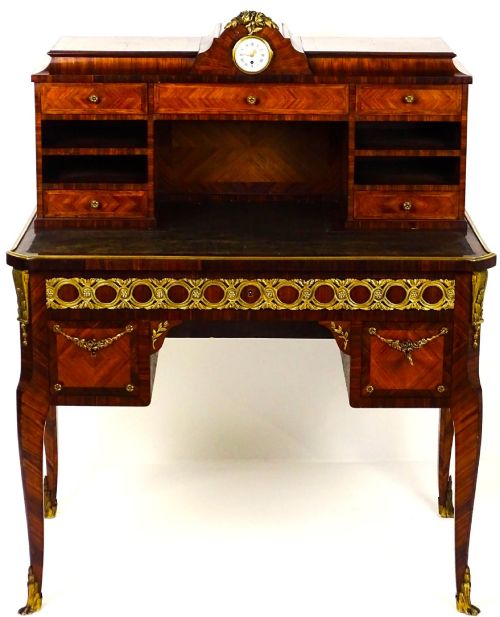
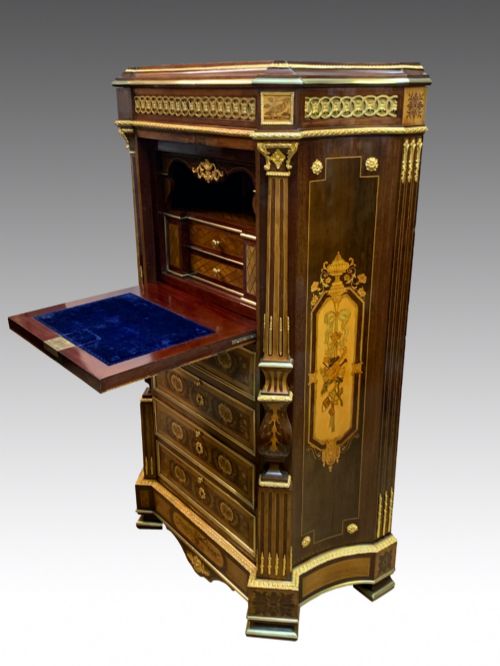
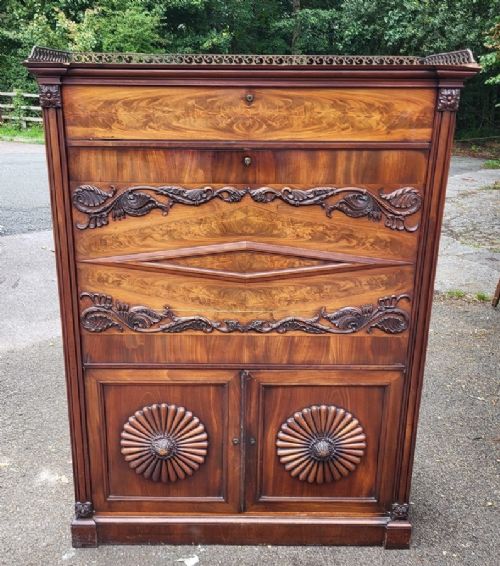
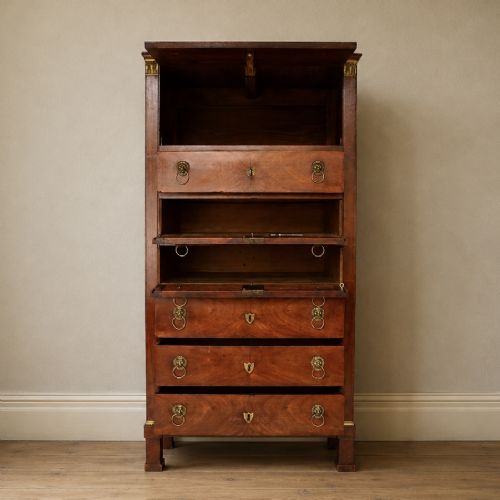
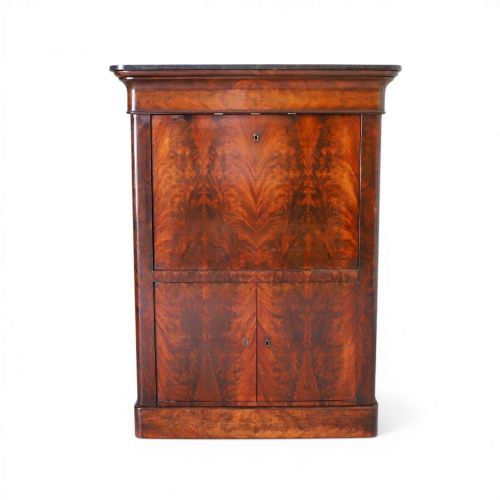
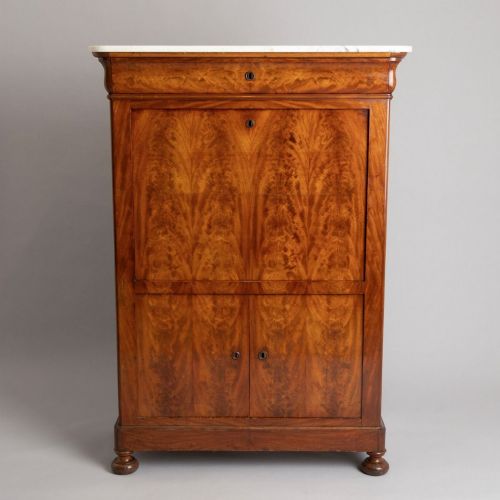
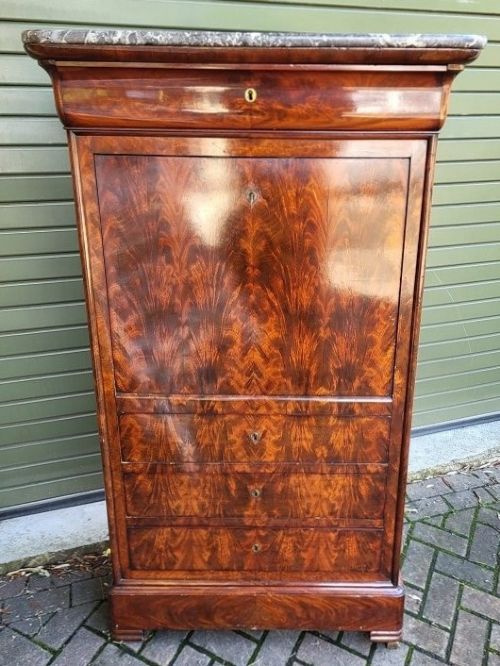
A 19th century french secretaire appears primarily as a tall upright cabinet known as a secretaire abattant, featuring a drop-down writing flap that conceals internal fitted compartments and secret drawers. Buyers seeking these pieces encounter variants ranging from tall chests of drawers and upright writing cabinets to cylinder desks and bon-heur du jour writing tables.
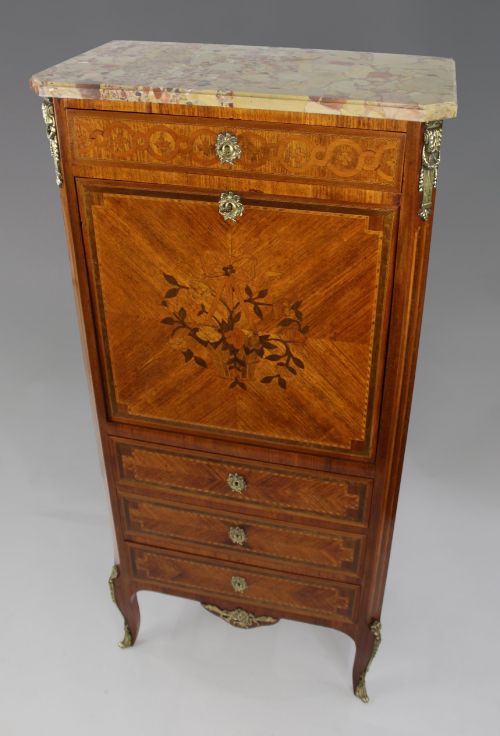
The styles span the formal symmetry of the French Empire and Restoration periods through to the elaborate curves of Louis XV and Louis XVI revivals, alongside Rococo Revival marquetry. Many examples incorporate a contrasting marble top, anchoring the proportions of flame mahogany, walnut, kingwood, or rosewood carcasses.
Cabinet forms also extend to specialised pieces such as semanier chests and pharmacy cabinets adapted with writing drop fronts, demonstrating the versatility of nineteenth-century French cabinet making.
Materials and Construction Techniques
Construction relies on solid timber frames veneered with rich decorative woods including flame mahogany, burr walnut, kingwood, rosewood, and tulipwood, often arranged in geometric parquetry or floral marquetry patterns. Carcasses are frequently fitted with heavy slabs of marble on the upper surface, requiring sturdy structural support within the frame.
Metal ornamentation plays a defining structural and decorative role, utilising cast brass and ormolu mounts, gilt bronze details, and occasional mother-of-pearl inlay to accent corners, key escutcheons, and structural borders. Lacquered decoupage and Vernis Martin finishes appear on specialised decorative cabinets, adding layered pictorial depth to the exterior surfaces.
Listings feature woods such as flame mahogany, kingwood, rosewood, and burr walnut, frequently paired with marble tops and brass mounts.
Evaluating Quality and Craftsmanship
Quality rests upon the precision of the cabinet work, particularly in the alignment of drop-down writing flaps, the seamless matching of veneer grains across drawer fronts, and the integrity of internal secret compartments. Finer examples display meticulous hand-chased ormolu mounts and crisply cut marquetry rather than stamped or cast secondary replacements.
The choice and thickness of primary veneers, the weight and marble selection of the upper slab, and the presence of signed maker furniture plaques distinguish standard production pieces from workshop masterpieces.
Paul Sormani·Maison Krieger
The 19th Century French Secretaire Glossary
- Secretaire abattant
- A tall writing cabinet featuring a vertical drop-down flap that serves as a desk surface. This form conceals pigeonholes and small drawers behind the main panel.
- Ormolu
- Gilt bronze ornamentation applied to furniture mounts and feet. The technique involves treating bronze with a gold amalgam to achieve a bright metallic finish.
- Marquetry
- Decorative veneer patterns assembled from various woods, ivories, or metals to create pictorial designs. Artisans cut thin sheets of material to fit precisely within a background veneer.
- Semanier
- A tall chest of seven drawers designed originally for each day of the week. In these selections, the form occasionally incorporates an integrated writing drop front.
- Vernis Martin
- A specialised European lacquer finish developed to imitate Japanese and Chinese wares. It provides a glossy, translucent surface layer over decorative painted scenes.
19th Century French Secretaire: Frequently Asked Questions
What is a secretaire abattant?
A secretaire abattant is an upright cabinet designed with a hinged writing flap that pulls down toward the user. Inside, small compartments and secret drawers provide storage for writing materials.
The exterior presents the appearance of a standard tall chest or cabinet until the primary writing surface is opened for use.
How do I identify French Empire style?
French Empire pieces emphasise architectural symmetry, dark mahogany surfaces, and heavy gilt bronze or ormolu mounts. The lines remain straight and formal, often drawing inspiration from classical antiquity.
Cabinet makers working in this style during the nineteenth century favored restrained proportions over the flowing curves seen in later revivals.
Where were marble tops used?
Marble slabs sit directly on the uppermost surface of many upright writing cabinets and chests. This heavy stone added stability to the tall carcass while providing a durable, heat-resistant top.
White, grey, and variegated marble varieties appear across nineteenth-century examples, frequently edged with moulded wood or cast metal borders.
How should I care for a veneer surface?
Veneered furniture requires protection from direct sunlight and extreme humidity fluctuations to prevent wood movement and lifting. Regular dusting with a dry, soft cloth preserves the original polish.
Avoid placing damp items directly onto the wood or marble surfaces, and use specialist wax sparingly to maintain the sheen of the timber.