


19th Century Folk Furniture
19th century folk furniture brings honest utility and vernacular charm into a room, offering sturdy pine benches, painted cupboards and rustic seating shaped by regional hands.
19th Century Folk Furniture
When searching for 19th century folk furniture, buyers encounter domestic objects made for everyday rural use rather than urban drawing rooms. These pieces originate from regional traditions across Scandinavia, Central Europe, the Alps and the British Isles.
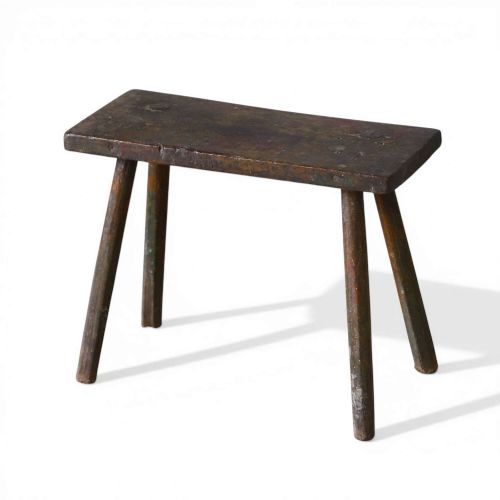
The selection on this page relies heavily on painted pine storage and seating. Benches, cupboards, side chairs and milking stools form the backbone of the inventory, often retaining their original painted finishes.
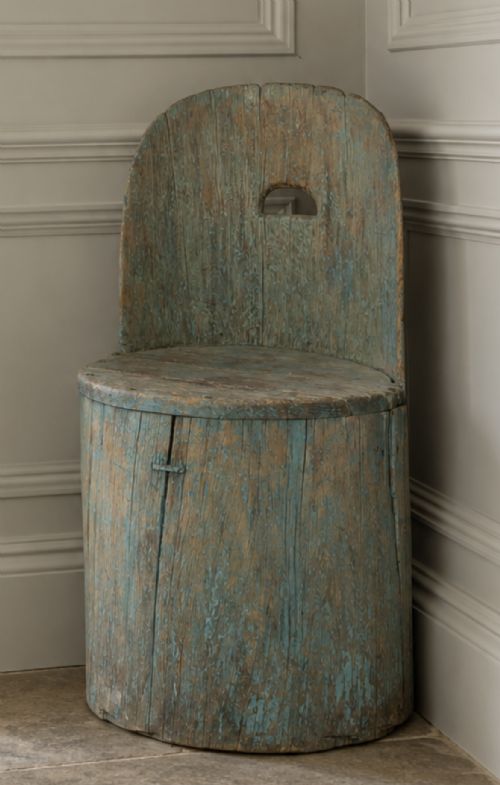
Makers in rural workshops built these items to serve specific household needs. Dugout chairs, coffer boxes and kitchen dressers reflect local materials and utilitarian designs handed down through generations.
Materials and construction methods
Pine and assorted local hardwoods provide the structural framework for these items. Carpenters utilised solid timber boards, assembling panels with pegged joints, dovetails and simple iron or brass fixings.
Surfaces frequently display layers of original paint in cream, green or earth tones. Applied decoration and hand-carved details appear on cupboards and chairs, reflecting regional folk art traditions.
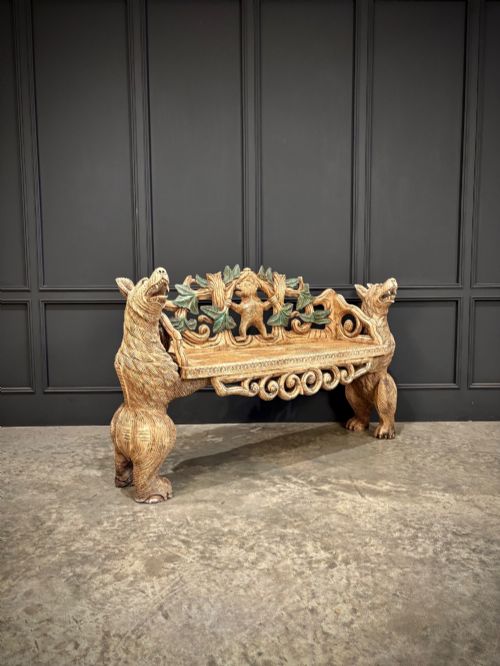
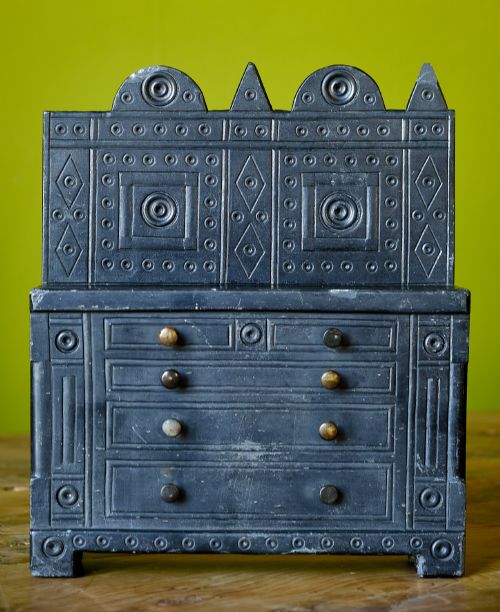
Black Forest bears and carved slate miniature chests prove that rural makers enjoyed crafting whimsy alongside milking stools.
Judging quality in folk pieces
Quality rests upon the survival of the original surface and the integrity of the timber. Pieces retaining undisturbed historic paintwork stand apart from those stripped or heavily repainted later.
Proportion and structural balance separate standard utility items from superior vernacular examples. Well-balanced forms with honest wear demonstrate the skill of the regional maker.
The 19th Century Folk Furniture Glossary
- Settle
- A wooden bench with high back and solid arms designed to block drafts in farmhouses. These pieces often incorporate a box seat for storage beneath.
- Coffer
- A large heavy box with a hinged lid used for storing linens or dry goods. They frequently feature painted panels or dome tops in regional styles.
- Milking stool
- A low, three-legged stool built for dairy work. Their simple peg-leg construction allowed stability on uneven farm floors.
- Jogltisch
- A traditional table originating from Alpine regions. These tables typically feature pegged wooden frames and robust pine tops.
- Súgán chair
- A traditional Irish seating form utilising a woven straw or hay cord seat. The frames are commonly constructed from ash or other local hardwoods.
19th Century Folk Furniture: Frequently Asked Questions
What defines 19th century folk furniture?
These items are domestic furnishings made in rural communities by local carpenters rather than large urban factories. They prioritise practical utility and regional aesthetic traditions.
Materials are typically sourced locally, with pine and mixed hardwoods dominating the construction. Painted surfaces and simple carved motifs distinguish them from formal period antiques.
How do I care for painted pine furniture?
Keep painted pieces away from direct sunlight and extreme humidity fluctuations to protect the historic surface. Dust gently with a dry cloth and avoid harsh chemical cleaners.
Allow the wood to breathe naturally without applying modern synthetic polishes. Gentle maintenance preserves the original pigment and patina.
Where were these pieces made?
Rural workshops across Sweden, Alpine regions, Hungary, Eastern Europe and Ireland produced this furniture. Each geographical area developed distinct forms and colour palettes.
Scandinavian pieces often display pale paintwork and clean lines, while Central European items tend to feature richer pigments and decorative motifs.
How can I tell original paint from later decoration?
Original paint exhibits natural craquelure, consistent wear patterns and historic pigment layers beneath the top surface. Modern repainting often feels flat or lacks the depth of accumulated age.
Examine corners and underside surfaces where handling wear naturally occurs. Consistent oxidation across both the wood and the paint layer indicates age.