
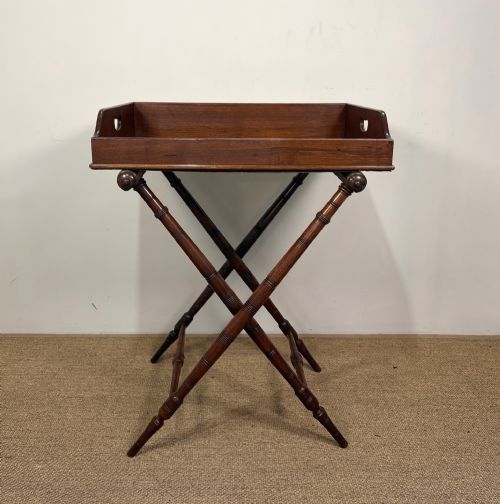


19th Century Folding Tray
These 19th century folding tray tables combine portable service with rigid stands, offering a practical surface that packs flat when space matters.
19th Century Folding Tray
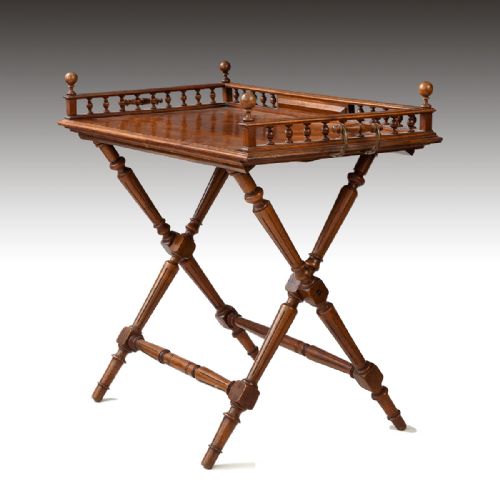
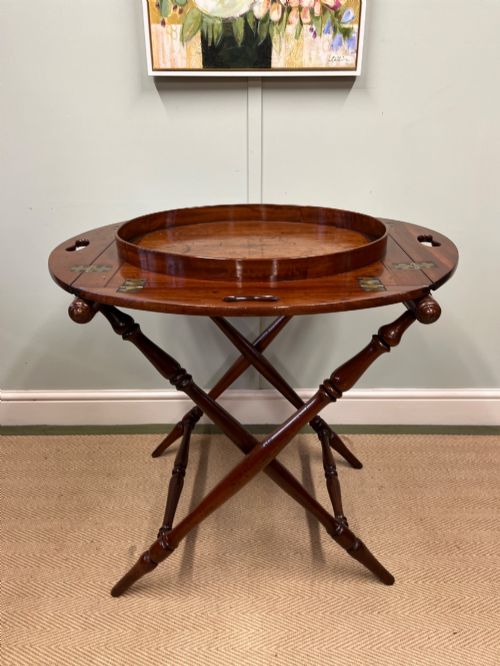
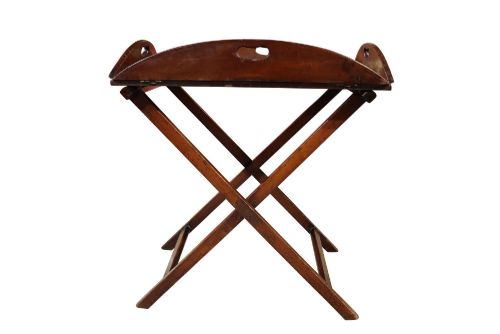
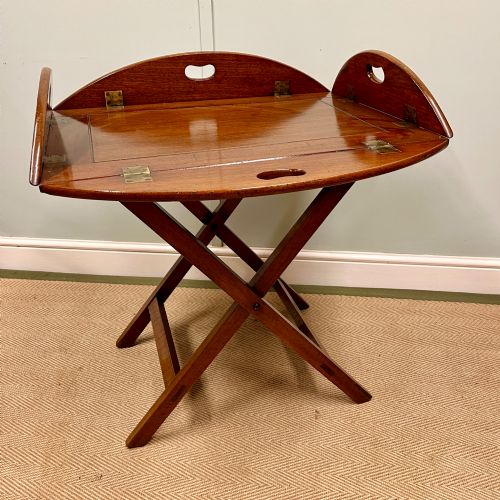
A 19th century folding tray most often takes the form of a butler's tray resting on a folding X-frame or four-legged stand. These pieces served domestic households by transporting meals or tea and clearing away afterwards without needing a permanent footprint.
Mahogany dominates the selection, accompanied by walnut, oak, and hardwood varieties including Cuban mahogany, rosewood, and Hongmu. Regional examples span English Regency and Victorian workshops alongside Anglo-Indian, Chinese, and Scandinavian country pieces.
Formats range from simple rectangular trays with hinged or cut-out carrying handles to octagonal tables with inset copper or brass surfaces. Stands match the tray's timber or utilise simpler folding mechanisms designed for rapid deployment and storage.
Materials and construction
Cabinetmakers constructed the trays predominantly in solid mahogany, walnut, and oak, frequently selecting Cuban mahogany for its density and rich grain. Selected examples incorporate metal elements such as brass hinges, copper inset tops, or brass carrying handles.
Stands utilise folding wooden frames connected by hinges, webbing, or cross-stretchers that allow the entire structure to collapse flat. Carved details appear on specific walnut and oak iterations, while others rely on clean joinery and turned legs.
One recorded oak tray travelled all the way from Bäckaskog Castle straight into the notebook of a very pleased nineteenth century butler.
Assessing quality
Quality rests upon the selection of timber and the precision of the folding mechanism. Dense Cuban mahogany and heavily figured walnut signify superior material choice compared to standard utility hardwoods.
The integration between tray and stand dictates utility, where tight hinge tolerances and stable X-frame alignment separate refined architectural examples from simpler country furniture.
The 19th Century Folding Tray Glossary
- Butler's tray
- A shallow wooden tray with hinged or fixed sides, designed to lift off a folding stand for serving. These trays often feature pierced hand-grips for easy carriage.
- X-frame
- A folding support structure formed by intersecting timber members that pivot on a central axis. This mechanism allows the base to collapse completely flat.
- Hongmu
- A traditional Chinese term for dense, dark hardwoods used in fine furniture. These timbers exhibit exceptional weight and deep natural colouration.
- Anglo-Indian
- A descriptive term for items produced in India under British rule, combining local hardwood construction with European furniture forms. These pieces frequently feature brass or copper inlay.
- Ragwork painted
- A decorative paint technique applied to wooden surfaces using rags or cloths to create mottled textures. This finish appears on Scandinavian country furniture.
19th Century Folding Tray: Frequently Asked Questions
How were folding trays used originally?
Servants used these trays to carry food and drink from the kitchens to dining rooms or drawing rooms. Once the meal concluded, the tray and its stand were folded and stored out of sight.
The removable tray top also functioned independently for serving directly to seated guests before returning to its folding base.
Can I use a 19th century tray as a coffee table?
Many buyers repurpose these pieces as low coffee tables in modern living spaces. Their proportions and removable tops make them adaptable for holding books and cups.
Ensure the folding stand remains stable and adjust the height if necessary to match surrounding seating.
How do I distinguish Regency trays from Victorian ones?
Early 19th century Regency and William IV pieces often feature dense Cuban mahogany with restrained lines and elegant turned supports. Later Victorian examples frequently introduce heavier carving, Gothic Revival motifs, or darker walnut timbers.
Examine the patination and joint construction to gauge the decade of manufacture within the broader nineteenth century.
Are brass and copper top tables sturdy?
Anglo-Indian and regional tables with metal inset tops provide a durable surface resistant to spills and heat. The metal sheet is typically secured over a solid hardwood substrate.
Maintenance involves occasional gentle cleaning to preserve the natural patina of the copper or brass without stripping its age.