

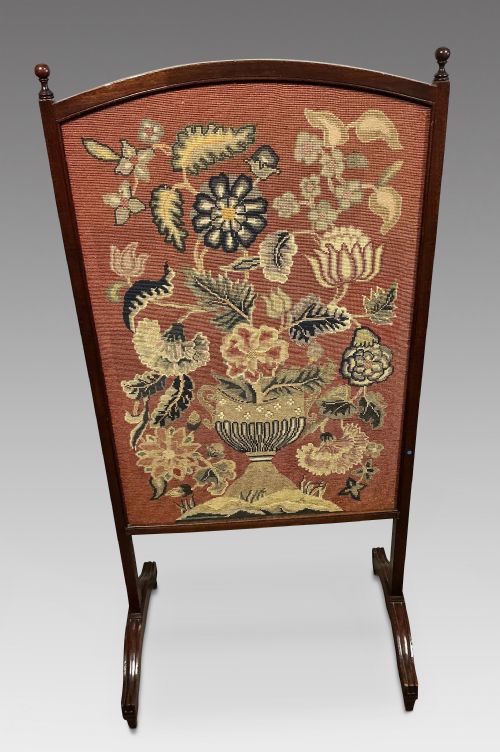


19th Century Fireplace Screen
A 19th century fireplace screen combines practical hearth protection with decorative artistry, offering period charm and warmth to a room.
19th Century Fireplace Screen
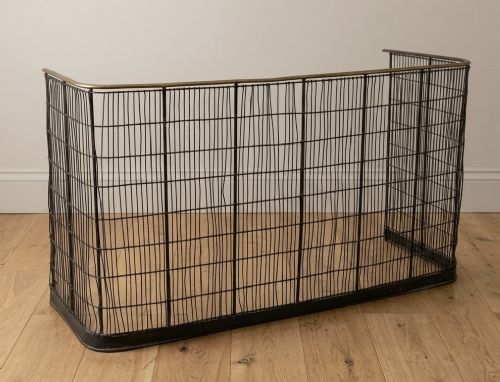
A 19th century fireplace screen serves to shield a room from the intense heat of an open grate while concealing an unlit hearth during warmer months. These pieces range from substantial folding frames and floor-standing panels to slender pole screens designed to be adjusted against radiant heat.
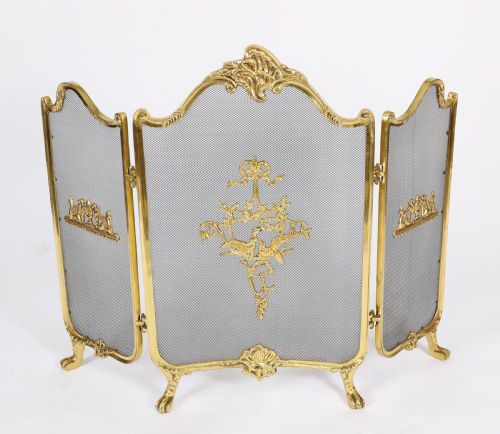
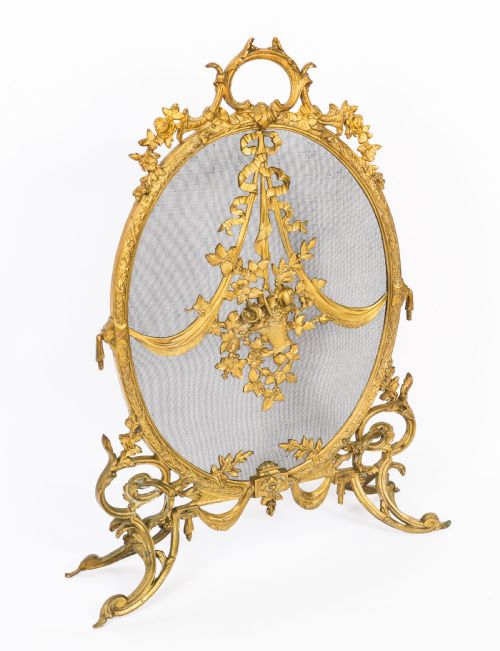
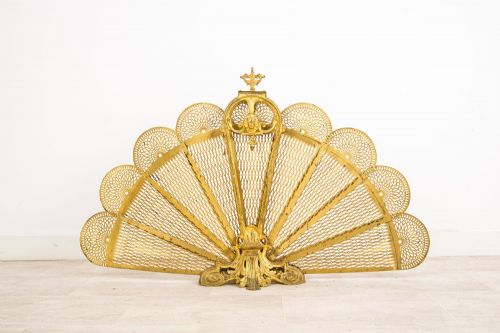
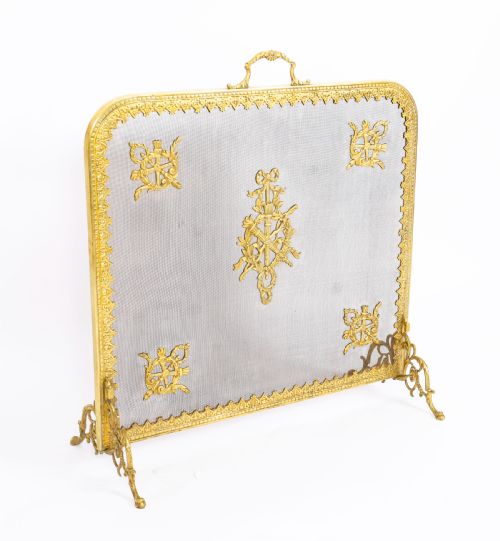
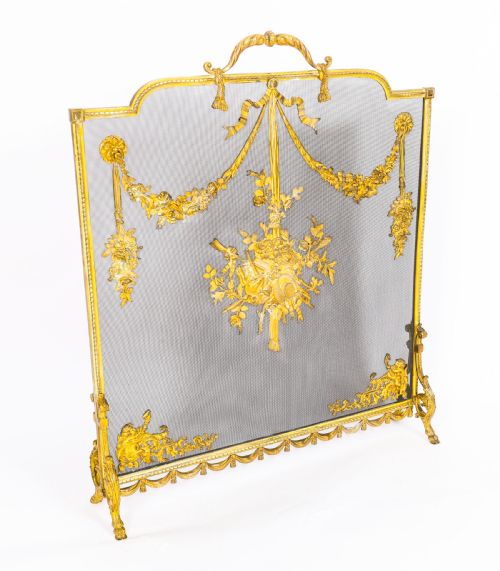
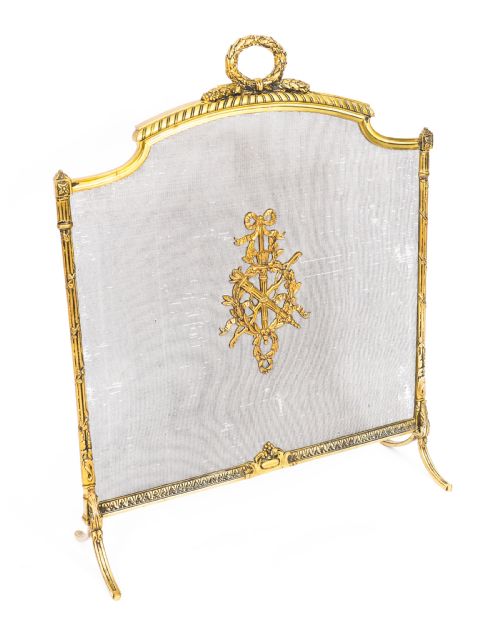
The selection on this page draws heavily from Victorian and Regency aesthetics, alongside French revival styles such as Rococo and Empire. Materials span polished brass and gilt bronze frames fitted with wire mesh, glass, or intricately worked textile panels.
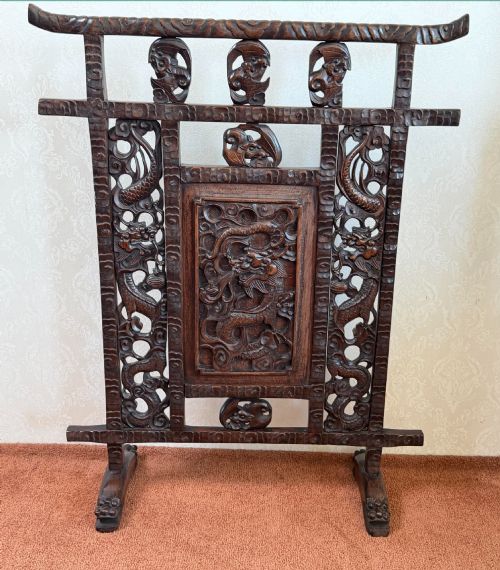
Formats vary widely between solid wood floor screens featuring carved mahogany, rosewood, or walnut, and lighter folding variations with ornate brasswork. Many examples incorporate hand-stitched needlework, tapestry, or painted glass within their central panels.
Distinctions in quality and execution
Quality reveals itself in the crispness of the bronze casting and the depth of the timber carving. Fine brass and gilt bronze examples display sharply defined scrollwork and robust structural joints rather than mass-produced uniformity.
The standard of the central panel heavily influences the piece, separating standard examples from exceptional ones. Finely worked hand-woven tapestry, intricate needlework, or high-grade bevelled glass indicate superior workshop origin.
The 19th Century Fireplace Screen Glossary
- Pole screen
- A small vertical panel mounted on a vertical wooden stand, designed to slide up and down to block radiant heat from the face.
- Nursery fender
- A low protective metal guard placed around the hearth to keep children and stray embers safely contained.
- Needlepoint
- Stitched textile work executed on canvas mesh, frequently used for the decorative central insert of a screen.
- Ormolu
- Gilt bronze ornamentation applied to furniture and decorative metalwork during the period.
- Dummy board
- A painted wooden figure cut out to resemble a person or animal, sometimes utilised near the hearth.
19th Century Fireplace Screen: Frequently Asked Questions
How were fireplace screens used?
These screens were positioned in front of the fireplace opening when the fire was not blazing brightly. They protected people sitting nearby from sudden surges of radiant heat and hid the ash-filled grate during summer.
Over time, they evolved from purely functional items into decorative focal points that displayed fine needlework and metal craftsmanship.
How do I tell Regency from Victorian screens?
Regency pieces often favour clean classical lines, rosewood or mahogany timbers, and pole screen formats with restrained mounts. They reflect a lighter, neoclassical influence.
Victorian examples tend towards heavier proportions, elaborate carving, and exuberant revival styles such as French Rococo, utilising abundant brass and rich tapestry.
Can I use a pole screen today?
Yes, though modern central heating alters their primary function, they remain versatile decorative accessories. Their adjustable panels work well as subtle room accents or decorative partitions.
Care should be taken to place them away from direct, aggressive heat sources to protect historical textiles and polished wood.