




19th Century Fireguard
A 19th century fireguard protects a room from stray embers while adding period character to the hearth.
19th Century Fireguard
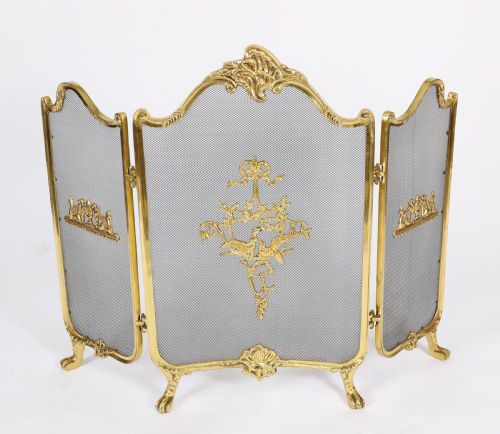
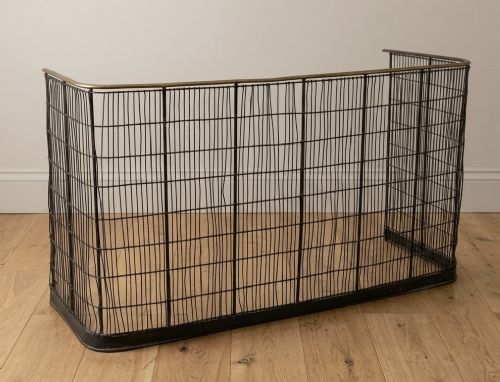
When you search for a 19th century fireguard, you encounter an array of hearth furniture designed to shield rooms from open flames and sparks. These pieces span from functional nursery guards to decorative folding screens and low curbs.
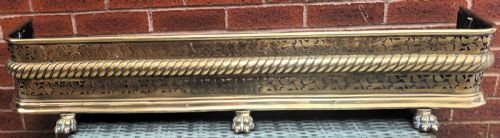
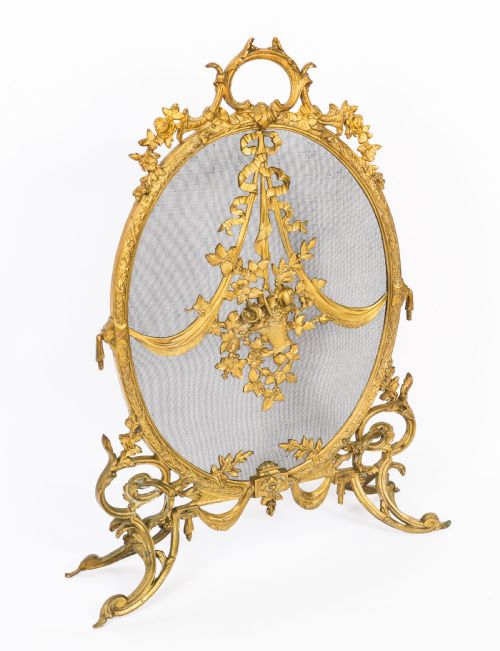
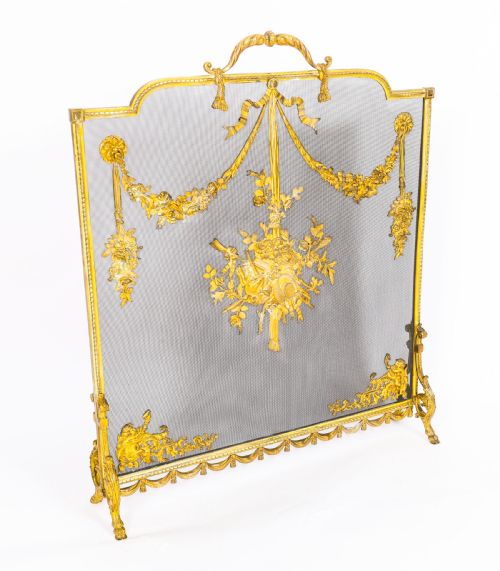
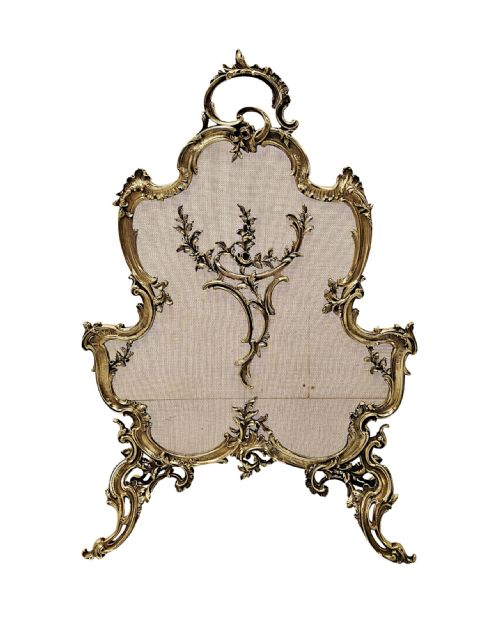
The most frequent examples on this page are brass fire screens and heavy brass fenders dating across the Victorian and Regency eras. French Rococo revival designs and simpler wire mesh nursery guards also appear regularly.
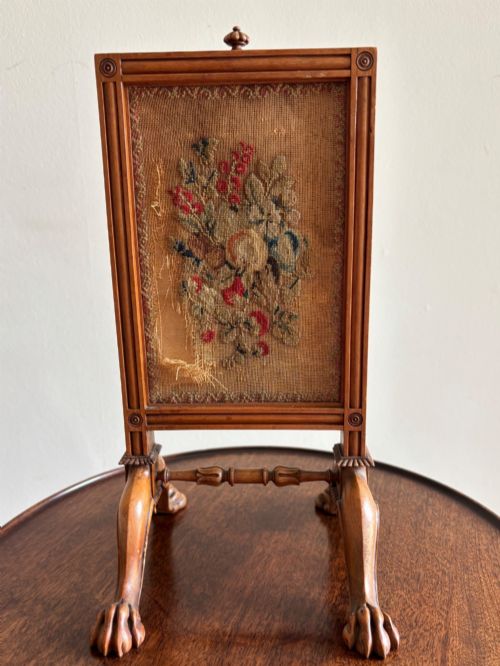
Makers of this period utilised a variety of formats, including pole screens with mounted embroidery and curved kerb fenders. Each type served a specific domestic purpose in nineteenth-century homes.
Materials and construction
Brass, iron, and mahogany form the structural backbone of these hearth pieces, often combined with wire mesh and gilt bronze. Metal components were cast, pierced, and polished to create reflective surfaces around the fireplace.
Textiles, glass, and tapestry panels were incorporated into pole screens and folding screens, secured within wooden or metal frames. Needlework samplers and embroidered panels added colour and personal craft to the domestic interior.
Musical trophies and flaming torches cast in gilt bronze kept musical spirits high even when the hearth went cold.
Judging quality
The distinction between standard domestic pieces and finer examples rests upon the depth of cast detail and the weight of the metal gauge. Heavy gauge brass and finely chased gilt bronze represent superior workshop output.
Design complexity also separates pieces, with ornate French Rococo revival scrolling and figural trophies demanding greater skill than plain wire mesh guards. The integrity of original textile panels and embroidery further defines the better items.
The 19th Century Fireguard Glossary
- Fire screen
- A movable panel placed before a fireplace to block excessive heat when the fire burned low. They often featured adjustable heights or folding leaves.
- Fender
- A low metal frame placed on the floor around the hearth to contain rolling logs and ash. Heavy brass curbs were common in nineteenth-century parlours.
- Pole screen
- A standing screen with an adjustable panel mounted on a vertical wooden pole. The panel could be slid up or down to shield the face from the fire.
- Nursery guard
- A tall, protective wire mesh fence designed to keep children and pets away from open flames. They typically featured sturdy metal frames.
- Gilt bronze
- An alloy treated with a gold amalgam finish to provide a rich, non-tarnishing decorative surface. It was frequently used on French revival hearth screens.
19th Century Fireguard: Frequently Asked Questions
How do I use a fire screen?
A fire screen sits directly in front of the fireplace opening when the fire is not actively tended. It blocks radiant heat and prevents sparks from reaching the carpet.
Many versions include adjustable panels or folding sections to control the coverage area according to the room's temperature.
What is a nursery guard?
A nursery guard is a tall, enclosed metal barrier built to surround the hearth completely. It prevented children and domestic animals from getting too close to burning coals.
These pieces prioritise safety and physical enclosure over delicate ornamentation, usually constructed from sturdy wire mesh and iron frames.
How do I distinguish Regency from Victorian pieces?
Regency hearth furniture often displays classical restraint, clean lines, and architectural influences dating from the early decades of the nineteenth century. Mahogany and simpler brass forms dominate this era.
Victorian pieces tend towards heavier proportions and elaborate revival styles like French Rococo, featuring exuberant scrolling, pierced brass, and applied floral motifs.
What maintenance do these brass pieces need?
Polishing brass depends on personal preference for bright reflective surfaces or dark patinated metal accumulated over decades. Gentle dusting preserves delicate wire mesh and fabric panels.
Harsh chemical cleaners should be avoided to protect the underlying metal and any historic surface treatments.