


19th Century Fire Curb
A 19th century fire curb grounds a hearth with polished metal and pierced detail, keeping stray embers in check while anchoring the room.
19th Century Fire Curb
A 19th century fire curb sits directly upon the floor to frame the hearth opening, functioning as both a physical barrier and an ornamental centrepiece. These guards appear in various forms, from simple extending brass rails to heavy curved barriers in iron and steel.
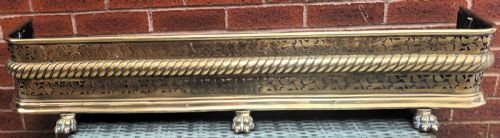
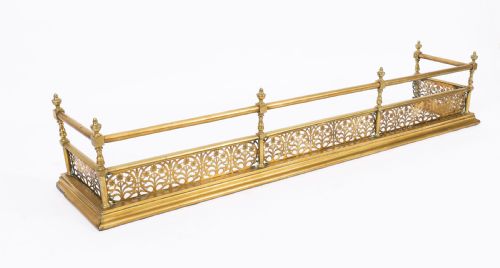
Victorian examples dominate the selection, often taking the form of pierced brass or heavy gauge metal bearing floral garlands or classical motifs. Alongside these sit pieces styled after Regency and William IV designs, showing tighter symmetry and refined metalwork.
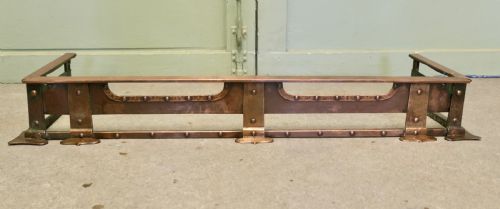
Makers of the period adapted their output to suit shifting tastes, producing everything from French Rococo flourishes to austere Arts and Crafts riveted copper. Buyers encounter straight rails, extending frames, and curved guards designed to fit specific hearth dimensions.
Materials and construction
Foundry workers cast iron and bronze into solid shapes while beating sheet brass and copper into decorative panels. Polished steel provided a bright, reflective surface that contrasted against darker iron components.
Craftsmen joined sections using rivets, screws, and intricate joints to build extending or curved frames. Pierced decoration was hand-cut or stamped into metal sheets to create light, open patterns along the gallery.
Distinguishing quality
The thickness of the metal gauge dictates the structural substance of a fender, with heavy brass and thick iron offering greater longevity. Lighter pieces rely on clever assembly rather than sheer weight to hold their shape.
Detailing separates standard production items from finer workshop pieces. Crisp chasing on bronze, precise piercing in brass, and the integration of motifs like dragons or classical garlands mark out superior execution.
The 19th Century Fire Curb Glossary
- Fender
- A low metal guard placed in front of an open fireplace to contain falling coals and ash. These items protect the hearth rug and flooring from stray sparks.
- Curb
- An alternative term for a fender, referring to the metal boundary that curbs the fire. It sits directly on the hearthstone.
- Pierced brass
- Sheet metal perforated with decorative holes and patterns using a punch or saw. This technique lightened the visual weight of heavy brass fenders.
- Extending fender
- A design featuring telescopic sections that adjust to fit varying hearth widths. This practical arrangement allowed one guard to suit different fireplace openings.
- Brutalist copper
- A heavier, tactile style associated with Arts and Crafts metalwork featuring visible riveted construction. The surface celebrates the raw texture of the hammered metal.
19th Century Fire Curb: Frequently Asked Questions
How do I measure for a fire curb?
Measure the width and depth of your hearthstone to ensure the guard sits comfortably within the perimeter. Account for any protruding hearth surrounds or uneven flooring that might affect placement.
Check whether you need a fixed length or an extending model to bridge the gap between your fireplace jambs. Leave a small clearance around the fire basket itself.
Can I polish brass and steel curbs?
Polishing depends on the desired finish and the age of the metal surface. Traditional metal polish restores a bright shine to brass and copper components.
Steel and iron require care to prevent rust while maintaining a clean appearance. Light oiling often protects unpolished iron without stripping its historic patina.
What is the difference between iron and brass fenders?
Iron and steel provide a darker, heavier structural framework that suits utilitarian or austere hearth designs. They often appear combined with brighter metals for contrast.
Brass and bronze offer a warmer tone that catches the firelight. These softer metals allowed artisans to apply detailed piercing and embossed garlands.
How do I date a 19th century fender?
Stylistic clues such as Regency curves, Victorian floral motifs, or Arts and Crafts rivets help narrow down the period. Construction methods, including machine rolling versus hand-beating, also indicate the decade of manufacture.
Heavier gauges and specific maker signatures or registry marks occasionally provide a more precise date. Comparing the decorative vocabulary to known furniture styles clarifies the timeline.