
19th Century Fauteuil Chairs
When choosing 19th century fauteuil chairs, you select open-armed seats defined by historic revival styles and carved wooden frames.
19th Century Fauteuil Chairs
When searching for 19th century fauteuil chairs, buyers encounter open-armed seating designed for formal salons and reading rooms. These pieces originate largely from French workshops adopting earlier court aesthetics, alongside regional English and Italian variants.
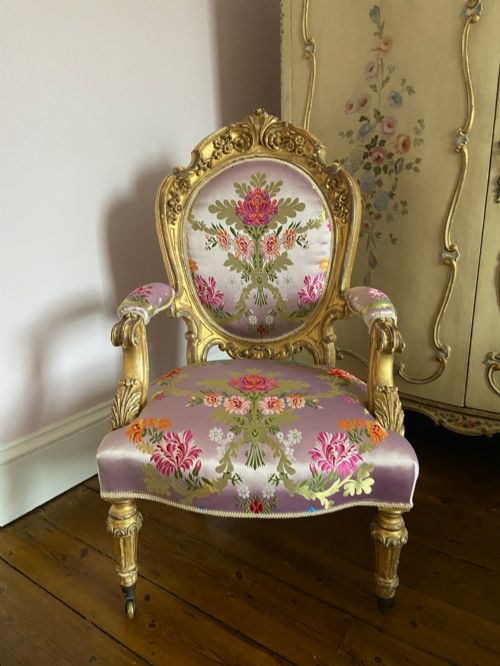
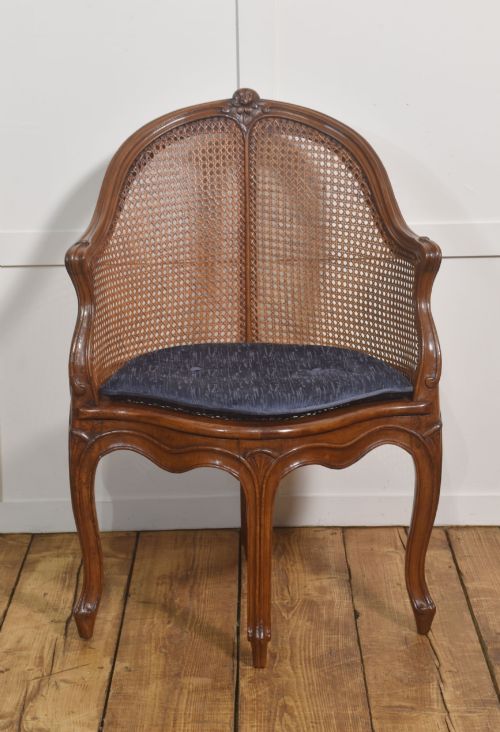
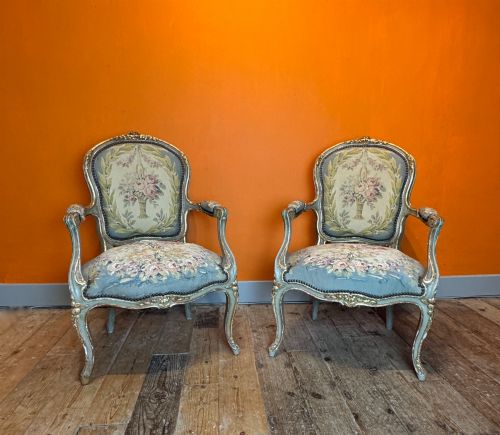
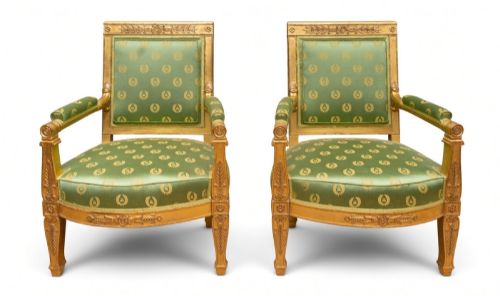
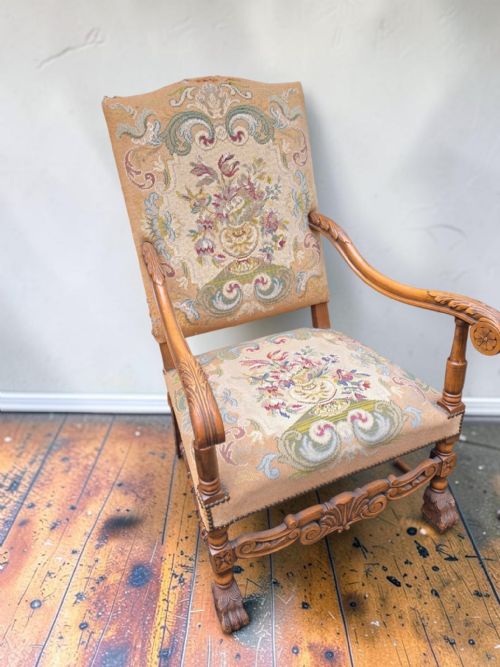
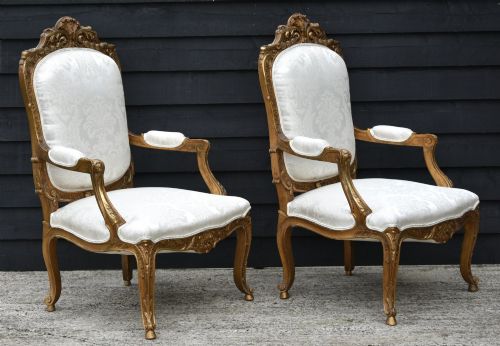
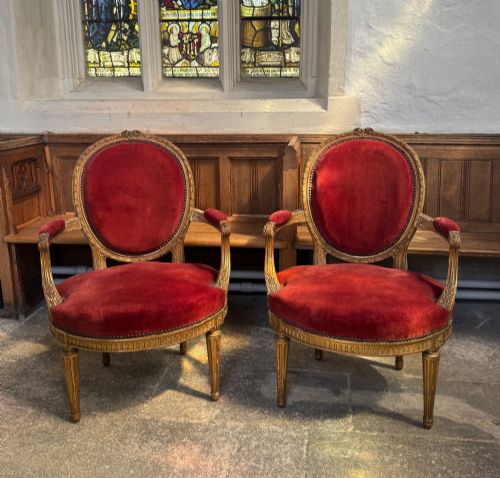
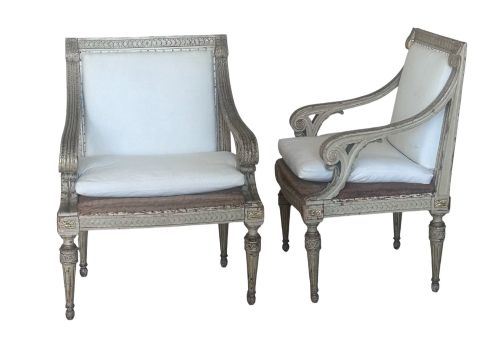
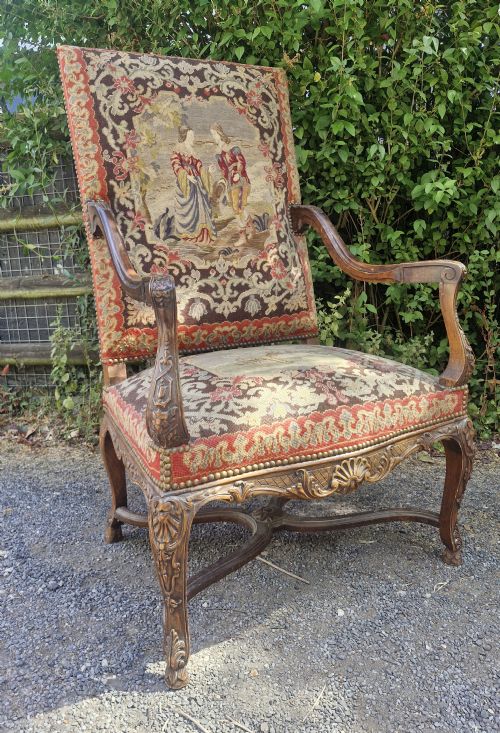
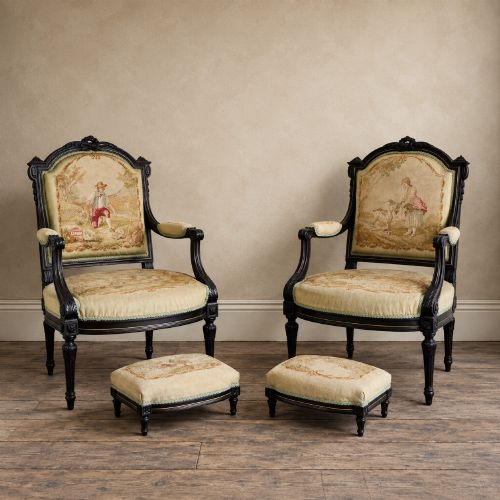
The most common examples on this page follow Louis XV and Louis XVI revival designs, featuring exposed wooden frames, padded armrests and upholstered seats. Forms range from compact salon chairs to large throne chairs and desk chairs.
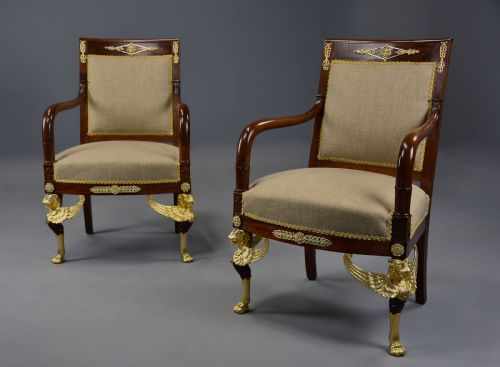
Period production spans across the decades from the early 1800s through the late Victorian era, taking shape as walnut, mahogany, oak or giltwood structures. Many survive today as matched pairs rather than isolated items.
How they were made
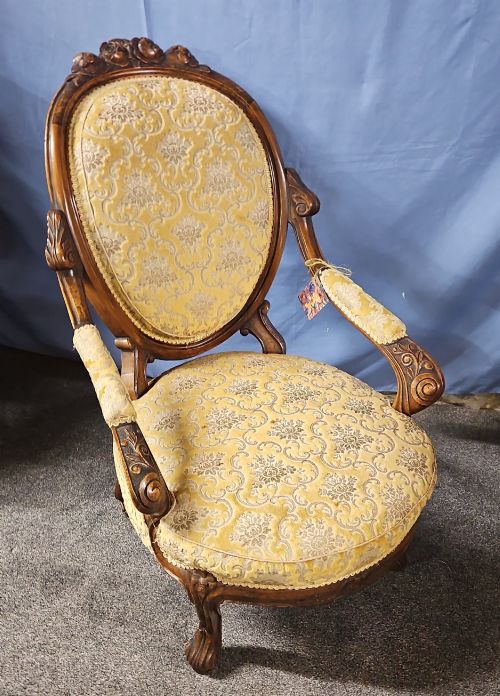
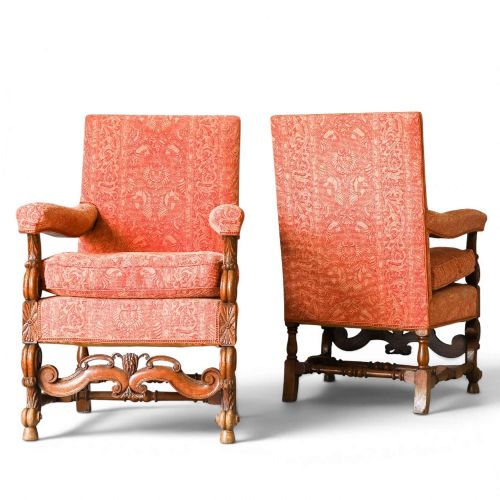
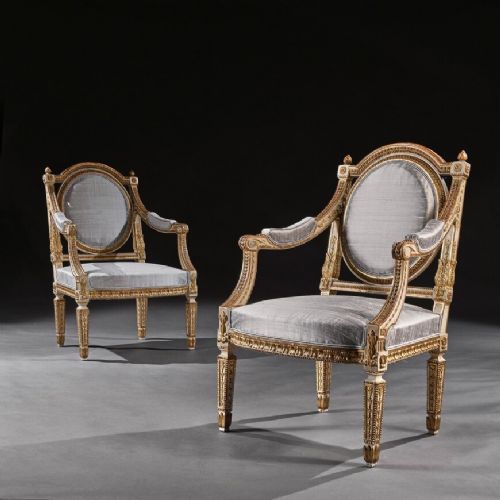
Joiners constructed these frames from solid hardwoods like walnut, mahogany and oak, frequently applying giltwood, paint or parcel gilt finishes to the carved surfaces. Woodcarvers shaped intricate foliage, scrolls and fluted legs by hand before assembly.
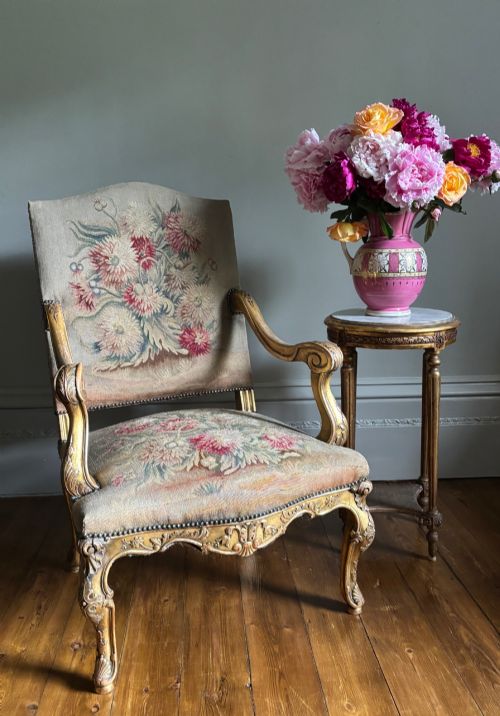
Upholstery techniques involved traditional stuffing secured over webbing, finished with textiles such as silk fabric, velvet, needlework, tapestry or leather held by brass or metal tacks. Some variants incorporated cane panels into the structural backrests or sides.
Several armchairs survived intact from the Palais de Tuileries, carrying centuries of French history straight into modern sitting rooms.
What varies in quality
The depth and crispness of hand-carved ornamentation separate standard production from exceptional examples, as skilled carvers created sharper relief and more fluid lines on the wooden frames. The choice of primary timber also dictates merit, with dense figured walnut and mahogany holding higher regard than softer secondary woods.
Proportion and structural balance define the silhouette, with superior pieces maintaining harmonious curves across the cabriole legs and arched backrests. Original gilding and period textiles add significant weight to a piece compared to modern replacement upholstery.
Jacob Desmalter·Holland And Sons
The 19th Century Fauteuil Chairs Glossary
- Fauteuil
- An open-armed upholstered armchair originating in France, featuring exposed wooden sides and a padded backrest. These chairs were designed for formal interior sitting rooms.
- Giltwood
- Timber coated with a thin layer of gold leaf over a prepared base. This finish appears frequently on formal salon seating from the period.
- Parcel Gilt
- A decorative treatment where only specific carved highlights on a painted or stained wooden surface receive gold leaf. It creates a subtle contrast against the base colour.
- Cane
- Woven rattan or plant material utilised to form permeable panels for chair backs or seats. It provides a lighter weight alternative to solid upholstered padding.
- Restauration
- A stylistic period bridging the fall of the Empire and the July Monarchy in France, spanning the early decades of the nineteenth century. Designs from this era simplify neoclassical forms.
19th Century Fauteuil Chairs: Frequently Asked Questions
What is a fauteuil chair?
A fauteuil is a traditional French upholstered armchair featuring open wooden arms. The design leaves the wooden frame visible at the sides and back.
Craftsmen built these seats primarily for formal reception rooms and drawing rooms during successive historic revival periods.
How do I style a fauteuil in a modern room?
These open-armed chairs function well as statement seating in living rooms or studies. Their exposed carved frames introduce traditional texture without overwhelming modern floor space.
Pairing a matching set creates a balanced reading area or fireside arrangement.
How do I tell Louis XV and Louis XVI styles apart?
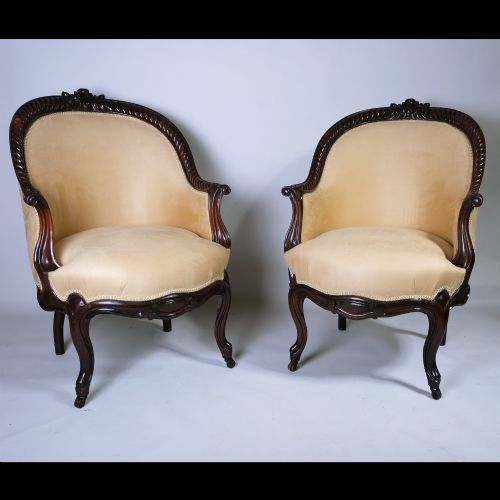
Louis XV style chairs display flowing asymmetrical curves, cabriole legs and organic rococo carvings. The overall silhouette is rounded and fluid.
Louis XVI style pieces shift towards strict symmetry, featuring straight fluted legs, rectangular or medallion backs and neoclassical motifs.
Were these chairs used at desks?
Certain nineteenth century variants functioned as desk chairs, known as fauteuils de bureau. These pieces adapted the standard open-arm format for workspace utility.
They combine supportive upholstered backs with sturdy wooden frames suited for daily writing.