


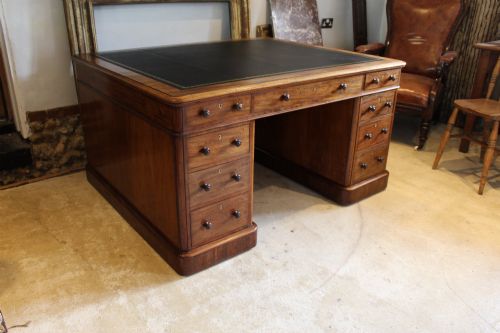
19th Century Executive Desk
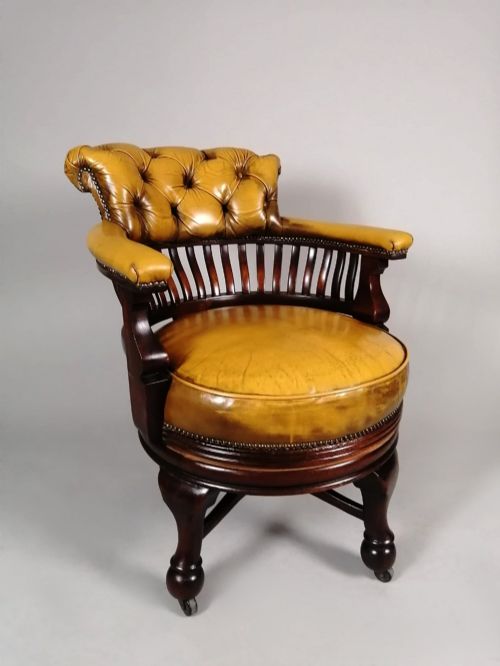
A 19th century executive desk provides a substantial workspace with period character, taking the form of large pedestal or partners pieces suited to traditional studies.
19th Century Executive Desk
A 19th century executive desk encompasses heavy pedestal designs, double-sided partners desks, and refined writing tables used for administrative and scholarly work. These large items dominate a room with their architectural presence and substantial timber construction.
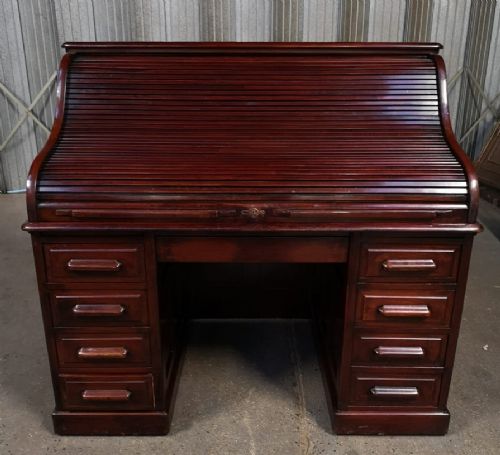
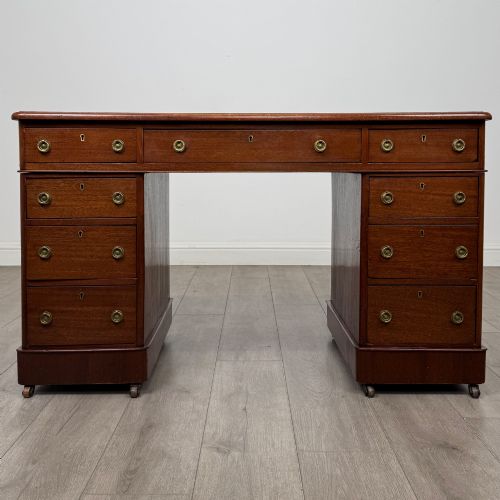
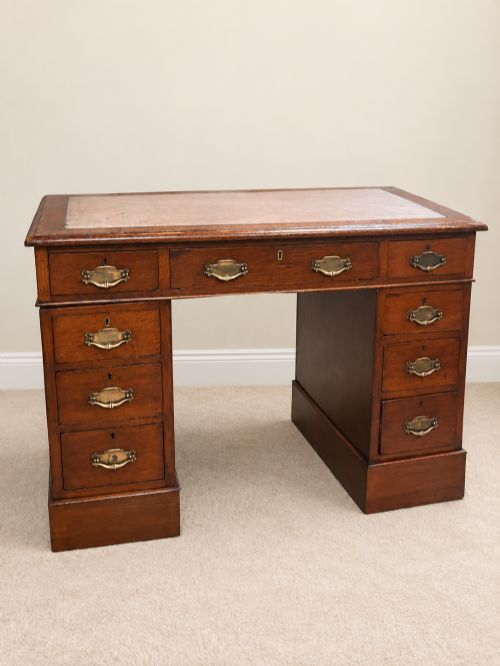
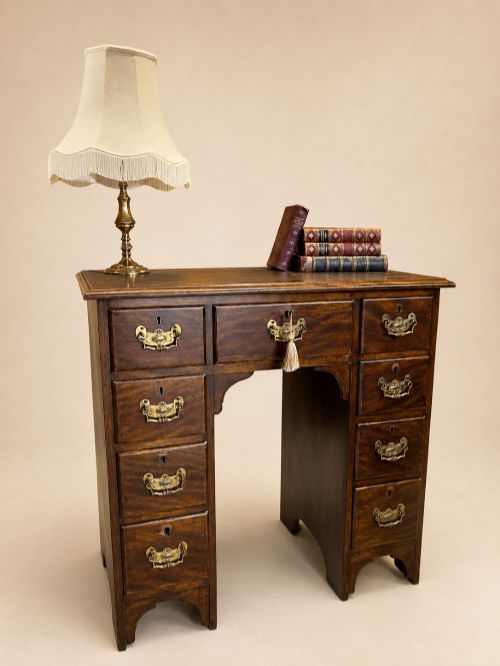
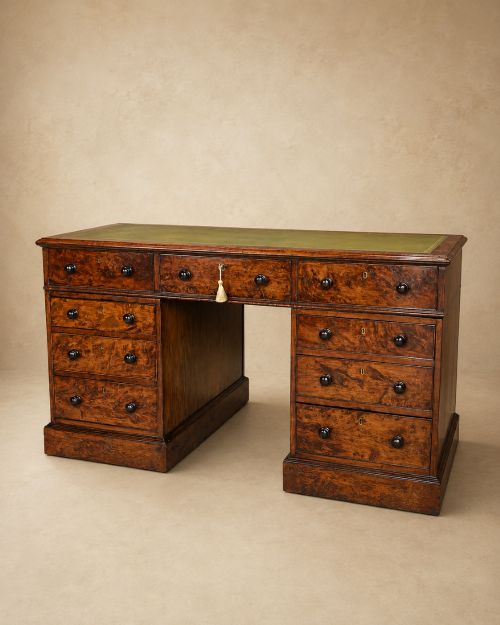
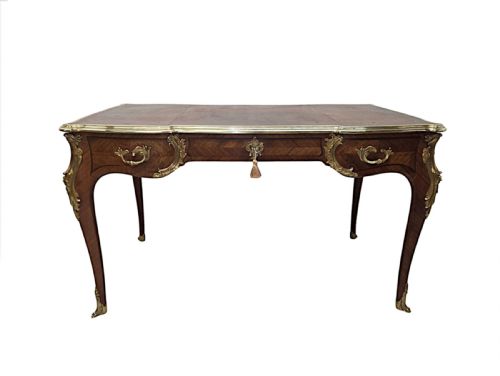
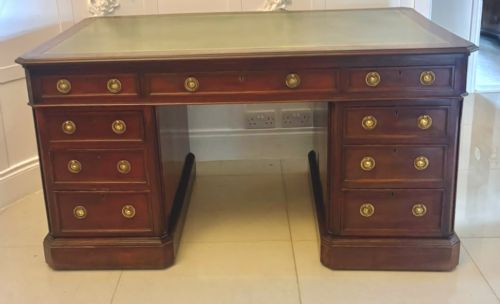
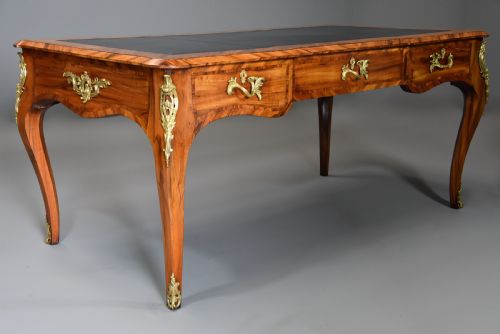
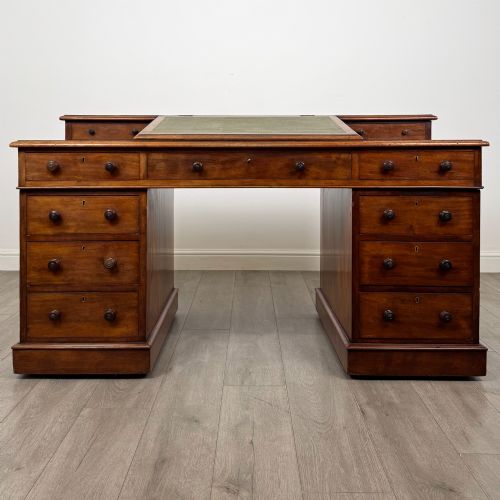
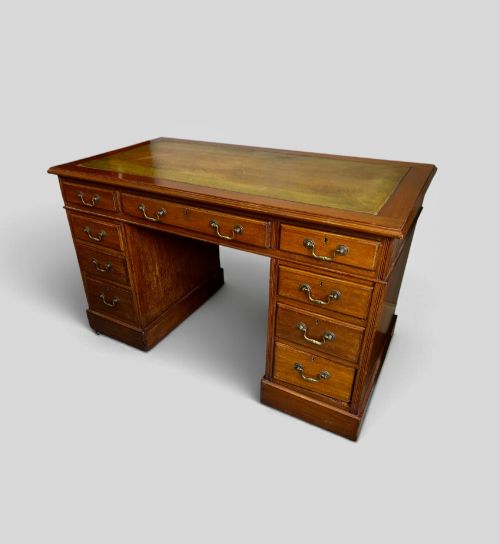
The most common version met on this page is the pedestal desk in mahogany, often fitted with drawers down each side and a leather-lined writing surface. Variants include oak kneehole configurations, walnut partners formats, and French bureau plat models.
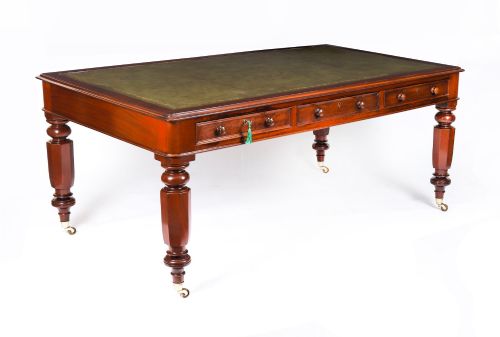
Pieces span several decades of the period, incorporating Victorian production alongside Regency and William IV examples. Specific forms range from roll top variants and Dickens desks to freestanding library tables placed in the centre of a room.
Materials and construction methods
Makers utilised dense hardwoods such as mahogany, oak, rosewood, and walnut for the primary structure, often selecting burr walnut or pollard oak for decorative veneer surfaces. Secondary timbers like pine appear in drawer linings and internal framing.
Writing surfaces are typically inset with tooled leather, whilst hardware includes cast brass handles and occasional ormolu mounts. Structural stability relies on heavy pedestals and dovetailed drawer construction designed to support sustained daily use.
The listings span the 19th century, featuring Victorian, Regency, and William IV periods built in mahogany, oak, rosewood, and walnut.
Distinguishing quality across examples
The calibre of a desk rests on the selection of timber veneers and the crispness of carved details like lion paw feet or mouldings. Finer pieces demonstrate superior joinery in the drawer framing and retain original brass handles.
Trollope and Sons·Charles Andrea Nosotti·Edwards and Roberts·Gillows
The 19th Century Executive Desk Glossary
- Partners desk
- A double-sided desk designed for two people to work opposite each other, featuring drawers and cupboards on both faces.
- Bureau plat
- A freestanding writing table, usually French, with a rectangular top and drawers in the frieze.
- Pedestal desk
- A heavy writing desk consisting of a top section resting on two separate drawer pedestals.
- Kneehole desk
- A compact desk with a central recess for the legs, flanked by pedestals containing drawers.
- Library table
- A large freestanding table used for reading and writing, finished on all sides so it sits away from walls.
19th Century Executive Desk: Frequently Asked Questions
What is a partners desk?
A partners desk is a large double-sided form built with drawers and cupboards facing both directions so two people can work at once. These pieces typically occupy the centre of a large study or library.
They emerged to accommodate professionals who needed shared access to documents and storage within a single piece of furniture.
How do I care for the leather top?
Leather writing surfaces require gentle cleaning with a slightly damp cloth and occasional application of specialist leather wax or balsam. Avoid harsh chemical cleaners and excessive moisture to prevent cracking.
Keeping the leather conditioned preserves the gold tooling and maintains the tactile quality of the writing area.
Where should I place a library table?
A library table is finished on all sides, making it suitable for placement in the middle of a room rather than against a wall. This allows access to the frieze drawers from multiple angles.
Ensure adequate clearance around the table for chairs and movement within the room layout.
How do I distinguish Victorian from Regency styles?
Regency pieces often display classical proportions with restraint, incorporating architectural elements inspired by ancient Greece and Rome. Victorian examples tend to be heavier in scale and encompass revival styles like Louis XV or Gothic.
Timber choice and carving depth also shift, with Regency work favouring clean lines and Victorian output exploring ornate decoration.