

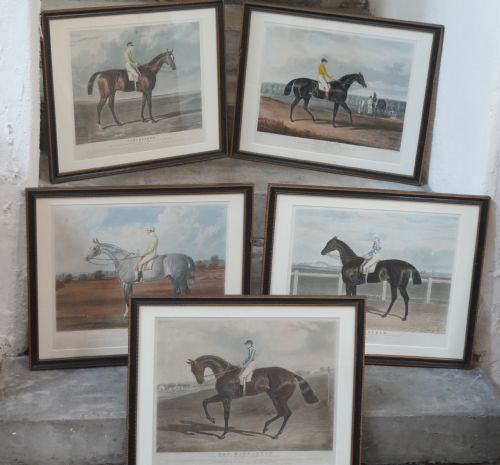


19th Century Equestrian Prints
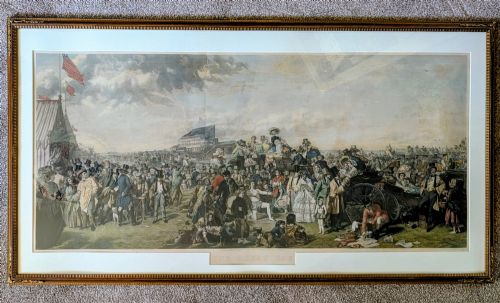
These 19th century equestrian prints capture the speed and theatre of the turf and field, offering a direct window into Victorian sporting life.
19th Century Equestrian Prints
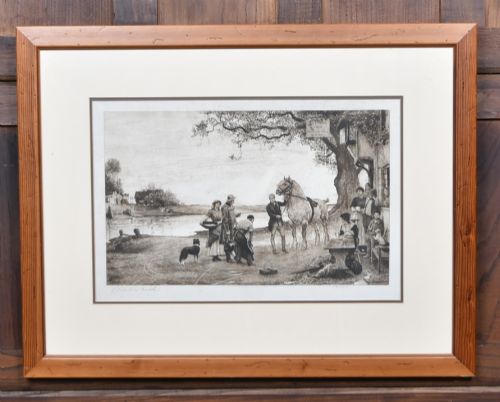
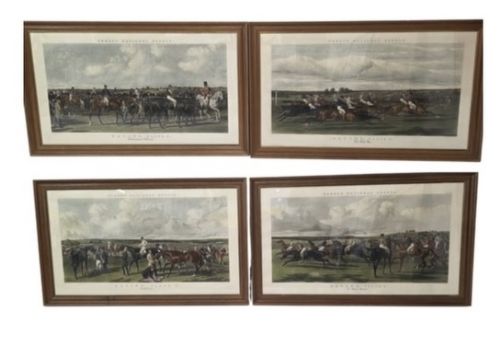
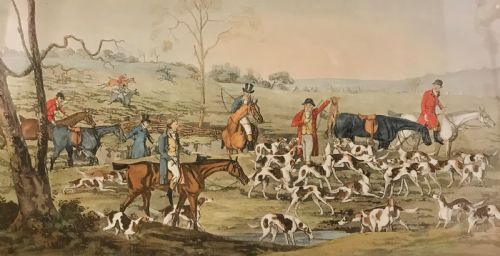
When you search for 19th century equestrian prints, you encounter a specialised selection of wall art and framed prints that document horses, racing, hunting and rural sporting life. The selections on this page span the Victorian era, bringing together varied interpretations of equine subjects from artists and publishers of the period.
The objects present in different formats, including engravings, lithographs, chromolithographs and etchings, alongside related oil paintings and watercolours. Framed sets depicting horse racing or hunting scenes dominate the offerings, often presented in wood or giltwood frames that complement the paper works.
What varies in quality
Quality in these works rests upon the clarity of the printed line and the precision of the original composition, particularly in depictions of equine anatomy and human figures. Works after established artists or published by notable houses demonstrate superior control over tone and detail.
The preservation of the paper and the fidelity of any hand applied colour contribute significantly to the visual impact of the piece. Additionally, the craftsmanship of the accompanying wood or giltwood frame influences the overall integrity of the presentation.
Victorian artists occasionally turned their keen observational skills from noble racehorses straight to the fierce intensity of combative bears and hounds.
William Powell Frith·Robert W Macbeth·Charles Faulkner·Frank Dadd·Edward Lloyd
The 19th Century Equestrian Prints Glossary
- Engraving
- A printmaking technique where an image is incised into a metal plate with a burin. The resulting lines hold the ink for transfer onto paper under pressure.
- Lithograph
- A planographic printmaking process based on the antipathy of oil and water, utilising a flat stone or metal plate to carry the image. Chromolithographs add colour through the use of multiple stones.
- Etching
- A method where lines are bitten into a metal plate with acid rather than carved with a tool, allowing for free, fluid draughtsmanship.
- Aquatint
- A printmaking variation that produces tonal areas resembling watercolours through acid-resistant resin patterns on a metal plate.
- Giltwood
- Wood that has been coated with a thin layer of gold leaf or gilt powder, commonly found on period picture frames.
19th Century Equestrian Prints: Frequently Asked Questions
What subjects do these prints show?
The subjects focus primarily on horses, horse racing, hunting scenes, military subjects and rural activities. Many depict specific moments from the turf or field, such as meets, gallops and steeplechases.
Other works record broader Victorian sporting life, including coaching scenes and animal studies.
How should I frame and hang them?
Most of these works are already presented in wood or giltwood frames with glass protection, ready for display on walls. They suit traditional interiors, studies and hallways where wall art of a sporting nature is desired.
Keep them away from direct sunlight to protect the paper and any hand-applied watercolours or inks from fading.
Are these works original prints?
The inventory includes original period engravings, lithographs, etchings and aquatints produced in the nineteenth century. Some are published after well-known painters, while others originate as direct artistic works on paper.
Mediums such as oil paintings and watercolours are also represented alongside the printed material.
How do I identify the period?
Period markers include the printing technique, the paper stock, publisher details and framing style. References to nineteenth-century artists, military campaigns or Victorian sporting clubs help anchor the date.
Many pieces carry explicit publication dates or stylistic attributes characteristic of the Victorian era.