




19th Century Earthenware Mug
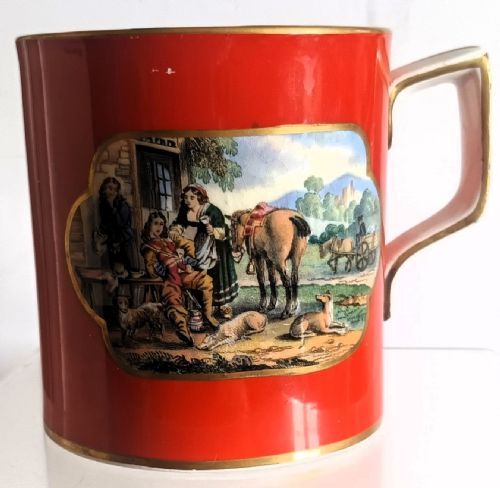
A 19th century earthenware mug brings rugged daily utility and folk charm to a table, offering solid ceramic weight and hand-finished character.
19th Century Earthenware Mug
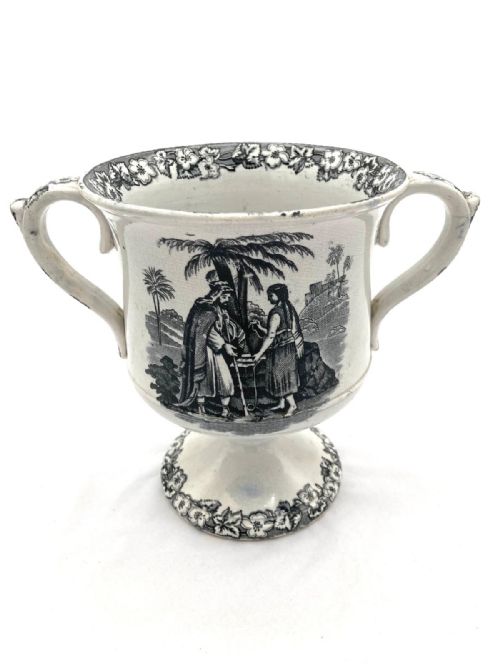
A 19th century earthenware mug spans robust drinking vessels, tankards and loving cups created across the Victorian and Georgian eras. Collectors encounter standard single-handled mugs alongside two-handled loving cups and tall beer steins.
The selections on this page showcase varied regional origins, including English transferware pieces, Welsh pearlware items and continental German faience. Many incorporate domestic drinking themes, commemorative school details or surprising interior ceramic figures.
Mugs range from half-pint vessels to large pint tankards designed for hearty toasts. Specialised drinking vessels often feature poems, hunting scenes or specific institutional inscriptions.
Methods and materials
Potters shaped these vessels from local clay bodies, applying tin-glaze, pearlware glaze or standard ceramic glaze before kiln firing. Earthenware provided a porous yet sturdy structure suitable for everyday liquid use.
Decoration relied heavily on black, blue and mulberry transfer printing to transfer complex pictorial scenes onto the curved surface. Artisans also utilised hand-painting and polychrome highlights, occasionally adding touches of gilt or gold leaf.
Surprise elements inside drinking vessels, such as moulded ceramic frogs and newts, required skilled interior placement before final glazing and firing.
Several mugs hide small ceramic frogs and newts inside, designed to startle drinkers when they finish their ale.
Assessing quality and character
Quality rests in the crispness of the transfer-printed motifs and the precision of hand-painted polychrome details. Superior examples maintain clear, vibrant application without smudging in the glaze.
The complexity of the form dictates distinction, separating simple cylindrical mugs from elaborate two-handled loving cups or sculptural steins with institutional provenance. Interior surprise figures and detailed poetic verse elevate individual vessels above plain utilitarian stock.
Copeland·Sarreguemines
The 19th Century Earthenware Mug Glossary
- Earthenware
- Porous pottery fired at lower temperatures than stoneware or porcelain. It requires a protective glaze to hold liquids.
- Pearlware
- A refined, whitened earthenware developed in the late eighteenth century. It displays a subtle blueish tint in the glaze pools.
- Transferware
- Pottery decorated by applying a printed paper design from an engraved copper plate onto the ceramic surface. This technique allowed repeatable, detailed pictorial scenes.
- Loving Cup
- A large drinking vessel featuring two or three handles, designed to be passed among guests. These often commemorated special occasions or featured rustic hunting motifs.
- Faience
- European tin-glazed earthenware decorated with opaque metallic oxide glazes. It often imitates the appearance of fine painted porcelain.
19th Century Earthenware Mug: Frequently Asked Questions
How do I date a 19th-century mug?
Dating relies on stylistic clues, glaze characteristics, and specific transfer patterns associated with Victorian or Georgian production. Marked pieces may also reference specific historical events or institutions.
Pearlware glazes typically point toward the earlier decades, while heavier transfer-printed styles align with mid to late Victorian manufacturing techniques.
Can I use these mugs for drinking?
While these pieces were originally made for everyday consumption, age and historic glaze composition mean modern use is generally discouraged. Porous earthenware and antique glaze finishes can degrade with modern liquids and washing.
Displaying these vessels safely preserves their fragile ceramic bodies and historical decoration for the future.
What is the difference between a mug and a tankard?
A mug is typically a cylindrical drinking vessel with a single handle for everyday use. A tankard often refers to a larger, heavier drinking vessel, sometimes featuring a lid or specific institutional capacity.
Both forms appear frequently in nineteenth-century earthenware, spanning simple domestic items to grand commemorative pieces.