


19th Century Earthenware Dish
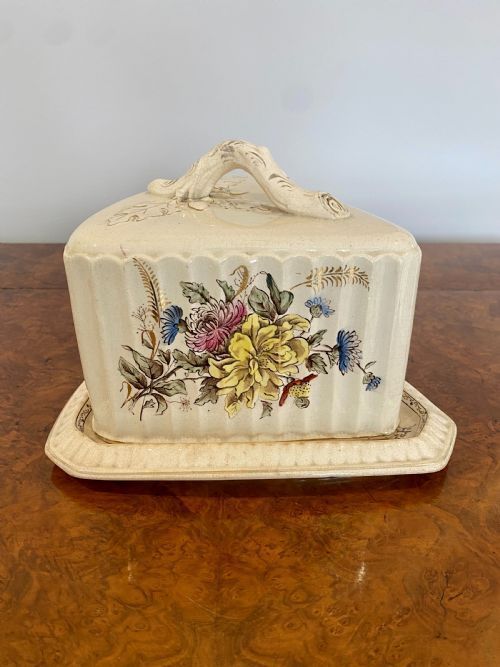
These pieces of 19th century earthenware dish encompass serving platters, cheese domes, and decorative plates that bring domestic history straight to the table.
19th Century Earthenware Dish
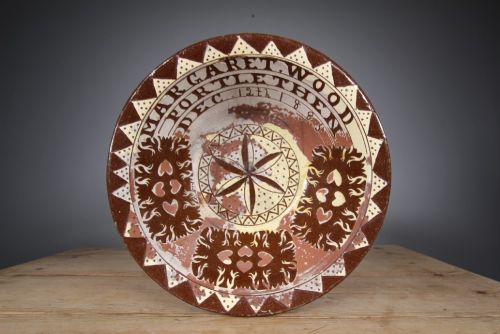
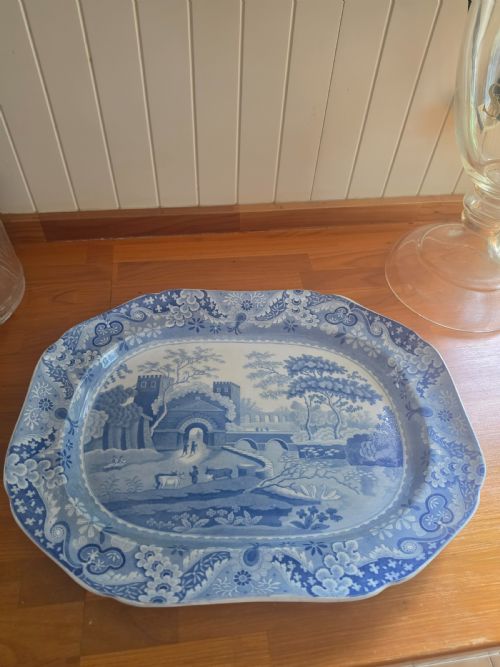
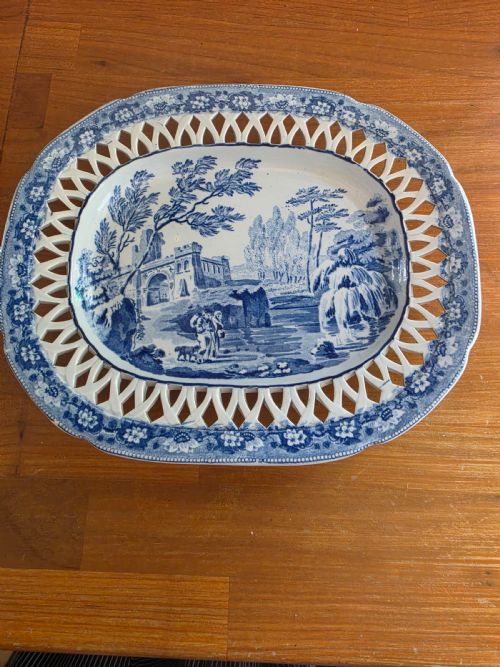
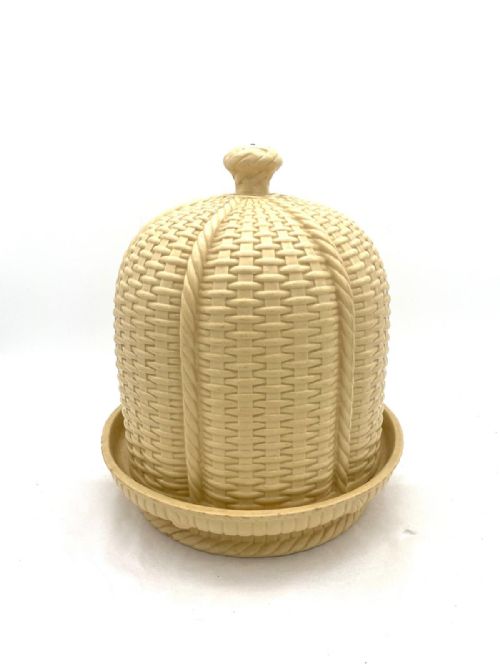
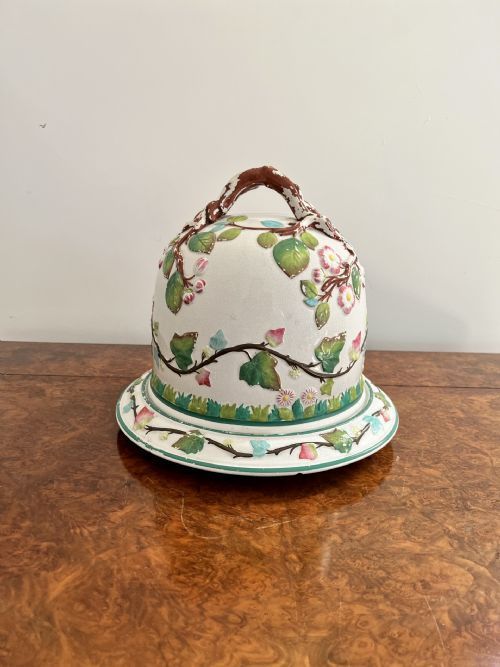
A 19th century earthenware dish typically spans utilitarian serveware and decorative pieces created during the Georgian, Regency, and Victorian periods. The selection on this page leans heavily toward blue and white transfer-printed meat platters, majolica cheese domes, and regional slipware bowls.
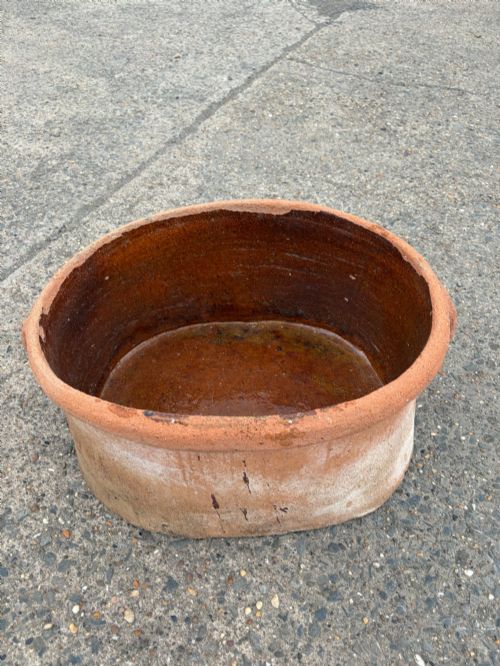
Makers ranged from large Staffordshire potteries like Spode and Minton to local makers producing earthenware, pearlware, and terracotta wares. Forms include large serving platters, commemorative plates, and specialised dishes such as butter pats and game pie dishes.
The aesthetic stretches from classical transfer-printed pastoral scenes and Chinoiserie motifs to exuberant Victorian majolica glazes and rustic folk art slipware. Buyers encounter everything from formal dining table centrepieces to robust kitchen utility vessels.
Materials and production techniques
The body of a 19th century earthenware dish is formed from clay fired at relatively moderate temperatures, resulting in a porous ceramic that required glazing to hold liquids. Potters utilised lead glazes, pearlware bodies, and colourful majolica or slipware coatings to seal and decorate the surfaces.
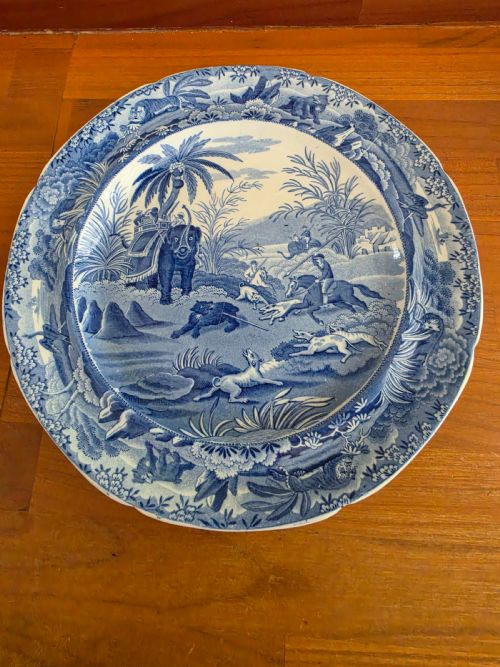
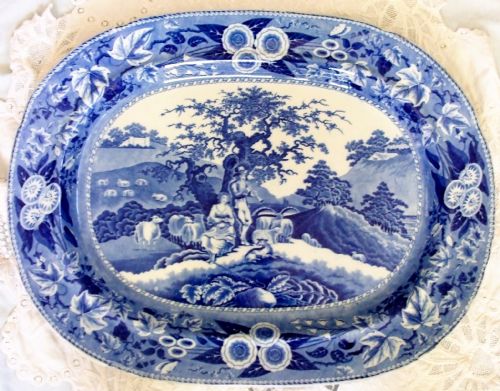
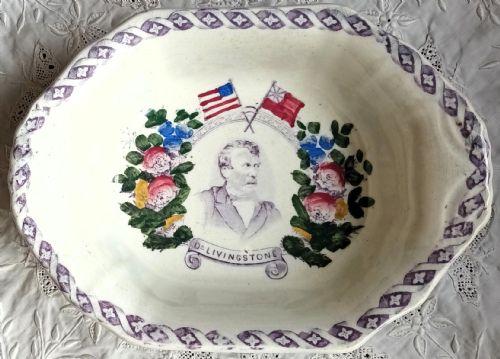
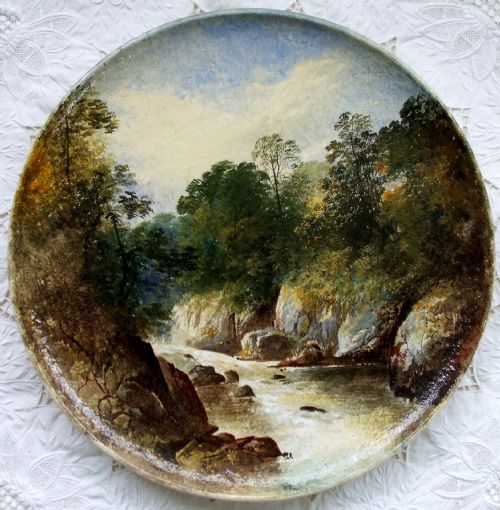
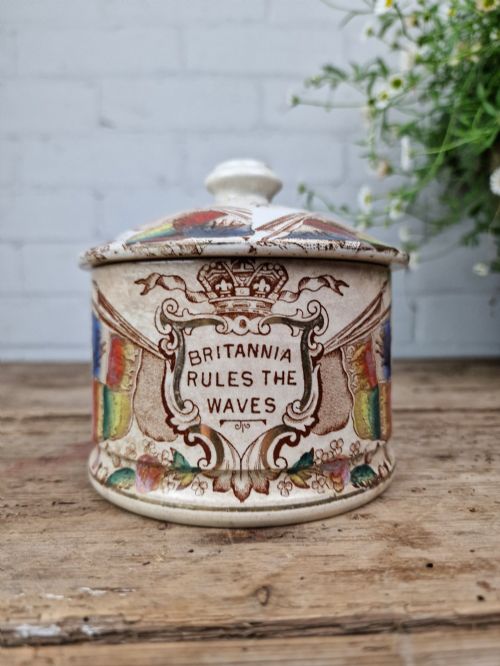
Decoration often involved copper-plate transfer printing in blue, mulberry, or polychrome pigments, transferring detailed narrative scenes like pastoral views onto the flat and hollowware. Hand-painting, sponging, and moulded relief work such as basket weave or naturalistic leaf patterns also shaped the visual character.
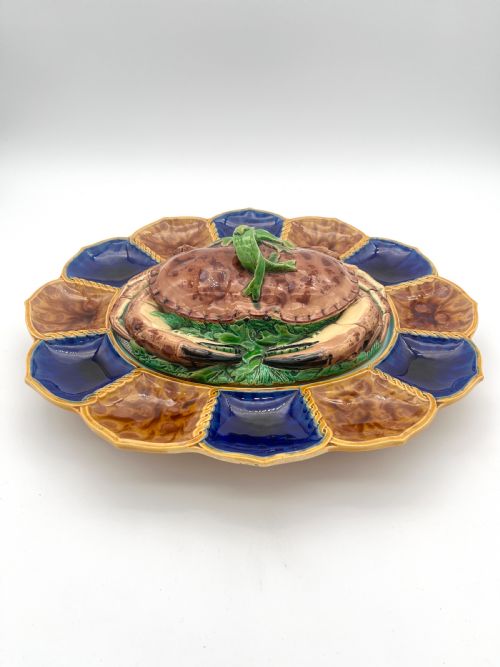
Nineteenth-century diners enjoyed elaborate culinary presentations featuring ceramic crabs, bears, and piping shepherds atop their dining tables.
Markers of quality
Quality in a 19th century earthenware dish rests on the crispness of the transfer print, the depth and richness of the glaze, and the precision of the moulding. Well-defined transfer lines and smooth glaze application without excessive pooling distinguish superior factory output.
The distinction between standard domestic utilitarian wares and high-end artistic pieces from makers like Minton or Copeland lies in sculptural ambition and decorative complexity. Intricate relief modelling, hand-painted polychrome highlights, and clear factory registry marks elevate specific pieces above everyday kitchen pottery.
Spode·Davenport·Copeland and Garrett·Minton·Wedgwood·Mann and Co
The 19th Century Earthenware Dish Glossary
- Transferware
- Pottery decorated by applying a printed design from a copper plate via tissue paper onto the ceramic body. This technique allowed factories to produce intricate pictorial scenes rapidly.
- Majolica
- A heavy earthenware type featuring colourful lead-based opaque glazes applied over moulded relief decoration. Popular during the Victorian era, it frequently depicted natural forms like leaves and animals.
- Pearlware
- A refined earthenware developed by Josiah Wedgwood featuring a subtle bluish tint in the transparent glaze. It served as a transitional ceramic body bridging creamware and later white ironstone.
- Drabware
- A utilitarian stoneware or earthenware body characterised by a subdued brownish-grey or olive hue. It gained popularity during the Georgian and Regency periods for kitchen and dairy vessels.
- Slipware
- Pottery decorated with liquid clay called slip, trailed or brushed onto a contrasting clay body before firing. This traditional technique produces tactile geometric and linear patterns.
19th Century Earthenware Dish: Frequently Asked Questions
What is a 19th century earthenware dish used for?
These dishes served multiple roles in historical dining, ranging from large platters for presenting joints of meat to specialised vessels like cheese domes and butter dishes. Many also functioned as decorative wall plaques or commemorative display pieces.
Today, collectors use them both as functional tableware for serving food and as decorative accents that showcase 19th-century ceramic artistry in domestic interiors.
How do I identify a Victorian majolica dish?
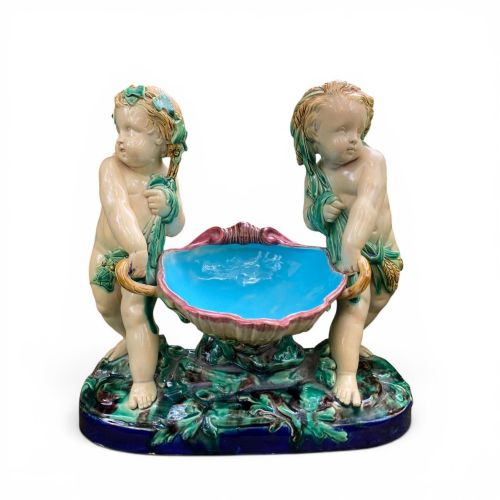
Victorian majolica is easily recognised by its vibrant, glossy coloured glazes over heavily moulded sculptural surfaces, often taking the form of natural elements like leaves, fish, or cherubs. The earthenware body underneath is typically thick and heavy to support the rich glaze.
Many of these pieces date from the mid-to-late 19th century and reflect a Victorian fascination with naturalism and ornate table presentation.
What is the difference between pearlware and standard earthenware?
Pearlware is a refined type of earthenware developed in the late 18th century, featuring a thin glaze containing a small amount of cobalt. This additive counteracts the natural yellowish tone of the clay, resulting in a paler, whiter appearance.
Standard earthenware generally displays warmer, creamier tones or uses coloured slips and opaque lead glazes without the specific bluish tint characteristic of pearlware.
Are blue and white transferware dishes marked with maker names?
Many transferware dishes feature printed or impressed factory marks on the underside, sometimes including pattern names like "Bridge of Lucano" or series titles. However, numerous pieces only display pattern names or registry marks without naming the specific pottery.
Unmarked pieces are common, requiring collectors to identify makers through stylistic clues, border designs, and specific transfer printing characteristics.