





19th Century Earthenware Bowl
A 19th century earthenware bowl brings domestic utility and robust slip-decorated character straight onto a modern table.
19th Century Earthenware Bowl
A 19th century earthenware bowl encompasses practical dairy vessels, colourful transfer-printed tableware, and heavy kitchen crocks originating from British, French, and Scottish potteries. Buyers seeking these items encounter robust utilitarian wares alongside decorative footed centrepieces spanning the Georgian, Regency, and Victorian periods.
The selection ranges from large terracotta dairy and salting vessels to patterned Gaudy Welsh basins, blue and white transfer-printed footbaths, and spongeware kitchen bowls. Many surviving examples carry the marks of regional potteries, traditional folk art traditions, and everyday rural service.
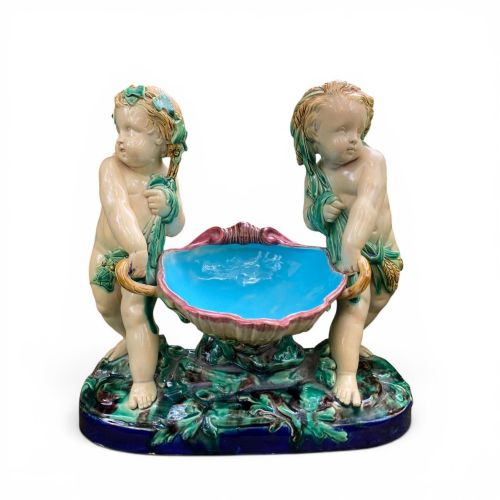
These forms bridge the gap between heavy kitchen utility and display pottery, offering deep utilitarian basins alongside refined majolica comports and armorial Sunderland pieces. Collectors typically find everything from plain lead-glazed dairy pans to brightly enamelled commemorative dishes.
Materials and Making
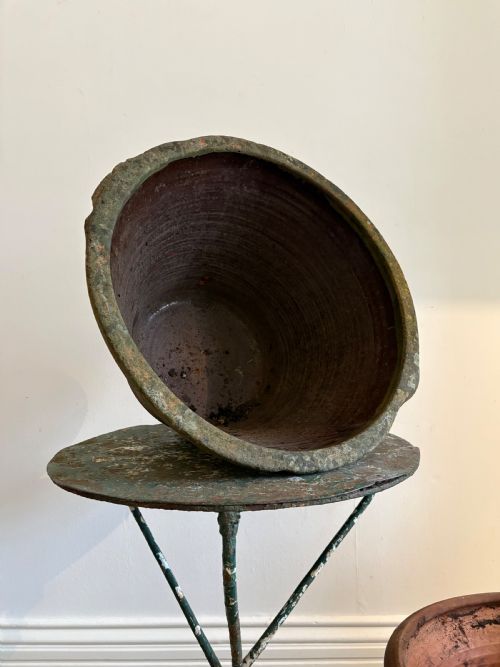
Potters built these vessels using porous red or buff earthenware bodies, frequently coating the interior surfaces in clear lead glazes or white tin-opacified pearl glaze to hold liquids. Heavy dairy vessels and tian bowls relied on simple terracotta fabrics finished with partial interior glazing for practical kitchen use.
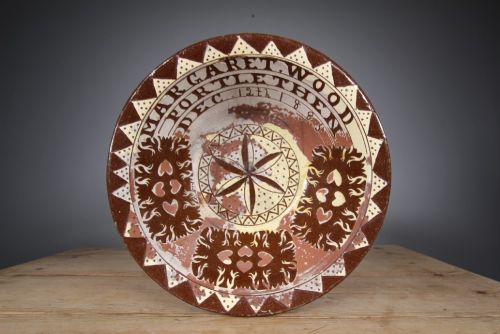
Decoration relied heavily on underglaze blue and white transfer printing, hand-applied slip trailing, and vibrant enamel colours seen in Gaudy Welsh and Staffordshire wares. More elaborate Victorian display pieces utilised moulded majolica techniques, copper lustre highlights, and rich polychrome glazes over shaped ceramic bodies.
Listings feature regional British pottery traditions, including Scottish Seaton Pottery dairy bowls, North Country slipware, and Staffordshire transfer-printed ironstone.
Judging Quality
Quality rests upon the crispness of the transfer print, the evenness of the lead or pearl glaze, and the stability of the heavy earthenware body. Superior pieces display deep, uniform colour saturation in blue and white patterns or rich, unclouded majolica enamels without excessive kiln distortion.
Utilitarian dairy bowls and salting crocks derive their appeal from honest surface wear and heavy throwing lines, whereas decorative tableware depends on fine potting and sharp moulding. The distinction between a standard kitchen vessel and a prized display piece lies in the preservation of painted or printed details across the ceramic surface.
Minton·Seaton Pottery·Mann And Co·Ridgway·Sewell·J And R Clews
The 19th Century Earthenware Bowl Glossary
- Earthenware
- Porous ceramic pottery fired at lower temperatures than stoneware or porcelain, requiring a glaze to become impermeable to liquids. It forms the core structural body for the vast majority of these domestic vessels.
- Slipware
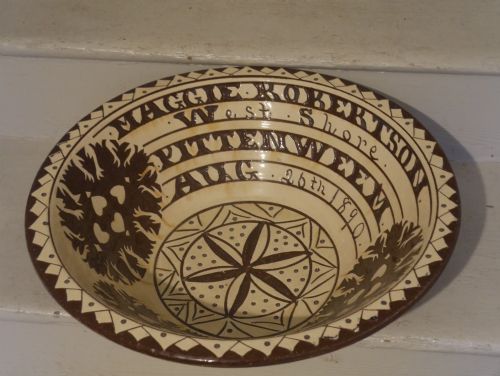
- Pottery decorated with slip, which is a liquid clay mixture applied to the un-fired body through trailing or dipping to create linear patterns. It appears frequently on traditional country kitchen bowls.
- Majolica
- Low-fired earthenware decorated with colourful opaque lead glazes, popular during the Victorian era for sculptural centrepieces and leaf-moulded comports. This technique allowed for vivid, glossy polychrome decoration.
- Transfer Printing
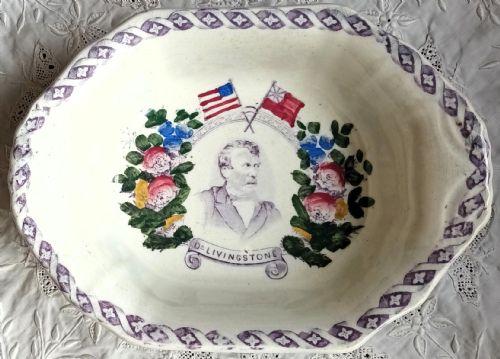
- A method of decorating ceramics by transferring a design engraved on a copper plate onto paper, which was then pressed onto the unfired pot. It created the intricate blue and white river scenes found on many nineteenth-century dishes.
- Spongeware
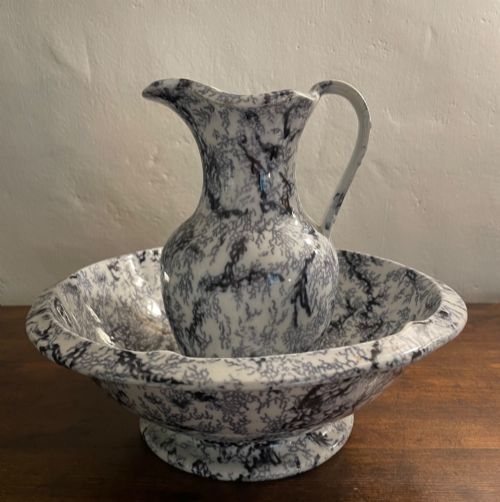
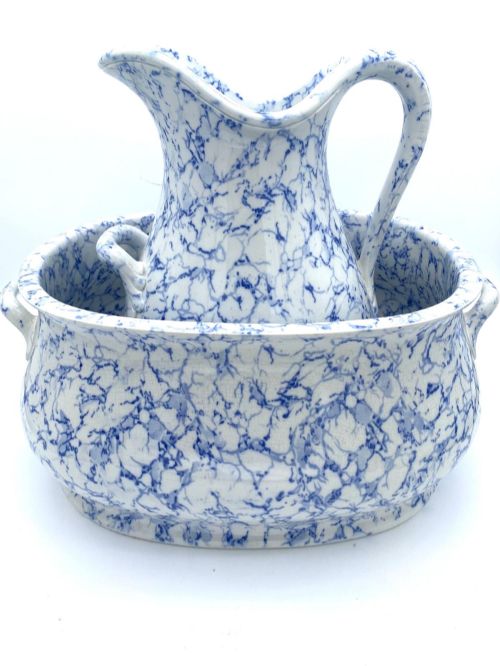
- Pottery decorated by dabbing pigment onto the biscuit body using a natural sponge, resulting in mottled or dotted patterns. This robust technique was common on utilitarian kitchen bowls.
19th Century Earthenware Bowl: Frequently Asked Questions
How were tian bowls used?
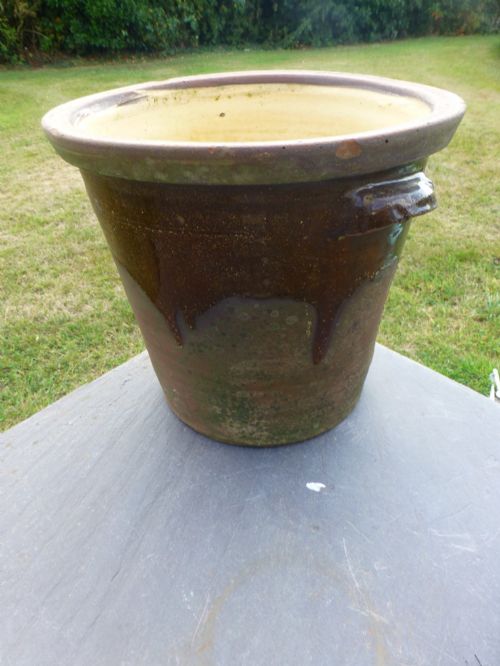
Large tian bowls served primarily in rural French farmhouses for heavy domestic kitchen tasks such as washing vegetables, setting bread dough, or skimming milk. Their wide rims and heavy earthenware walls provided the stability needed for daily agricultural work.
Over time, these large vessels transitioned from utilitarian workspace fixtures into decorative garden planters and interior display basins appreciated for their aged green glazes.
Can I use an antique dairy bowl for food?
Porous nineteenth-century earthenware bodies and historic lead glazes can absorb liquids and may not meet modern food safety standards for daily dining. It is best to treat these bowls as decorative objects or dry display pieces.
Gentle hand washing in warm water preserves the historic glaze and prevents moisture penetration into the fragile underlying ceramic fabric.
What is Gaudy Welsh pottery?
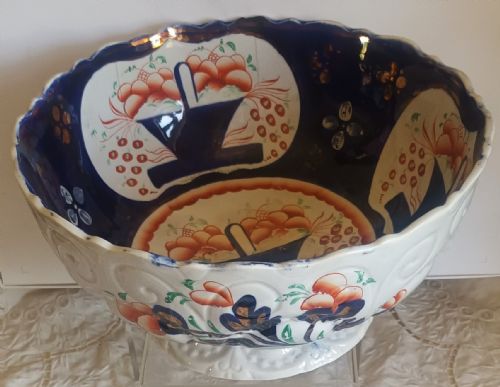
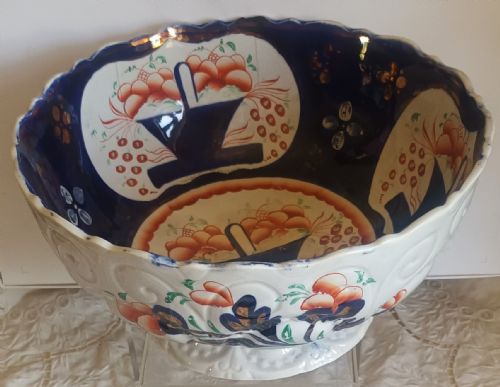
Gaudy Welsh refers to a distinct style of brightly coloured earthenware featuring cobalt blue, copper lustre, and vibrant red or pink enamel motifs. It was produced in Staffordshire and exported widely for domestic household use.
The bold floral patterns, such as the basket of flowers design, were designed to brighten modest nineteenth-century dining tables.
How do I spot Victorian majolica?
Victorian majolica is characterised by heavy moulded earthenware bodies covered in rich, glossy coloured glazes that pool in the recessed details of naturalistic forms like leaves and putti. The undersides often reveal coloured lead glazes rather than plain white ceramic.
These pieces were intended as dramatic centrepieces and decorative comports rather than everyday kitchen utensils.