




19th Century Devotional Art
These nineteenth century devotional art pieces are sacred works intended for prayer and contemplation, combining spiritual devotion with traditional craftsmanship.
19th Century Devotional Art
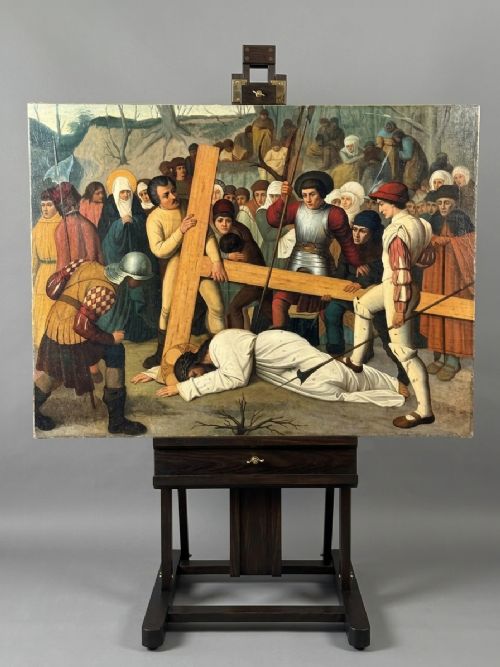
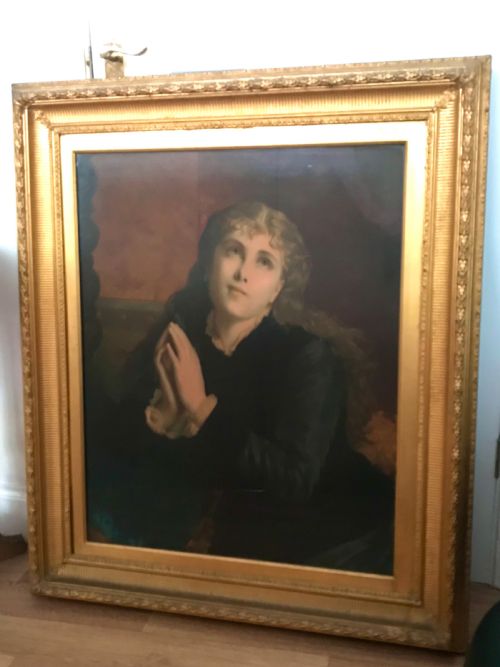
Nineteenth century devotional art encompasses a wide range of sacred objects created for personal and communal worship during the period. The selection here leans heavily towards oil paintings on canvas depicting holy figures, alongside carved wooden statues and folk art models.
Buyers will encounter both sophisticated academic works after old masters and simpler regional folk pieces. These items originate from various European traditions, including Italian, Spanish, German and Central European workshops.
Three-dimensional figures such as Santos processional statues and carved panels sit alongside framed canvases under glass. Each piece reflects the specific religious practices and aesthetic preferences of its origin.
Materials and construction methods
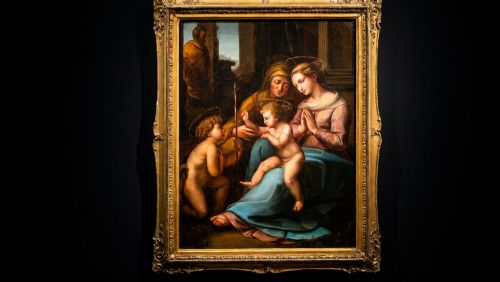
Painters utilised oil on canvas, frequently applying pigment over gesso grounds on wooden panels or stretched cloth. Many canvas works replicate celebrated Renaissance compositions by masters like Raphael and Guido Reni.
Sculptural pieces rely on carved wood, sometimes enhanced with gilt finishes or painted details. Folk art examples incorporate unusual media, including detailed bottle dioramas and mounted panels.
Listings feature oil paintings, wooden statues, icons mounted on wood panels, and folk art models created across the nineteenth century.
Distinctions in quality
Painted works vary from accomplished studio canvases following classical masters to simpler folk interpretations. The preservation of the original surface, gesso, and gilt wood significantly influences the overall character.
Costantino Frixione·Jozef Jansessens·Guido Reni·Girolamo Dai Libri·Raffaello Sanzio Da Urbino
The 19th Century Devotional Art Glossary
- Oleograph
- A colour lithograph that simulates an oil painting, often mounted under glass on canvas during the period.
- Santos
- A carved wooden figure representing a saint or sacred personage, traditionally used in religious processions and home altars.
- Ex Voto
- A votive offering presented to a saint or divinity in fulfilment of a vow, frequently taking the form of a small metal or painted plaque.
- Gesso
- A plaster mix applied to wood or canvas as a base for painting or gilding.
- Globe de Marie
- A French decorative glass dome enclosing religious figures or mementoes on a wooden base.
19th Century Devotional Art: Frequently Asked Questions
What is 19th century devotional art?
These are sacred paintings, statues and folk objects created during the eighteen hundreds to aid private prayer and religious observance.
They range from formal oil paintings after Renaissance masters to folk art carvings and household shrines.
Where were these pieces made?
The items originate across Europe, with particular representation from Italy, Spain, Germany and Austria.
Regional workshops and local folk artists produced much of the carved woodwork and vernacular painting.
How should I display a Santos figure?
Santos figures require stable indoor conditions away from direct sunlight and damp environments to protect the carved wood and paint.
Place them securely on a mantel, shelf or within a dedicated cabinet where the details can be appreciated safely.
Are these paintings original works?
The selection includes original oil paintings by period artists alongside studio copies and oleographs after famous masters like Raphael.
Each listing specifies the medium, whether painted canvas, panel, or print under glass.