


19th Century Desktop Chest
A 19th century desktop chest is a scaled storage cabinet designed for writing surfaces, offering compartments for letters, specimens and keepsakes.
19th Century Desktop Chest
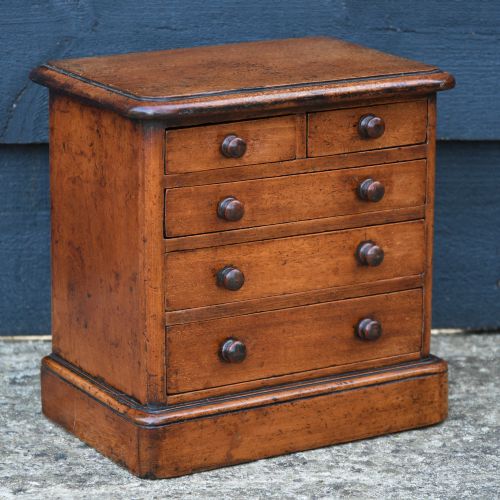
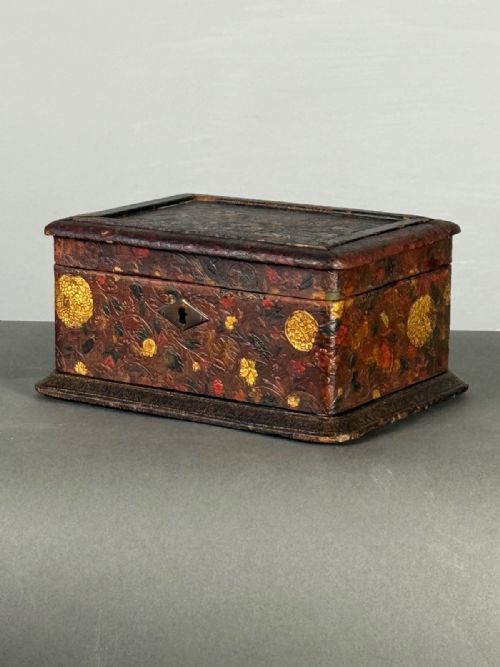
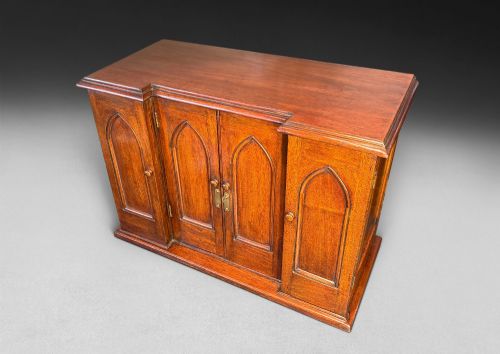
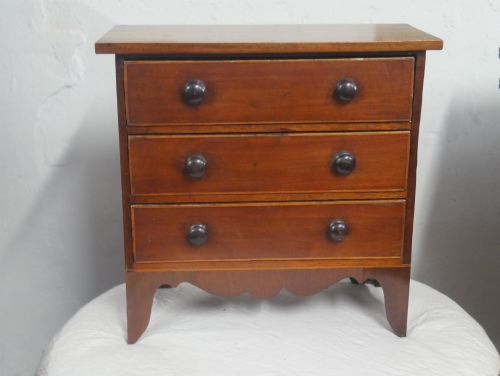
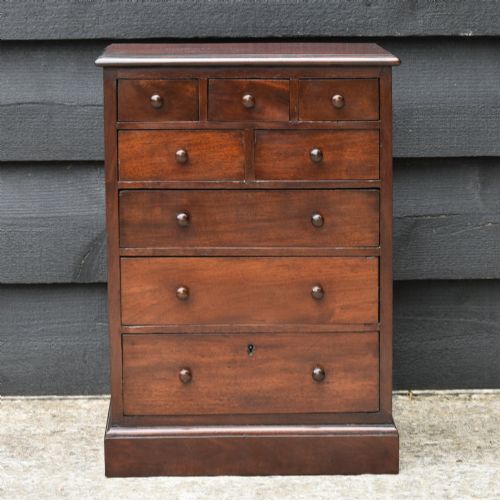
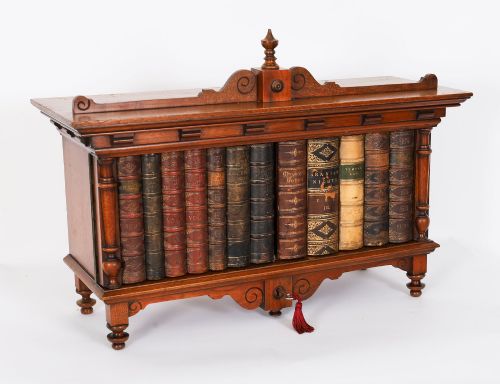
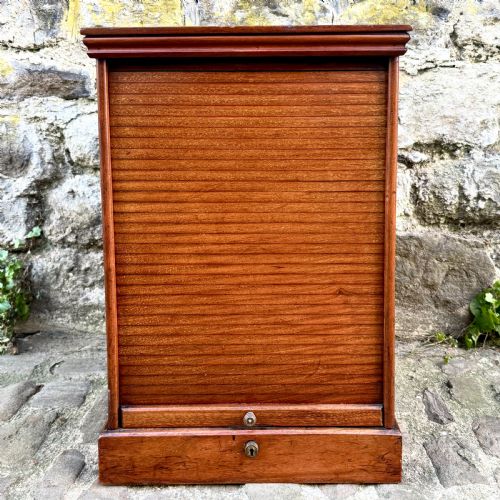
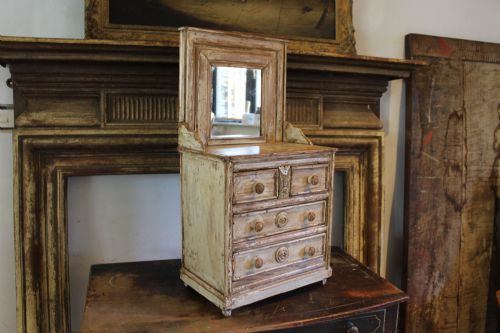
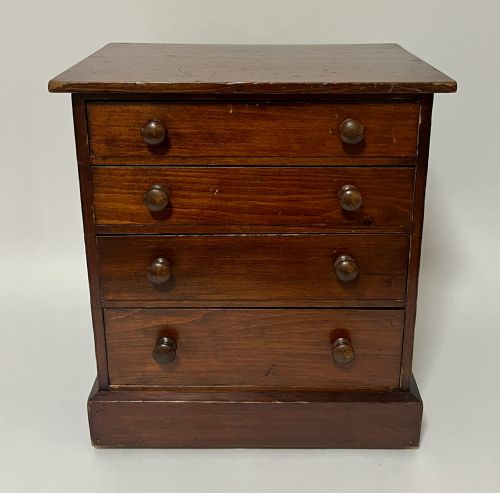
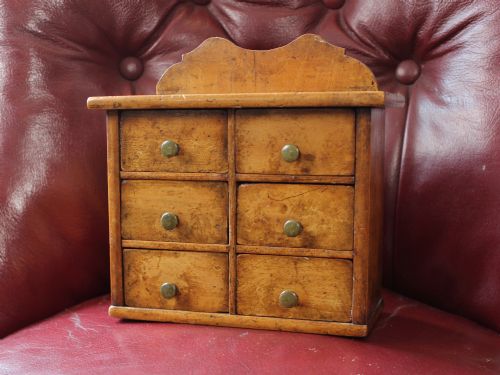
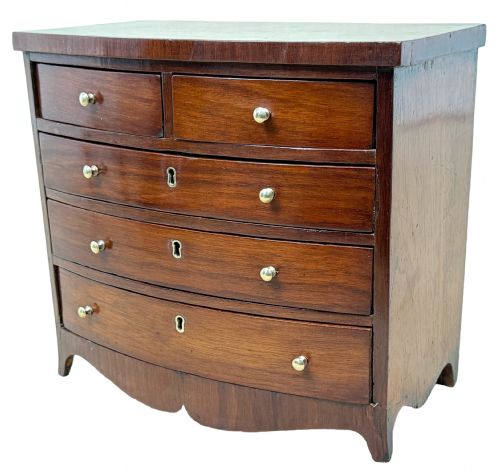
A 19th century desktop chest serves as a compact storage unit for the writing table, housing everything from correspondence to natural history specimens. Buyers seeking a 19th century desktop chest encounter miniature chests of drawers, tabletop cabinets, cigar humidors, and specimen cases.
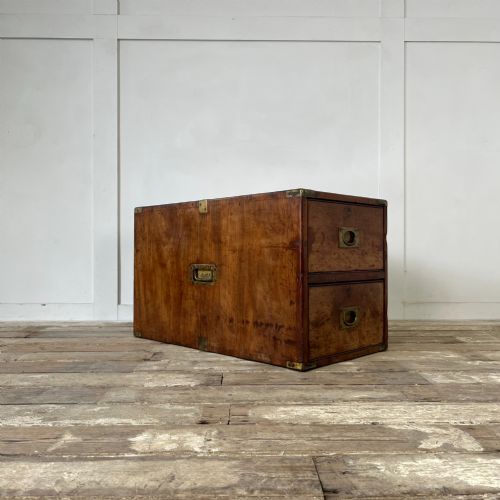
The materials span mahogany, oak, walnut, and pine, often mounted in brass and lined with leather. Examples range from Regency and Victorian campaign pieces to Gothic Revival table-top cabinets and French miniature chests.
Forms include bowfront drawer sets, Wellington chests, and apothecary display boxes designed to sit securely on a desk or table. These pieces reflect the functional desk accessory needs of the 19th century, constructed to keep small valuables organised.
How They Were Made
Cabinet makers utilised dense hardwoods such as mahogany, oak, and walnut alongside burr veneers, applying brass handles, bound corners, and locks for security. Surfaces often featured leather tooling, hand-painted decoration, or intricate inlay work.
Joinery techniques prioritised durability in miniature scale, allowing small drawers and compartments to operate smoothly within compact frames. Brass mounts and campaign-style hardware provided structural reinforcement for portable desktop use.
Listings feature woods including mahogany, oak, pine, burr walnut, fruitwood, and eastern elm across the 19th century.
What Varies in Quality
Quality rests in the precision of the miniature joinery, the choice of timber figure such as burr walnut or figured mahogany, and the integrity of the original brass hardware. Pieces retaining fitted interiors and working locks command greater appreciation.
The refinement of the timber patina and the subtlety of any inlay work distinguish standard utility boxes from superior cabinet work. Details like hand-tooled leather surfaces and sound internal drawer construction elevate the execution of the piece.
Susse Freres Paris·Jennens and Bettridge
The 19th Century Desktop Chest Glossary
- Apprentice piece
- A small-scale item demonstrating the skill required for a craftsman to join a trade guild. These often take the form of miniature chests of drawers.
- Humidor
- A moisture-controlled box designed for storing cigars. 19th century examples frequently utilise cedar linings within mahogany or walnut exteriors.
- Wellington chest
- A tall, narrow chest of drawers secured by a hinged locking stile on one side. This locking mechanism holds all drawers shut simultaneously.
- Campaign chest
- Portable furniture built in sections with recessed brass handles and corner brackets. Designed for military officers on the move, these appear in miniature desktop formats.
- Specimen case
- A cabinet fitted with shallow drawers for storing natural history collections like insects or minerals. They protect delicate items behind glass or tightly fitted wooden fronts.
19th Century Desktop Chest: Frequently Asked Questions
What is a 19th century desktop chest used for?
These pieces provided organised storage for correspondence, writing instruments, or personal keepsakes directly on a study desk. Interiors frequently accommodated letters, documents, and small valuables.
Collectors also utilised them to house natural history specimens, jewellery, and cigars. Their compact footprint allowed desktop access while keeping work surfaces clear.
How do you tell a miniature chest from an apprentice piece?
Apprentice pieces represent scaled-down furniture built by craftsmen to demonstrate mastery before qualifying for a guild. They replicate full-sized furniture designs down to the structural joints.
Miniature chests served functional roles as desktop storage rather than trade examinations. Both share meticulous scaling, but apprentice pieces typically exhibit exceptional joinery relative to their small size.
What woods were commonly used for these chests?
Mahogany, oak, and walnut predominate among the surviving pieces, often selected for durability and grain figure. Burr walnut and satinwood veneers added decorative contrast to the exterior surfaces.
Secondary woods like pine appear on internal drawer linings and carcass backs. Hardwoods ensured the small drawers could withstand frequent opening without warping.