



19th Century Desk Tray
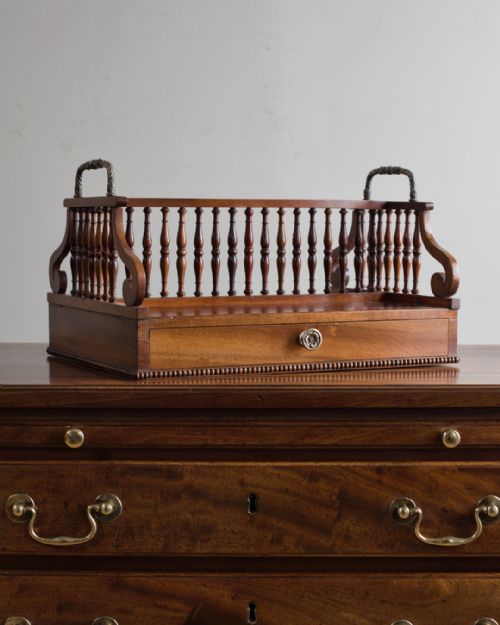
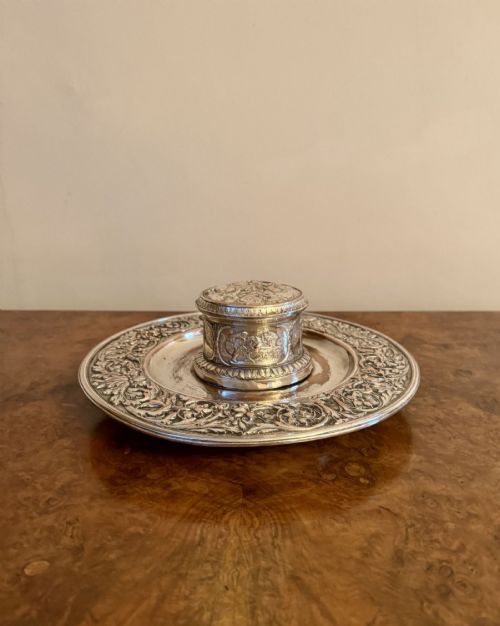
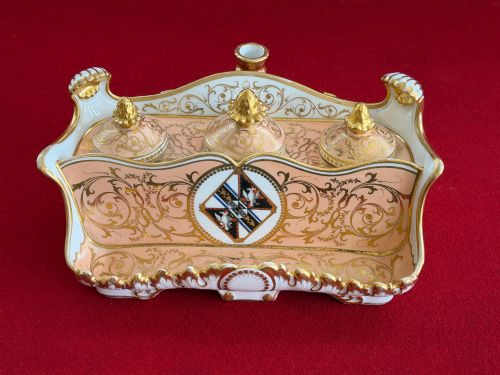
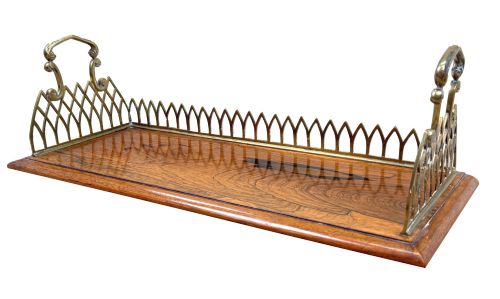
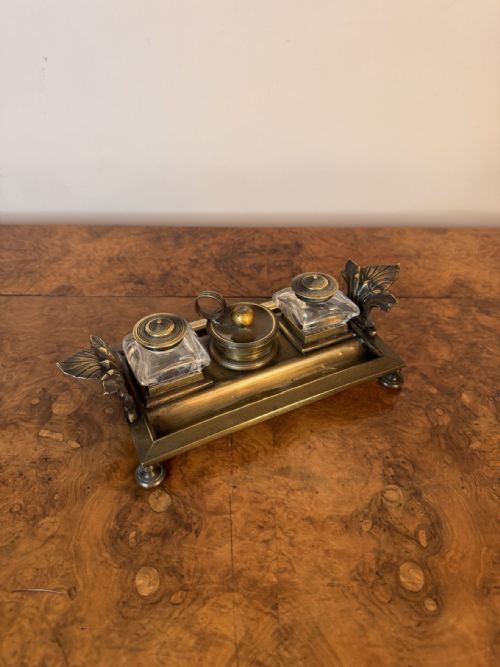
These items for a 19th century desk tray organise writing tools and correspondence upon a table.
19th Century Desk Tray
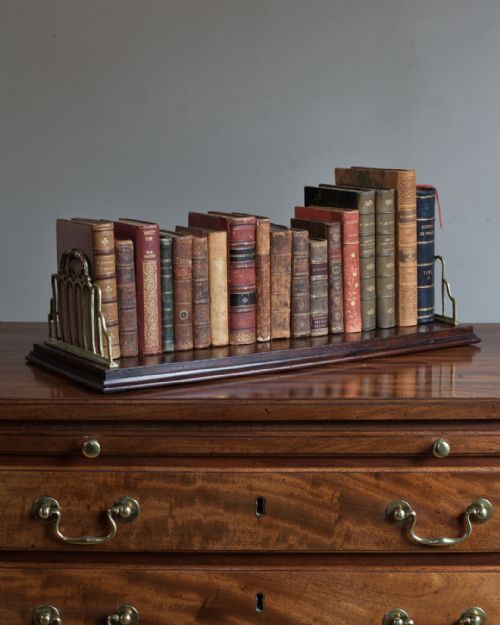
A 19th century desk tray holds inkwells, pens, and paper items for correspondence, appearing in forms such as inkstands, letter racks, and writing trays. The pieces originate from Victorian, Regency, Georgian, and Napoleon III periods, drawing upon English, French, Scottish, Dutch, and Kashmiri origins.
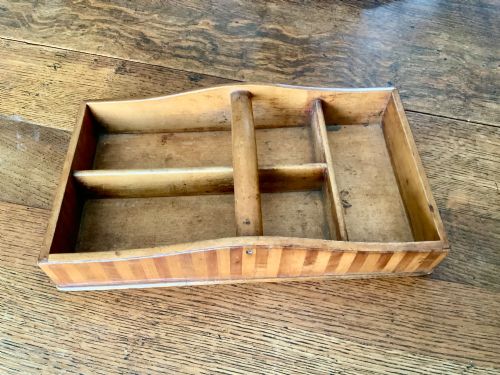
Most examples function as combined desk stands fitted with glass or ceramic wells, while others take the form of wooden cutlery trays adapted for stationery. Materials shift from simple pine and mahogany to walnut, coromandel, papier-mâché, and marble.
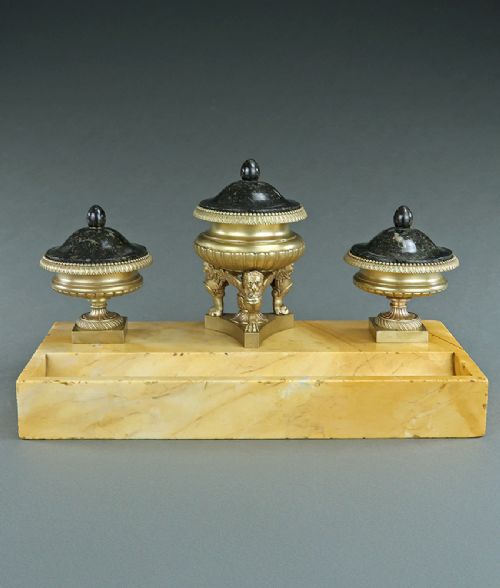
Makers and workshops construct these accessories in styles ranging from Neoclassical and French Rococo Revival to Black Forest carving and Art Nouveau. Buyers encounter varied configurations, from simple brass-mounted trays to elaborate multi-piece ensembles with gilt bronze and champlevé enamel.
Materials and construction
Metalwork relies upon cast brass, gilt bronze, ormolu, and patinated bronze, frequently paired with Sienna marble, onyx, or agate cabochons. Papier-mâché and lacquer provide durable surfaces for hand-painted decoration.
Ceramic components include Dutch Delft blue and white faience and early porcelain inserts, while glass forms inkwell liners and bottles.
19th Century Desk Tray Retail Price Guide 2026
Typical asking prices for 19th century desk tray among the pieces listed under this phrase on Sellingantiques today, from the lower quarter to the upper quarter. They describe what is for sale here now, not the wider market.
Black Forest carved bears hold inkwells with unwavering determination.
Quality variations
The standard of execution depends upon the precision of metal casting, the clarity of hand-carving in wood or Black Forest bears, and the finesse of hand-painted papier-mâché decoration. Superior examples integrate precious materials like tortoiseshell, coromandel, and champlevé enamel with balanced proportions.
Maker attribution and hallmarked silver mounts elevate an object above standard commercial production, while replacement glass inkwells or missing lids diminish integrity.
Robert Garrard London·Rupert Favell·Lefebvre of Belgium
The 19th Century Desk Tray Glossary
- Encrier
- A French desk stand or inkstand designed to hold writing equipment. These often incorporate marble bases and gilt bronze mounts.
- Vide poche
- A small tray for emptying pockets or holding loose desk items. Late 19th century French examples commonly employ gilt bronze.
- Champlevé
- An enamelling technique where troughs are dug into a metal surface and filled with vitreous enamel. Paris makers utilised this method on desk stands.
- Cabochon
- A gemstone or hardstone shaped and polished rather than faceted. Antique brass desk sets sometimes mount agate cabochons.
19th Century Desk Tray: Frequently Asked Questions
What is a 19th century desk tray used for?
These trays hold inkwells, pens, and letter racks to keep writing equipment orderly on a desk. They served administrative and correspondence duties in Victorian and Georgian homes.
Today, they function as decorative desktop accessories or storage for small items.
How do I identify a Victorian desk stand?
Victorian examples frequently utilise walnut, coromandel, or papier-mâché, often incorporating brass inlay and silver mounts. Stylistic clues include Gothic revival, Rococo revival, or plain utilitarian forms.
Date markers also appear through hallmarks on silver components or stylistic crossover into Art Nouveau by the end of the century.
What materials were used for desk trays?
Maker materials include hardwoods like mahogany and rosewood, alongside decorative options such as coromandel, tortoiseshell, and papier-mâché. Metals range from simple brass to gilt bronze, ormolu, and patinated bronze.
Stone elements like Sienna marble and onyx frequently form the heavy bases of French and Neoclassical stands.
How do French and English trays differ?
French pieces from the period often favour gilt bronze, ormolu, champlevé enamel, and marble bases in Neoclassical or Napoleon III styles. English versions tend to concentrate on figured timbers like mahogany, walnut, and coromandel with brass or silver fittings.
Regional English and Welsh pieces also utilise pine in simpler cutlery tray forms.