


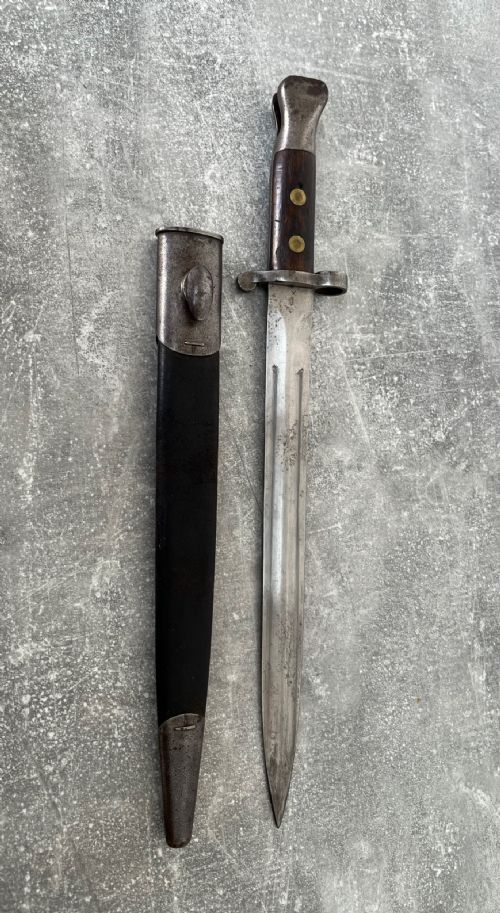


19th Century Dagger
These 19th century dagger examples span military dirks, regional sidearms and edged implements from European and Asian workshops.
19th Century Dagger
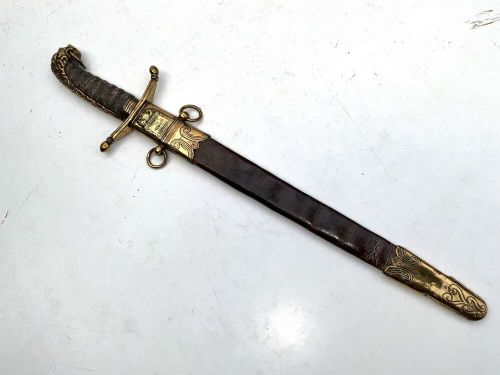
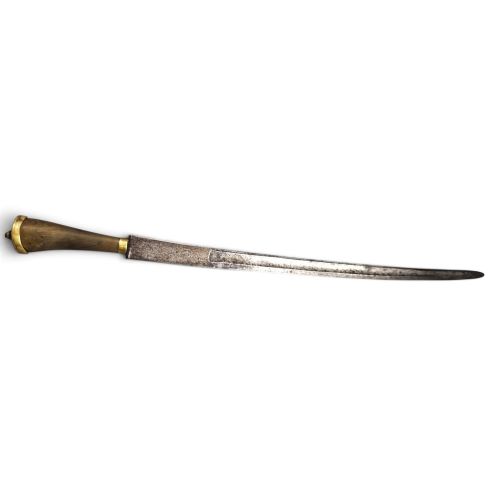
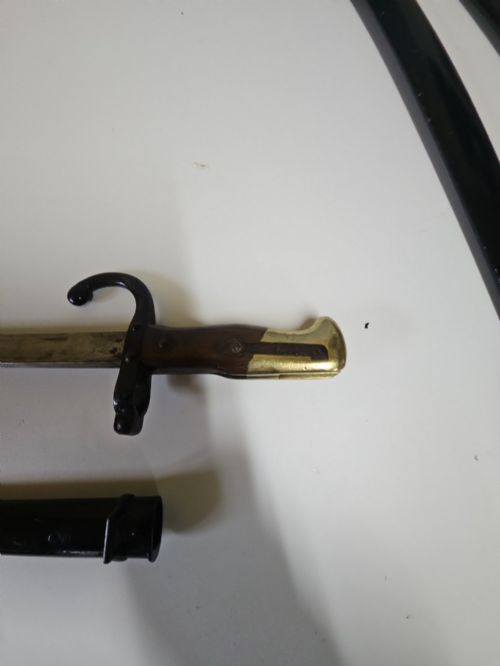
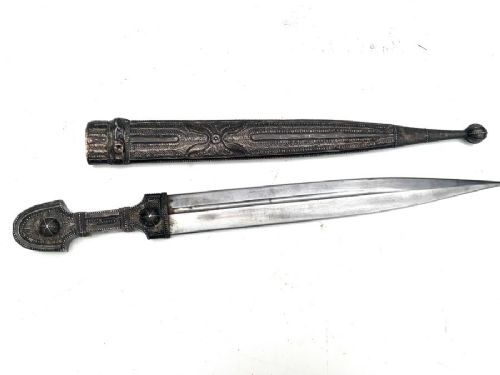
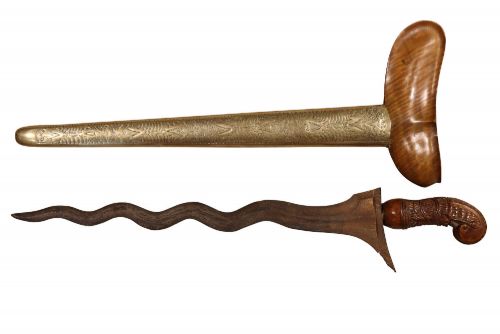
When you search for a 19th century dagger, you encounter a varied assortment of edged weapons, bayonets, military dirks and ethnographic arms. The selection includes naval dirks, French bayonets, Caucasian kindjals and Malay keris forms from various global traditions.
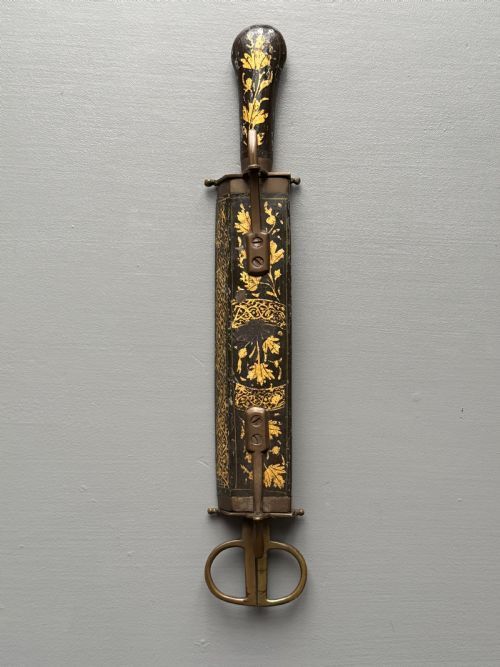
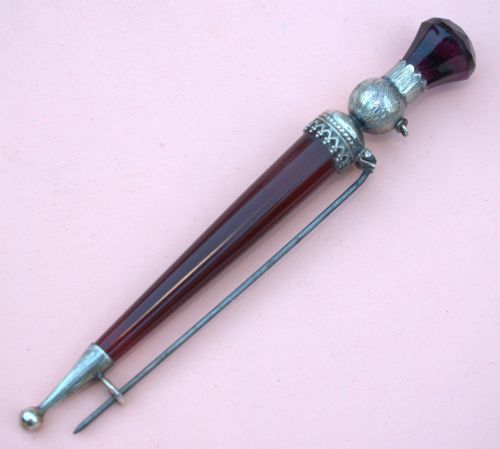
You are most likely to meet Victorian military pieces, Qajar Persian sets, and Indian katar push daggers alongside European-Afghan hybrid pesh-kabz designs. Certain items also cross into desk sets, scribe tools, and Scottish silver brooch conversions.
The origins stretch from Britain and France to Russia, Persia, India, and Southeast Asia, reflecting the distinct martial and decorative output of the period.
How they were made
Blades are typically forged from steel, sometimes featuring blue and gilt treatments or pierced decorative work. Hilt and scabbard construction incorporates brass, iron, silver, wood, leather, bone, lacquer, and papier-mâché.
Mounts and fittings utilise cast brass, gilt brass, and chased silver, whilst specialised items incorporate agate stones or delicate papier-mâché sheaths paired with matching scissors.
19th Century Dagger Retail Price Guide 2026
Typical asking prices for 19th century dagger among the pieces listed under this phrase on Sellingantiques today, from the lower quarter to the upper quarter. They describe what is for sale here now, not the wider market.
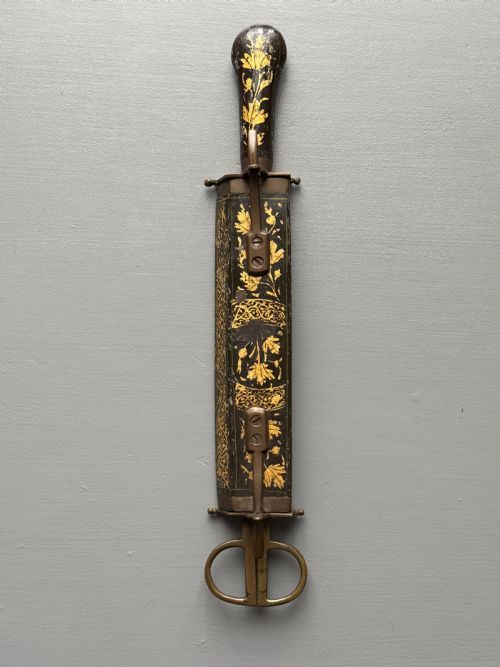
Some Persian dagger sets come equipped with their own matching papier-mâché scissors, proving that even warriors appreciate a coordinated stationery drawer.
What varies in quality
The standard of workmanship differs between utilitarian military bayonets issued for service and elaborately decorated court weapons created for Persian or Mogul patrons. Finer examples display meticulous detailing in pierced steel sheaths, intricate grip materials, and preserved blue and gilt blade finishes.
Materials dictate much of the distinction, shifting from basic iron and wood to precious silver mounts, inset agate stones, and specialised lacquer work.
The 19th Century Dagger Glossary
- Dirk
- A long-bladed stabbing weapon, frequently associated with Scottish Highland dress or naval officers.
- Katar
- A traditional Indian push dagger characterised by an H-shaped horizontal handgrip that positions the blade in line with the user's arm.
- Kindjal
- A double-edged Caucasian dagger featuring a broad, straight blade and a hilt with minimal crossguard.
- Keris
- An asymmetrical dagger native to Southeast Asia, known for its distinctive wavy or straight laminated blade pattern known as pamor.
- Bayonet
- A solid blade designed to be fitted to the muzzle of a rifle for close combat.
- Pesh-kabz
- A single-edged Persian or Afghan dagger with a T-section spine designed to pierce mail armour.
19th Century Dagger: Frequently Asked Questions
What is a 19th century dagger used for?
These items served various roles, ranging from military sidearms and naval officers' weapons to ceremonial court pieces and personal protection tools. Some regional variants functioned as daily utility implements or markers of social status.
Over time, many of these edged weapons transitioned into collector pieces, decorative desk sets, or in the case of Scottish dirks, Highland dress accessories.
How do I identify a Qajar Persian dagger?
Qajar Persian pieces frequently present distinct papier-mâché construction on their hilts and scabbards, often decorated with painted figures or floral motifs. They sometimes appear paired with matching scissors in a unified set.
Their stylistic ornament clearly separates them from standard European military bayonets or Caucasian kindjals.
Are all 19th century daggers military weapons?
No, while many examples originate from military contexts like the Royal Navy, French infantry, or British pattern bayonets, a significant portion comes from civilian or ethnographic traditions. Items like the Indian katar or Malay keris served cultural, ritual, and personal defence functions.
Additionally, some pieces were created primarily as decorative works of art or court regalia rather than combat equipment.
How should I display a dagger at home?
Displaying these pieces safely involves securing them on stable horizontal mounts or enclosed wall display cases that protect the steel blades and delicate materials like leather, bone, and papier-mâché from environmental extremes.
Keeping them away from direct sunlight and excessive humidity helps preserve the original wooden grips, silver mounts, and gilt finishes.
What materials are common in these weapons?
Steel forms the primary material for the blades, frequently complemented by iron, brass, and gilt brass mountings. Grips and scabbards often incorporate wood, leather, bone, silver, lacquer, and papier-mâché.
Certain regional pieces add decorative stones such as agate, particularly within Scottish brooch conversions and Indian katar designs.