





19th Century Corner Table
These pieces use forgotten floor space intelligently, bringing timber and brass from the 19th century corner table tradition directly into modern rooms.
19th Century Corner Table
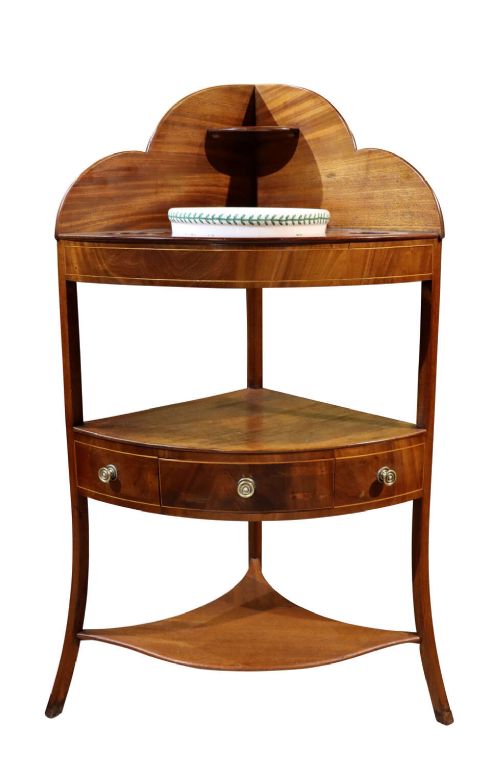
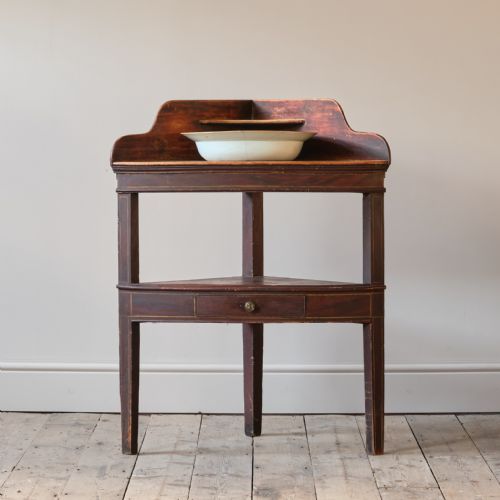
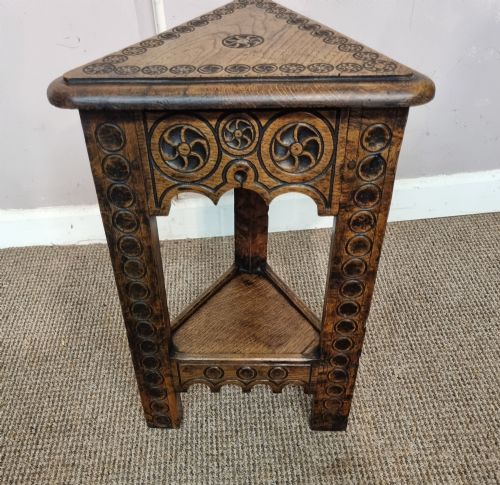
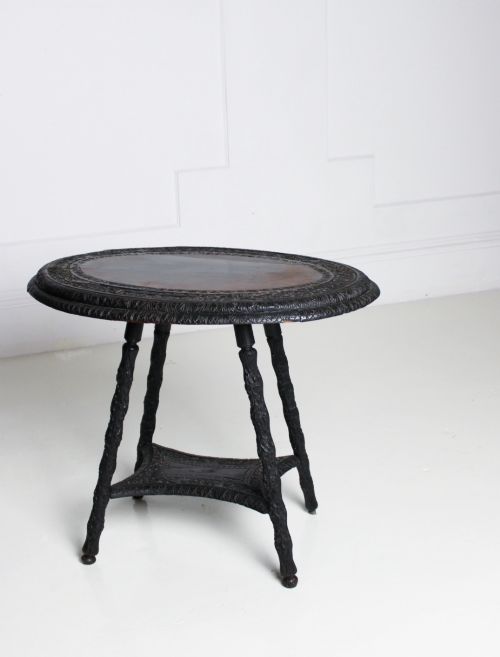
A 19th century corner table turns unused angles into practical surfaces, appearing in forms from triangular lift-top tables to wash stands and console tables. The selection ranges across the Georgian, Regency and Victorian periods, alongside specific regional iterations.
Mahogany and walnut form the backbone of the domestic items, whilst camphor wood and sandalwood appear in campaign and Anglo-Indian variants. Most examples on this page date from the broader 19th century and the Victorian era, offering compact scales designed to fit tightly against meeting walls.
Materials and construction methods
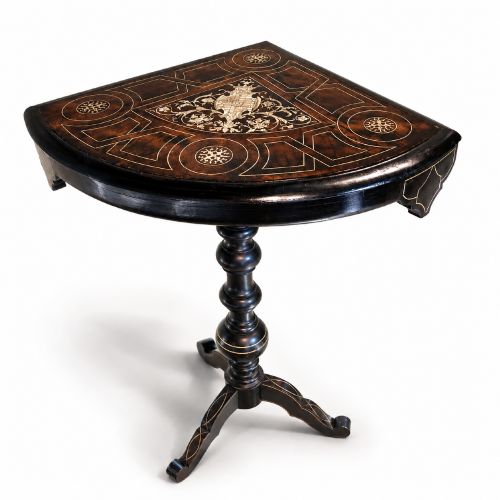
Cabinet makers utilised dense hardwoods like mahogany, rosewood and burr walnut, frequently applying distinct veneers to flat or demi-lune surfaces. Inlaid brass, bone and original paint finishes appear across specific pieces, showing decorative techniques native to Regency and Anglo-Indian workshops.
Structural integrity relies on traditional joinery suited to triangular and multi-tiered forms, from tiered etageres to folding card tables. Secondary timbers like pine support the primary show woods, whilst brass mountings reinforce campaign trunks and tables designed for travel.
19th Century Corner Table Retail Price Guide 2026
Typical asking prices for 19th century corner table among the pieces listed under this phrase on Sellingantiques today, from the lower quarter to the upper quarter. They describe what is for sale here now, not the wider market.
Bone inlay from Hoshiarpur sits alongside campaign brass corners, proving that 19th century furniture travelled further than most of us do.
Distinguishing quality across the range
Quality rests in the choice of timber figure, such as the depth of grain in burr walnut or bird's-eye maple against plain hardwoods. Finer pieces demonstrate precision in brass inlay, carving work and the retention of original surface patination rather than later finishes.
Proportion and utility separate standard utility items from more ambitious architectural or console formats. The integrity of internal framing, original hardware and untouched timber surfaces dictates the standing of each item within its period.
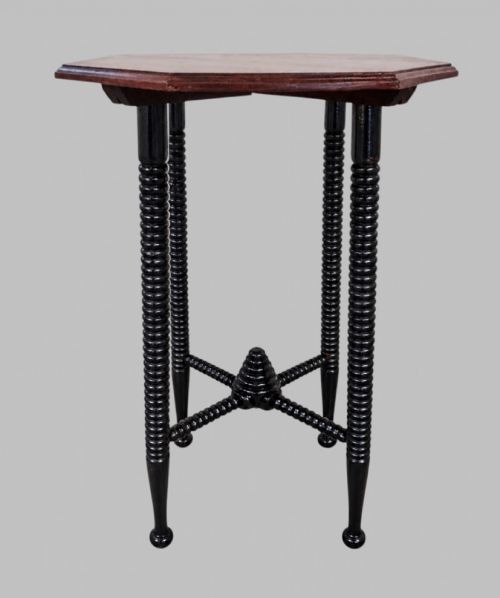
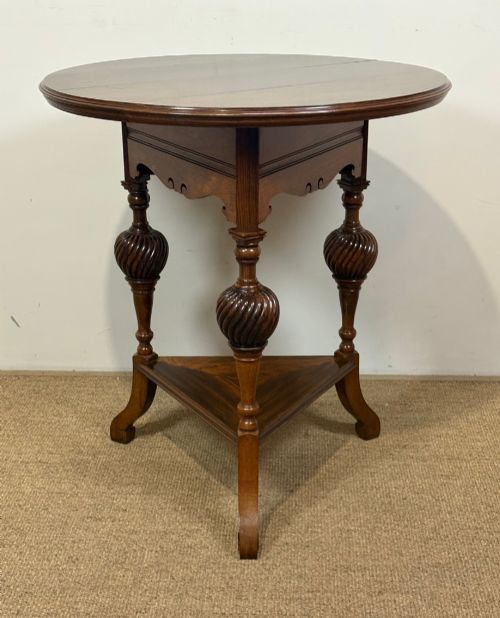
Liberty & Co.·E.W Godwin
The 19th Century Corner Table Glossary
- Demi-lune
- Having a half-moon shape, often applied to console tables and small side pieces designed to sit flat against a wall.
- Campaign trunk
- A portable storage chest constructed in sections with brass binding and flush handles, built for military travel during the 19th century.
- Whatnot
- An open shelving unit with multiple tiers used for displaying objects, developing through the Regency and Victorian periods.
- Monopodia
- A single carved animal-form support or leg, typically terminating in a paw or hoof, seen on console tables.
- Etagere
- A movable stand with multiple open shelves for small ornaments or books, functioning similarly to a whatnot.
19th Century Corner Table: Frequently Asked Questions
How do I place a corner table?
These tables are designed to slide precisely into the meeting point of two walls, making use of angles that standard rectangular furniture leaves empty.
They work well in hallways, studies and bedrooms where floor space is limited but surface area remains useful.
What wood types are common?
Mahogany and walnut dominate the domestic pieces from the Georgian and Victorian eras, often featuring burr veneers for decorative effect.
Alternative timbers include camphor wood, sandalwood and rosewood, which appear in campaign and imported regional furniture.
How do I date a 19th century table?
Dating relies on the stylistic markers of the period, such as Regency brass inlay, Georgian proportions, or Gothic Revival and Aesthetic Movement details.
Construction methods, secondary woods and hardware also help narrow the decade of manufacture within the 19th century.
What is an etagere?
An etagere is a multi-tiered shelving unit designed for displaying small objects, decorative items or books.
In 19th century interiors, these pieces served both decorative and practical storage functions in living rooms and corner spaces.