



19th Century Copper Tub
These heavy utilitarian vessels and containers bring warmth and texture into modern spaces when you search for a 19th century copper tub.
19th Century Copper Tub
When you search for a 19th century copper tub, you are looking at heavy utility items that served working households, farms, and industrial spaces during the Victorian era and earlier decades. These pieces include large pots, planters, log bins, cauldrons, water barrels, and cooking vessels originally designed for daily domestic or agrarian chores.
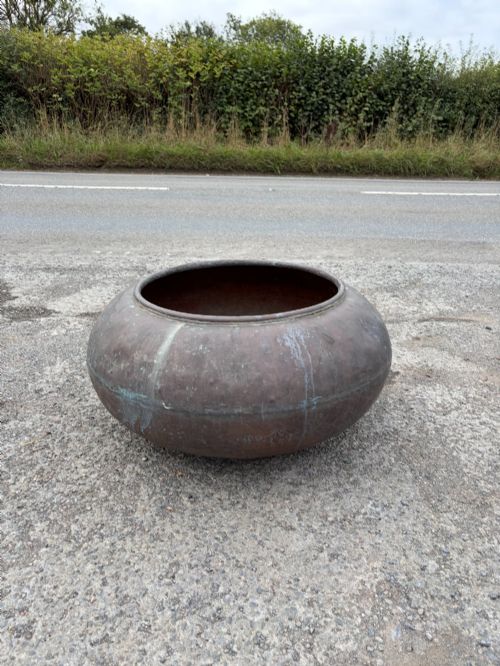
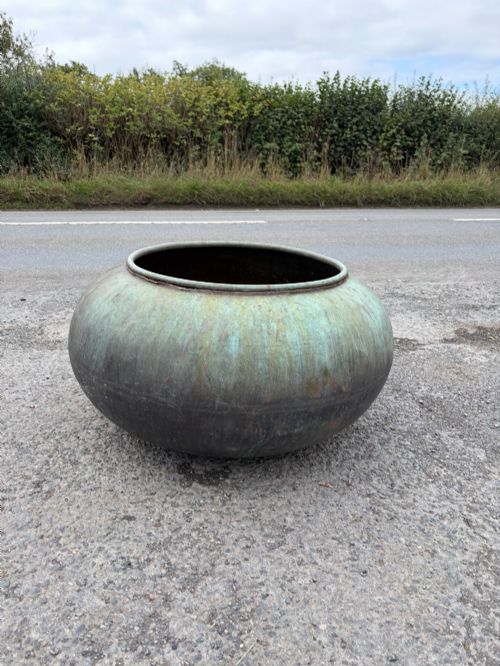
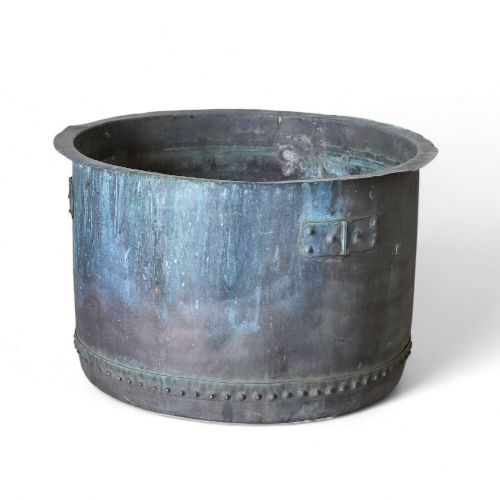
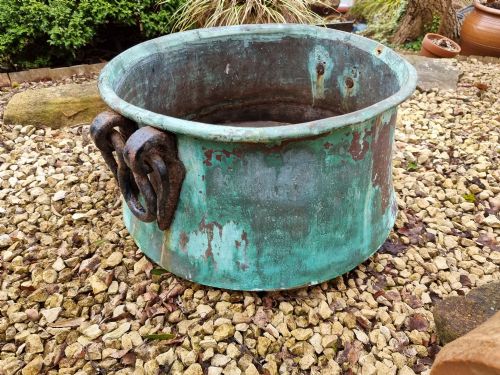
The version you are most likely to meet on this page is a generous copper pot or planter, often showing the marks of hard work through weathered patinas, verdigris surfaces, and hand-beaten textures. Many examples double as robust garden planters or indoor log baskets, adapting their original functional capacity to decorative roles.
Origins span English, Swedish, and French country workshops, encompassing styles from Georgian elegance to rustic farmhouse simplicity and Victorian industrial design. These vessels range from simple open bowls to handled cauldrons and riveted boilers meant to hold water, grain, or fuel.
How they were made
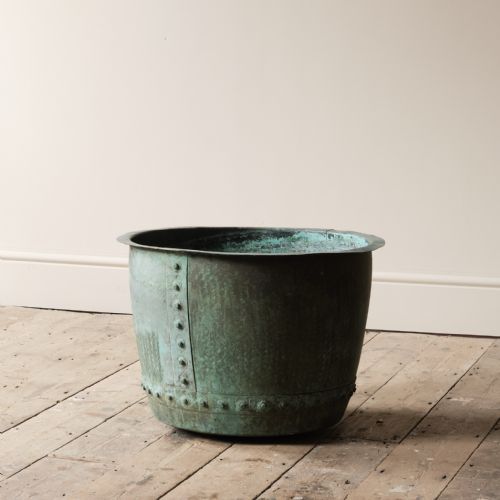
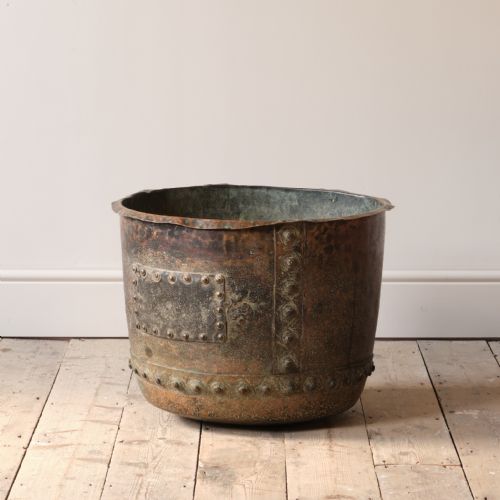
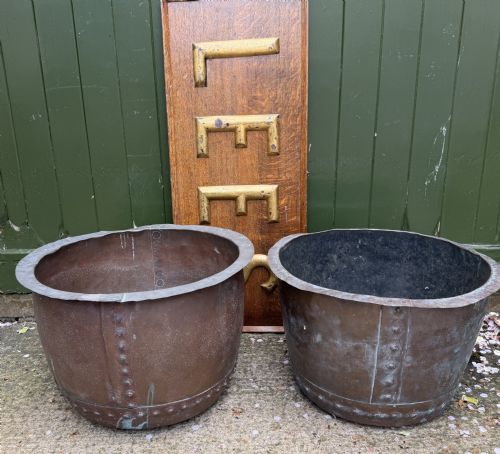
Makers formed these heavy vessels primarily from sheet copper, hammering and shaping the metal by hand before securing the joints with robust metal rivets. The reliance on hand-riveting created structural strength capable of containing liquids, grains, and heavy fuel logs without splitting.
Many items incorporate complementary metals, uniting copper bodies with brass rims, iron bands, or wrought iron swing handles for added durability. Handles and structural supports often utilised iron or steel, combining malleable copper walls with rigid framing materials.
Some heavy copper pots carry numbered stamps, quietly revealing their past life as official grain measures on bustling nineteenth-century market floors.
What varies in quality
The distinction between ordinary utility items and superior examples lies in the integrity of the metalwork, the presence of original fittings, and the depth of the natural patina. Pieces that retain their heavy wrought iron handles, original brass accents, and unpolished surfaces command greater appreciation.
Proportion and scale also separate standard domestic items from exceptional vessels, particularly in extra-large cauldrons and grain measures that maintain balanced symmetry despite their heavy wear. The character of the surface - ranging from deep reddish-brown tones to stable verdigris - reflects the history of each piece.
The 19th Century Copper Tub Glossary
- Patina
- The surface film and colour developed through age, oxidation, and use. A rich natural patina displays varied tones of brown and green that signal authentic historic wear.
- Verdigris
- The green crust or patina formed on copper and brass surfaces through atmospheric weathering and oxidation. This surface finish adds distinct visual depth to garden planters and outdoor vessels.
- Riveted
- Joined together using metal pins hammered flat to secure overlapping sheets of copper. Hand-riveting indicates traditional construction methods used before mass-production took over.
- Cauldron
- A large metal pot with a wide opening and usually a swing handle, designed for hanging over fires or heating substantial volumes of liquid.
- Log bin
- A deep container utilised for storing and displaying firewood by a hearth. These vessels often double as large indoor or outdoor plant holders.
19th Century Copper Tub: Frequently Asked Questions
What were 19th century copper tubs used for?
These vessels served demanding practical roles in Victorian homes, farms, and industrial settings. They held water, grain, washing, and cooking supplies or carried heavy loads of fuel.
Today, their durable construction and generous proportions make them suitable for repurposing as log bins, indoor planters, or garden troughs.
How do I clean a copper tub?
Most collectors prefer to leave the original patina and weathered surface untouched, as this finish records decades of history. Aggressive polishing removes the character and natural verdigris that give these pieces their visual appeal.
If cleaning is necessary, use a soft cloth and mild soap to remove surface dust without disturbing the underlying metal oxidation.
Are these copper vessels waterproof?
While many were originally built to hold water, boiling liquids, or wash loads, centuries of use can affect their structural seals. It is wise to test individual vessels for leaks before filling them for indoor display.
Using a modern liner inside large planters protects the historic metal from continuous moisture contact and soil acidity.
How can I tell the age of a copper tub?
Age is determined by examining construction methods, such as hand-hammered panels and iron rivets rather than modern machine welds. Traces of Georgian styling, Victorian proportions, or specific maker marks also help narrow down the period.
Heavier gauge copper and forged iron swing handles typically point towards nineteenth-century craftsmanship rather than later reproductions.