
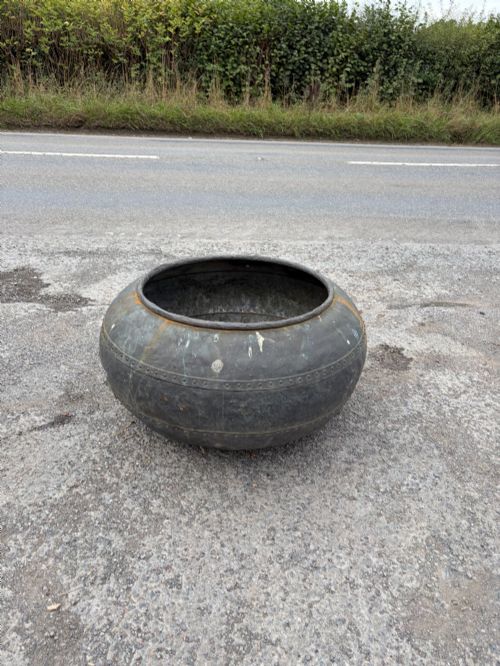
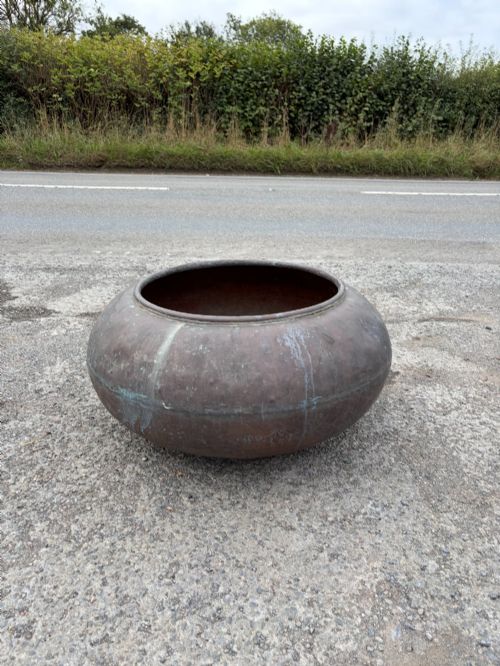
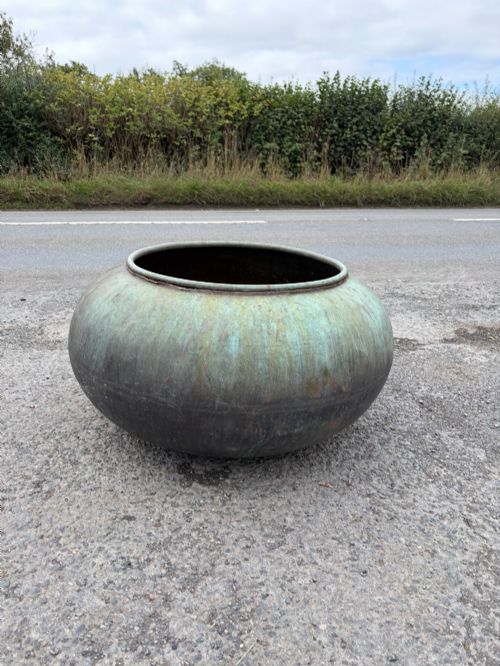
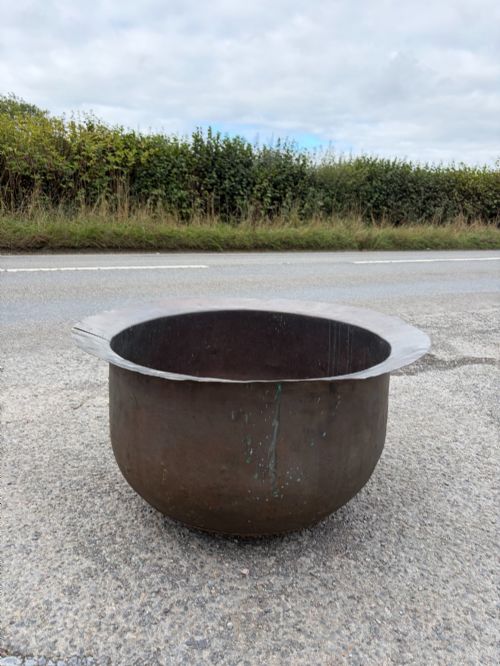


19th Century Copper Cauldron
A 19th century copper cauldron brings warmth and tactile weight to a room, serving as a functional log bin or planter.
19th Century Copper Cauldron
A 19th century copper cauldron bridges the gap between utilitarian kitchenware and decorative home furnishing. Buyers searching for this phrase seek vessels that double as log bins, garden planters or jardinières, utilising their generous proportions for modern display.
The versions most commonly met on this page span the 19th century, including Victorian examples and earlier Georgian pieces dating from around eighteen hundred. These objects appear in robust forms such as cooking pots, boilers and log buckets.
Originating from domestic and industrial kitchens, these pieces transition easily into contemporary rustic farmhouse and country interiors. Their substantial size and metal construction provide a strong focal point for hearths and living spaces.
Materials and Construction Methods
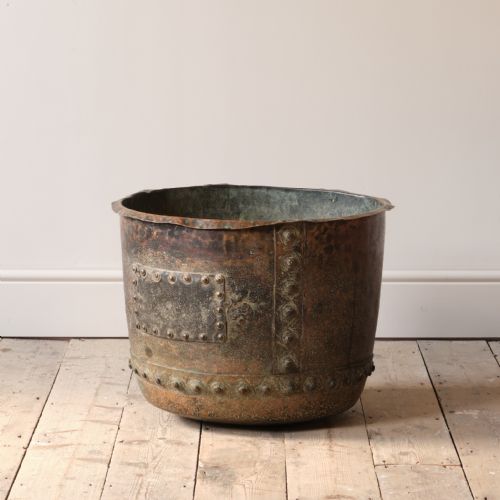
Makers constructed these vessels primarily from heavy gauge copper, beaten and shaped by hand to create durable hollowware. Rivets secure overlapping seams, providing structural integrity for heavy loads like logs or wet soil.
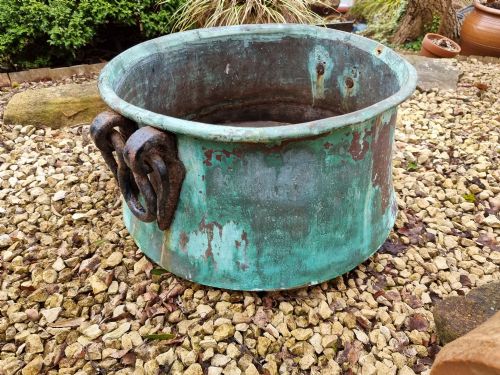
Iron and wrought iron form the robust swing handles and swing handles attached to the sides, while brass appears in feet and decorative mounts. Steel also surfaces in related planters from the same period, completing the mixed metal palette.
Materials span copper, iron, wrought iron, brass, metal and steel, often combined with original iron swing handles.
Factors That Distinguish Quality
The distinction between standard utility vessels and superior examples rests upon construction detail and original mounts. Pieces featuring hand-beaten surfaces, heavy riveted seams and integral cast brass paw or lion mask feet demonstrate higher craftsmanship.
Condition of the metal surface and the presence of original iron handles or swing handles alter the character of the piece. Authentic patina and verdigris finish contribute visual depth without masking the underlying quality of the metalwork.
The 19th Century Copper Cauldron Glossary
- Cauldron
- A large deep metal pot used originally for cooking or boiling over an open fire. These heavy vessels now serve frequently as log bins and garden planters.
- Verdigris
- A green patina formed naturally on copper and brass surfaces through atmospheric oxidation. This patination adds distinctive colour and historical depth to antique metalware.
- Jardiniere
- An ornamental pot or stand designed to hold growing plants or flowers. In nineteenth-century metalwork, these often feature decorative feet or handles.
- Riveted
- Joined together using metal bolts or pins hammered flat at the ends. This technique creates strong structural seams on heavy copper boilers and cauldrons.
- Log bin
- A large container used to hold firewood beside a hearth. Antique copper cauldrons suit this domestic purpose due to their stable bases and spacious interiors.
19th Century Copper Cauldron: Frequently Asked Questions
What were 19th century copper cauldrons originally used for?
These large metal vessels served primarily for boiling water, washing or preparing food over open fires in domestic and industrial kitchens. Their robust construction allowed them to withstand intense heat and heavy daily use.
Over time, many of these heavy pots transitioned from utilitarian kitchen equipment into decorative items, finding a second life holding firewood by the hearth or housing large indoor plants.
How do I use a copper cauldron as a log bin?
Placing a copper cauldron beside a fireplace creates a practical and visually striking storage solution for firewood. Their wide openings allow logs of various sizes to stack neatly inside.
Ensure the interior is clean and dry before loading timber to protect the metal surface. The sturdy iron handles make repositioning the container straightforward when sweeping the hearth.
Can I use an antique copper cauldron outside?
Many of these vessels function well as garden planters or jardinières, housing large shrubs and floral displays. Copper weathers outdoors by developing a natural verdigris finish over time.
Protecting the metal from standing water and severe frost helps preserve the structural integrity of the riveted seams. Placing drainage material inside ensures plants remain healthy while resting in the antique container.
How do I tell a Georgian copper cauldron from a Victorian one?
Georgian examples often date from around eighteen hundred to eighteen twenty, displaying hand-beaten surfaces and specific forge techniques typical of earlier metalsmiths. Their proportions tend toward deep, rounded forms with simple wrought iron handles.
Victorian pieces frequently incorporate machine-rolled sheet copper and may feature cast brass feet or lion mask mounts. Examining the rivet placement and handle attachments helps identify the manufacturing period.