



19th Century Cookware
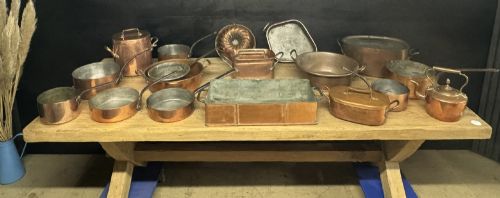
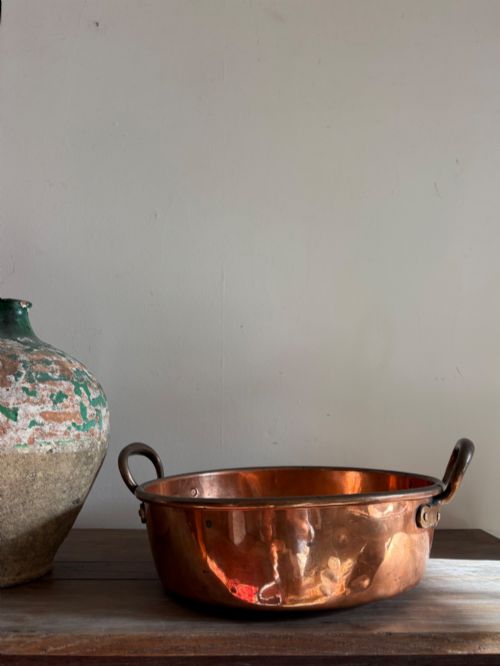
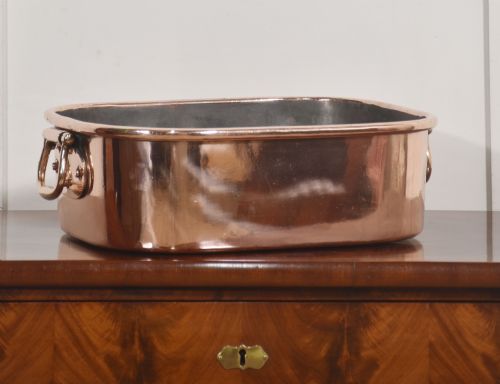
These pieces of 19th century cookware bring heavy copper pans, jelly moulds and racks into a modern kitchen for daily service or display.
19th Century Cookware
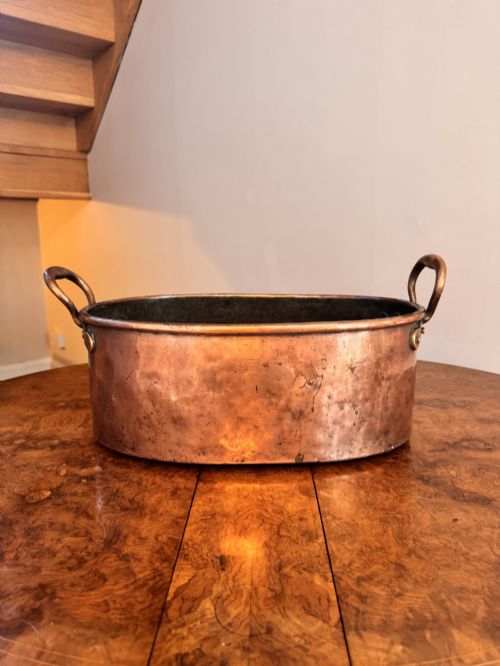
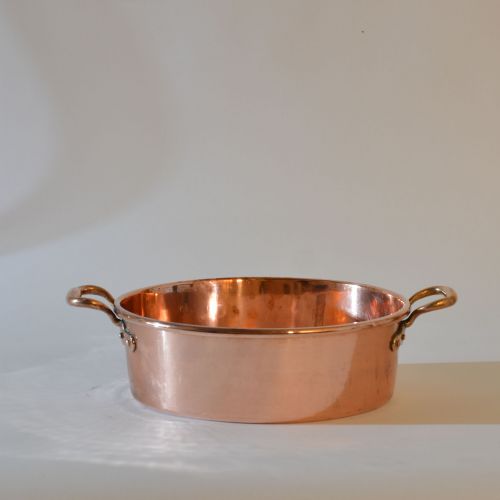
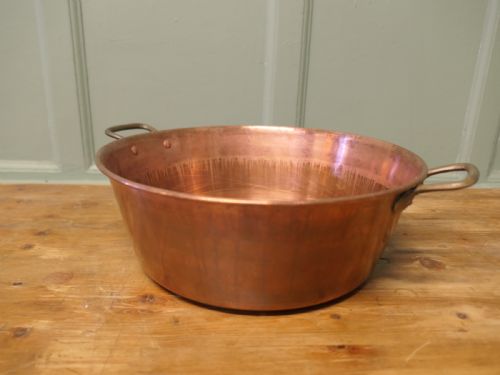
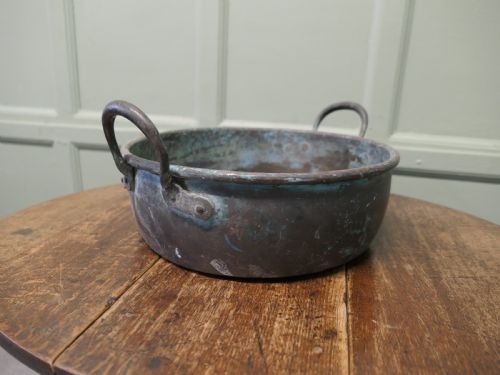
19th century cookware comprises heavy kitchen vessels and implements made primarily for preserving, boiling and baking in domestic and institutional settings. You will most frequently encounter large copper preserving pans, handled saucepans in sets, and detailed tin-lined jelly moulds across these listings.
Forms span English and French country kitchens, taking in Georgian brandy warmers, Victorian fish kettles and tiered saucepan racks designed to hold heavy metal vessels. These items reflect a period when kitchen equipment was built from durable metals to withstand direct hearth and stove heat over decades of continuous use.
The aesthetic bridges utilitarian workspace utility and decorative kitchenalia, with many pieces displaying maker marks, riveted handles and embossed motifs. Whether you seek a single jam pan or a matching set of four French saucepans, these survivors of 19th century culinary life retain their structural integrity.
How they were made
Makers formed these vessels predominantly from heavy-gauge sheet copper or cast iron, hammering and riveting the seams by hand before attaching brass or iron handles. Copper pans often received a protective internal lining of pure tin to prevent acidic foods from reacting with the metal during boiling and preserving.
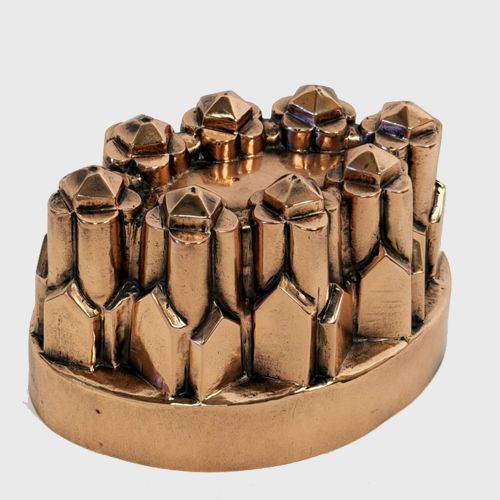
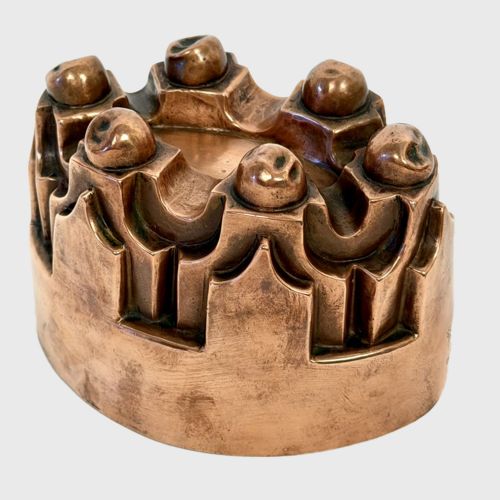
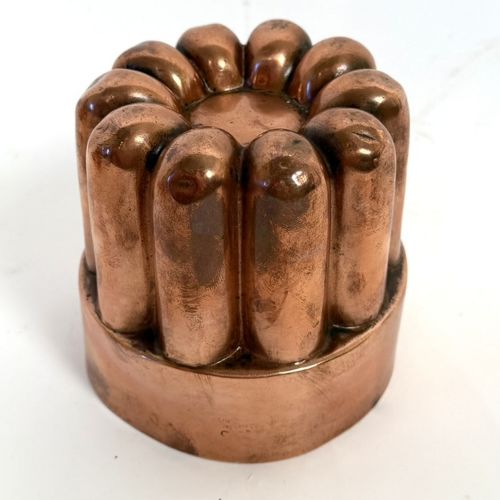
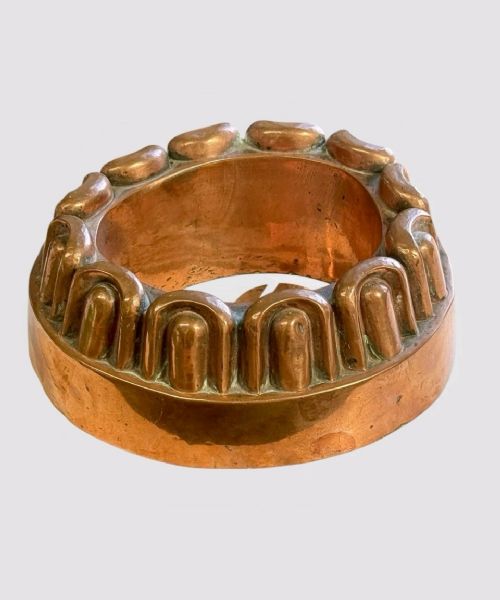
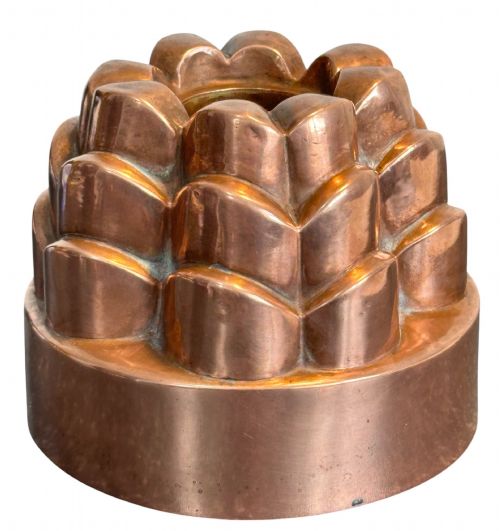
Jelly moulds were constructed using specialised stamping and embossing techniques to create intricate architectural and botanical shapes, finished with fitted lids for precise shape retention. Racks and stands utilised wrought iron and timber, combining forged hooks with sturdy mounting brackets to support substantial weights of metal cookware.
19th Century Cookware Retail Price Guide 2026
Typical asking prices for 19th century cookware among the pieces listed under this phrase on Sellingantiques today, from the lower quarter to the upper quarter. They describe what is for sale here now, not the wider market.
Victorian jelly moulds with castle tops let earlier households turn dinner tables into fortified medieval banquets.
What varies in quality
Quality in 19th century cookware is determined by the thickness of the metal gauge, the precision of the dovetail or hand-beaten seams, and the retention of original brass fittings and handles. Superior examples maintain a heavy, balanced weight in the hand without excessive thinning at the base from centuries of scouring.
The integrity of the internal tin lining on copper vessels distinguishes working kitchenware from purely decorative pieces, alongside the crispness of detail on embossed jelly moulds and ice cream pots. Matching sets and signed pieces by known retailers or silversmiths represent the upper tier of survivals.
Matthew Linwood·Harrods
The 19th Century Cookware Glossary
- Tin lining
- A protective coating applied to the interior of copper cooking vessels to prevent food toxicity. This layer required periodic renewal by a professional metalsmith during the active life of the pan.
- Preserve pan
- A wide, deep vessel with a rounded base designed for boiling jams and fruit preserves. These pans distribute heat evenly across the bottom to prevent burning.
- Fish kettle
- An elongated metal pan featuring a fitted lid and an internal draining rack for poaching whole fish. They were standard equipment in large 19th century households.
- Jelly mould
- A rigid form made of copper or tin used to shape aspics, jellies and blancmanges. Designs often featured complex architectural motifs such as castle tops.
- Kitchenalia
- Utilitarian domestic objects from past eras collected for their decorative appeal and historical interest. This category includes everything from saucepan racks to lidded ice cream pots.
19th Century Cookware: Frequently Asked Questions
Can I still cook with antique copper pans?
Many heavy copper pans remain entirely functional for modern hob use, provided the interior tin lining is intact and smooth. You should check the surface condition before heating.
For preserving jam or boiling sugar, these vessels perform exceptionally well due to rapid and even thermal conductivity.
What is the purpose of tin lining?
Copper reacts adversely with acidic ingredients like fruit juices and vinegar, creating harmful compounds during cooking. A hand-applied lining of pure tin creates a safe barrier between the food and the copper.
When the grey tin wears thin and exposes the pink copper underneath, the vessel requires retinning.
How were jelly moulds used?
Cooks filled these metal forms with gelatinous mixtures, aspics, or creams before chilling them in ice cellars or early refrigerators. Once set, the moulds were dipped briefly in warm water to release the cold dessert.
The intricate designs on the interior surface transferred detailed patterns to the food.