



19th Century Claret Jug
A 19th century claret jug brings table service from the period to life through cut glass and silver mounts.
19th Century Claret Jug
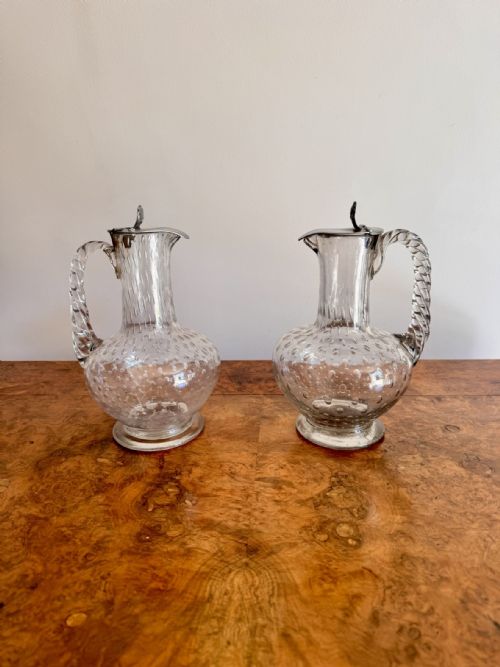
A 19th century claret jug is a serving vessel designed for wine, combining a glass body with metal mounts, handles, and hinged lids. These pieces appear frequently in Victorian styles, alongside French Rococo Revival and Bohemian designs.
Makers and manufacturers of the period utilised various decorative techniques, from vine motifs to latticinio work. Collectors encounter these vessels in forms that bridge utilitarian diningware and ornamental glass artistry.
How they were made
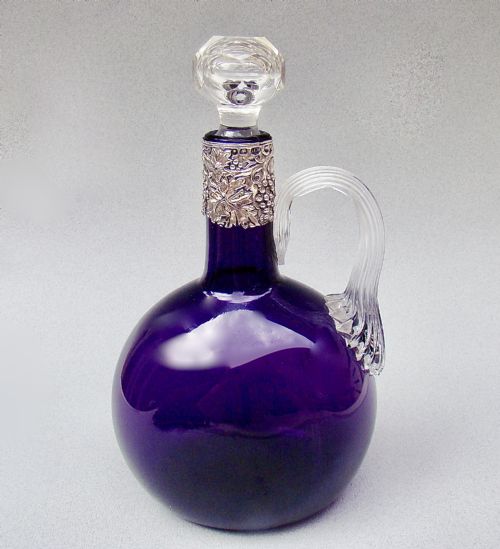
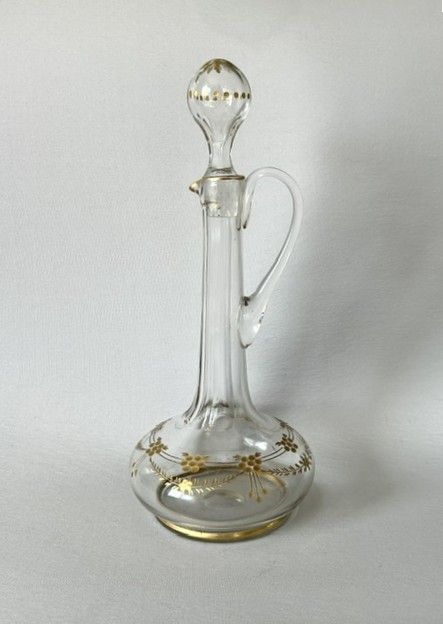
Makers formed the bodies of these vessels from clear, crystal, or coloured glass using hand-blowing and cutting techniques. Surface decoration often involved wheel-engraving with fruiting vines, fern motifs, and geometric patterns, or enamel painting applied directly to the glass.
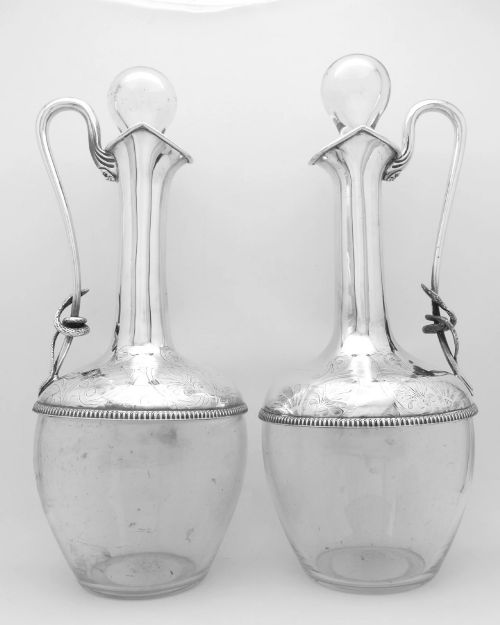
Metalwork components, including mounts, handles, and hinged lids, were executed in sterling silver, silver plate, or ormolu. Artisans attached these mounts securely to the glass necks and lips, frequently incorporating figural elements such as serpents or novelty figures.
The listings show 19th century claret jugs incorporating materials such as crystal, sterling silver, silver plate, and etched glass.
What varies in quality
The execution of the glass cutting and the depth of the wheel engraving determine the refinement of the body. Crisp facets and sharply defined motifs indicate skilled craftsmanship.
The weight and detail of the silver or silver-plated mounts differentiate standard production from superior examples. Elaborate handles, such as figural serpent designs, and substantial metal mounts reflect higher workshop standards.
Henry Matthews·Thomas Webb·Elkington·Stevens and Williams·Richardson·Baccarat
The 19th Century Claret Jug Glossary
- Latticinio
- A glassmaking technique involving fine white or coloured glass threads embedded within clear glass. This method creates delicate internal patterns inside the body of the vessel.
- Ewer
- A large jug with a wide spout and a decorative handle, historically used for pouring liquids. In this context, it functions as a formal wine vessel.
- Cased glass
- Glass composed of multiple distinct layers of different colours, where the outer layer is partially cut away to reveal the contrasting colour beneath.
- Ormolu
- Finely ground high-carat gold cast and chased onto a bronze base. This material appears on decorative mounts and frames.
- Cartouche
- An ornamental frame or panel, often left blank or inscribed with initials, crests, or presentation text.
19th Century Claret Jug: Frequently Asked Questions
How were these jugs used?
These vessels served to hold and pour claret at formal dining tables during the nineteenth century. The hinged lid kept the contents covered between pours while the handle aided service.
They stood upon sideboards or dining tables as part of larger glassware services. Guests were served wine directly from these decorated jugs during dinner courses.
How do I clean a claret jug?
Gentle hand washing with warm water and mild detergent preserves both the glass and the metal mounts. Avoid soaking silver-plated or sterling silver mounts for extended periods.
Soft cloths prevent scratching the crystal or coloured glass surfaces. Chemical cleaning agents should not be used on antique silver plate or enamel painted glass.
What glass colours exist?
Makers utilised clear glass, crystal, and various saturated shades. Green, cranberry, and Bristol blue appear frequently across the period examples.
Cased glass combinations, such as green overlaid on clear glass, also occur. Enamel painted decoration frequently highlights these coloured surfaces.
How do I identify the period?
Hallmarks on silver mounts provide exact assay office marks and date letters for English pieces. Stylistic indicators like Victorian registration details or specific maker signatures aid attribution.
Cut glass patterns and manufacturing techniques evolved through the decades. Comparing engraving styles helps narrow the date of production.