



19th Century Chinese Censer
A 19th century chinese censer brings centuries of ritual craft to a desk or mantelpiece through heavy cast metal and intricate enamel work.
19th Century Chinese Censer
When you search for a 19th century chinese censer, you encounter vessel forms primarily cast from copper alloy and bronze, often accompanied by matching covers and stands. These pieces range from compact scholar's desk items to monumental lidded containers weighing several kilograms.
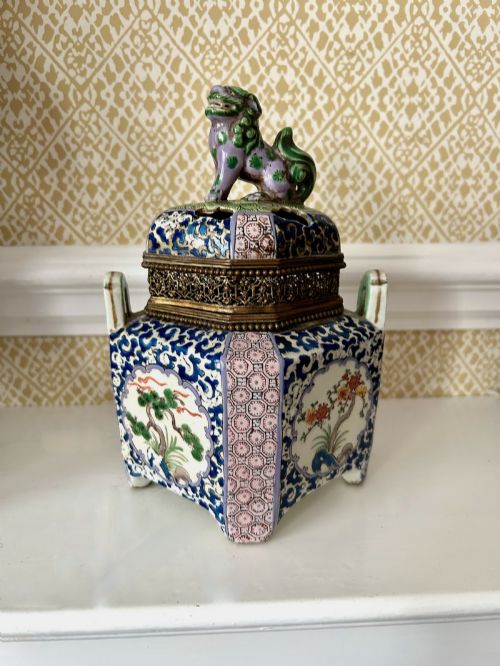
The objects appearing on this page span the Qing dynasty, featuring dragon handles, foo dogs, qilin lions, and bamboo motifs. Alongside traditional tripod vessels, the selection includes related forms such as decorative bowls, planter boxes, and sectional jardinieres.
Most examples originate from the nineteenth century, though the record extends to include pieces from the eighteenth century and the Georgian period. Buyers seeking these vessels will find both utilitarian ritual forms and purely decorative scholar's pieces.
How they were made
The makers of these vessels utilised lost-wax casting techniques to produce substantial bronze and copper alloy bodies capable of bell-ring resonance. Surface treatments range from polished plain metal to applied gold gilding and gold-splashed effects.
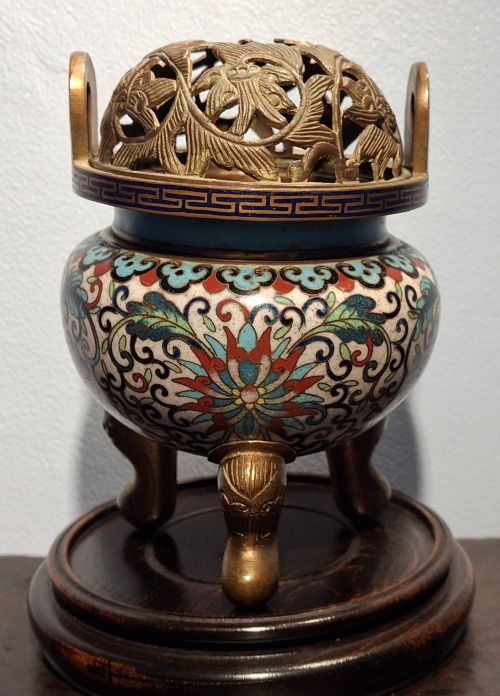
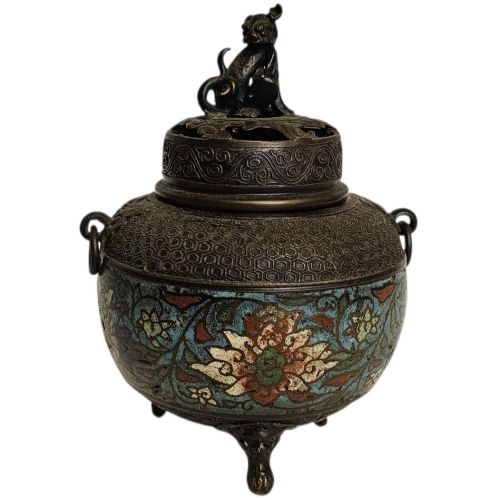
Cloisonne enamel work appears frequently, fusing coloured glass pastes within wire cells soldered to a metal base. Porcelain and ceramic variants also feature, decorated with painted motifs such as dragon fish under Qing dynasty glazes.
19th Century Chinese Censer Retail Price Guide 2026
Typical asking prices for 19th century chinese censer among the pieces listed under this phrase on Sellingantiques today, from the lower quarter to the upper quarter. They describe what is for sale here now, not the wider market.
One determined man astride an ox found his way into the archive, proving incense burners sometimes take unexpected journeys.
What varies in quality
Quality in these vessels rests upon the precision of the casting and the weight of the metal relative to size. Heavier specimens with thick walls demonstrate superior craftsmanship during production.
The 19th Century Chinese Censer Glossary
- Tripod
- A vessel supported by three feet, standard for traditional ritual bronzes. These elevate the body from the altar or desk surface.
- Cloisonne
- An enamel technique where metal wire forms compartments on a bronze or copper base to hold coloured glass paste. Firing fuses the vitreous paste into hard decorative fields.
- Qilin
- A mythical hooved Chinese creature symbolising good fortune and prosperity. Figures of this beast frequently ornament vessel covers.
- Foo Dog
- A guardian lion motif traditionally placed at temple gates and rendered here as sculptural handles or finials. They protect the vessel and its contents.
- Jardiniere
- A large decorative pot or stand intended to hold plants or floral arrangements. Sectional versions allow for modular assembly.
19th Century Chinese Censer: Frequently Asked Questions
How are these censers dated?
Dating relies upon stylistic markers associated with the Qing dynasty, combined with material composition and casting characteristics. Structural wear and patination also provide context for the age of the metal.
Evidence from past and current listings points to production methods typical of the nineteenth century and earlier periods.
Were all these vessels used for incense?
Many vessels served ritual or aromatic functions in temples and scholar's studios, burning solid incense materials. Others functioned as decorative desk bowls, planters, or jardinieres.
Form often dictated use, with lidded tripod designs suiting incense burning while open bowls accommodated plants or display.
What is gold-splashed bronze?
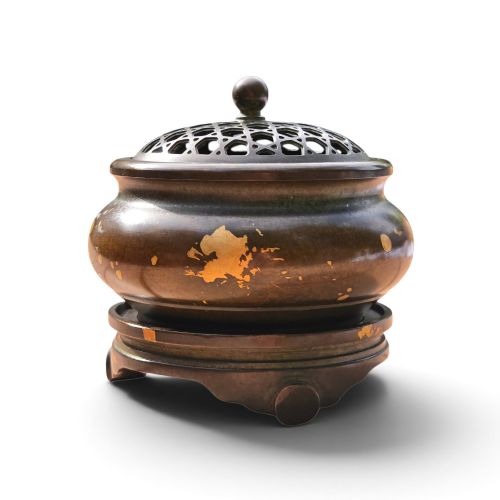
Gold-splashed bronze involves applying contrasting gold patches onto the dark bronze surface during or after the casting process. This technique created a mottled decorative effect favoured by Qing dynasty scholars.
Examples of this finish appear on fine desk items designed for educated elites.
How do I care for bronze and cloisonne?
Bronze and cloisonne require gentle dusting with a soft cloth to protect the metal patination and delicate enamel wires. Avoid harsh chemical cleaners or abrasive polishes that strip historical surfaces.
Stable indoor humidity preserves both the metal alloy and the glass pastes of enamel decoration.