


19th Century China Platter
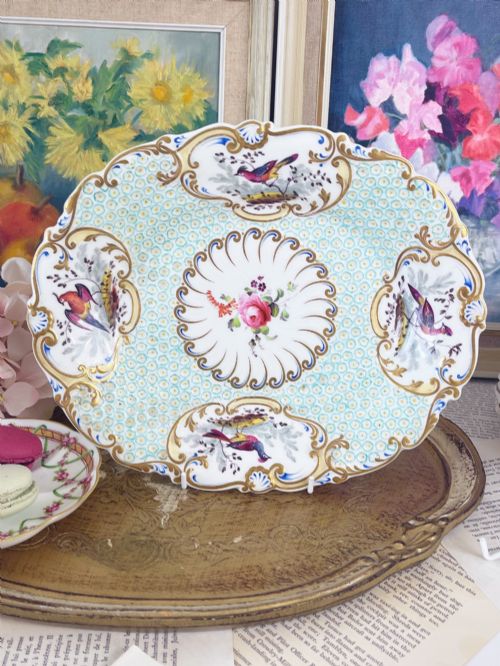
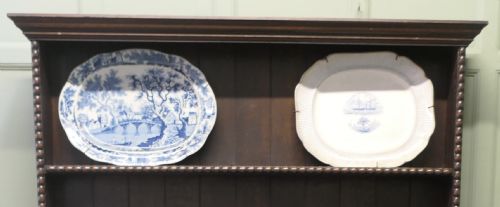
These 19th century china platter examples offer robust serving surfaces and transfer-printed patterns for traditional dining tables.
19th Century China Platter
When buyers search for a 19th century china platter, they encounter large serving dishes, meat platters, and chargers shaped for domestic dining across the Georgian and Victorian eras. These items served functional roles in large households, carrying joints of meat or courses of dessert to the table.
The versions most common on this page span earthenware, porcelain, and ironstone, frequently decorated with blue and white transfer-printed motifs such as the Tower pattern or landscape scenes. Oval and rectangular formats predominate, often featuring wells and reservoirs for collecting juices.
Materials and production methods
Potters utilised earthenware, pearlware, ironstone, and porcelain, shaping bodies through moulding or throwing before applying lead or tin glazes. Ironstone provided a dense, heavy body suited to large meat dishes, while finer porcelains accommodated delicate hand-painted botanical designs.
Decoration relied heavily on transfer printing, a technique where engraved copper plates transferred ink impressions onto paper and thence onto the ceramic body. Enamel colours and gold leaf were occasionally added by hand over the glaze before a final firing.
Listings feature earthenware, porcelain, and ironstone bodies decorated with transfer-printed blue and white patterns or hand-painted botanical studies.
Factors separating grades of quality
Quality rests upon the crispness of the transfer print and the skill of any hand-applied enamel painting or gilding. Finer wares show precise registration in multi-coloured patterns and well-modelled rims without warping from the kiln.
The choice of body material also marks distinction, as translucent porcelain and heavy, vitreous ironstone represent more durable or costly manufacturing standards than standard earthenware.
H & R Daniel·Rockingham Pottery·Minton·Coalport·Ridgway·Brameld & Co.·Spode·Mason's Ironstone
The 19th Century China Platter Glossary
- Transfer print
- A decorative technique where an engraved copper plate transfers an inked design onto unglazed or biscuit pottery via tissue paper. This method allowed factories to produce uniform patterns in large quantities.
- Ironstone
- A heavy, durable ceramic body patented in the nineteenth century to imitate Chinese porcelain while offering greater resistance to chipping. It forms the foundation of many robust meat dishes.
- Pearlware
- A refined earthenware developed with a bluish-white glaze that pooled in recesses to create a bright appearance. It bridged the gap between creamware and later white ironstones.
- Flow blue
- A Staffordshire pottery technique where cobalt blue transfer print bled slightly into the surrounding white glaze during firing. This produced a misty, atmospheric effect popular on mid-century tableware.
- Reservoir
- A sunken well or channel moulded into the base of a meat platter to catch carving juices. It helped keep the dining table clean during the service of large joints.
19th Century China Platter: Frequently Asked Questions
How were these platters used?
These large dishes served roast meats, poultry, and desserts at formal dining tables, carrying food from the kitchen to the dining room.
Deep wells and reservoirs collected juices, while flat surfaces accommodated large joints or arrangements of fruit.
How do I distinguish ironstone from earthenware?
Ironstone offers a much heavier, denser body that resists chipping and rings slightly when struck, whereas standard earthenware feels lighter and more porous.
Ironstone platters were built to withstand heavy daily use in busy Victorian kitchens.
What does flow blue mean?
Flow blue describes a transfer-printed pattern where lime or ammonia gas was introduced into the kiln during firing, causing the cobalt blue to blur into the glaze.
This deliberate chemical reaction created a soft, hazy aesthetic across the entire surface of the dish.
Can I use these platters for serving food?
Most nineteenth-century ceramic platters remain structurally sound for serving dry foods, though historic glazes may contain trace materials.
Hand washing is essential to preserve fragile overglaze enamels, gold leaf, and centuries-old ceramic bodies.