

19th Century Carved Seating
These 19th century carved seating examples unite solid timber frames with ornate ornamental detail to serve dining rooms, halls and libraries.
19th Century Carved Seating
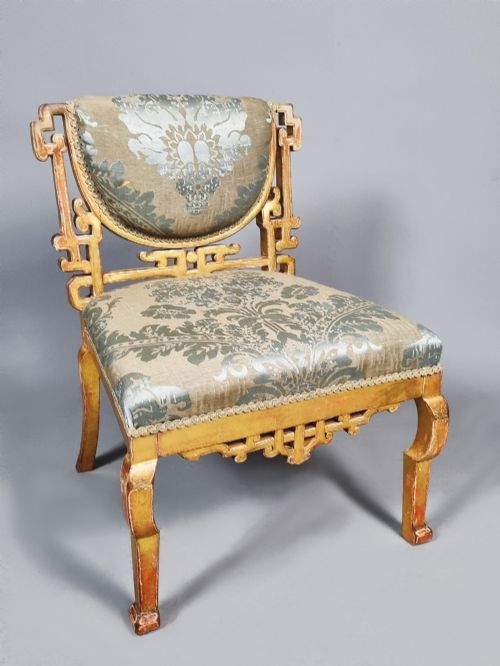
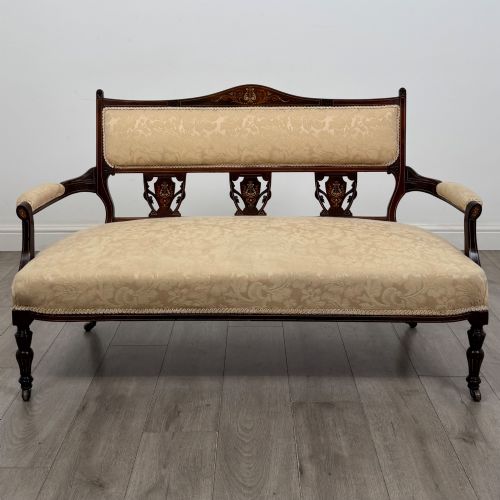
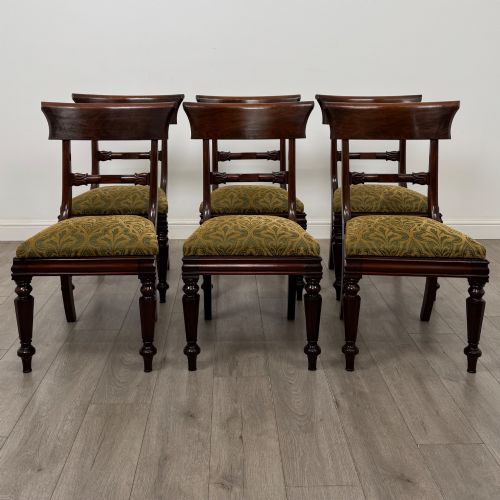
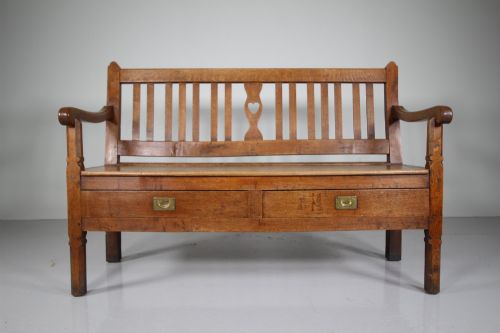
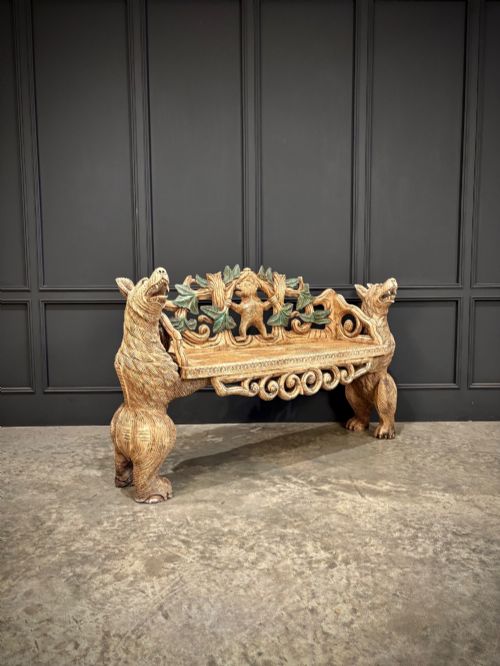
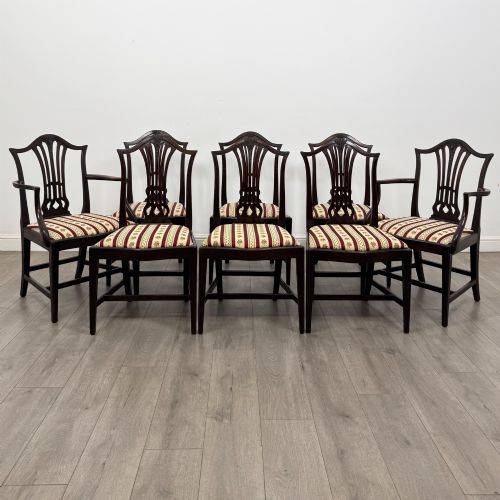
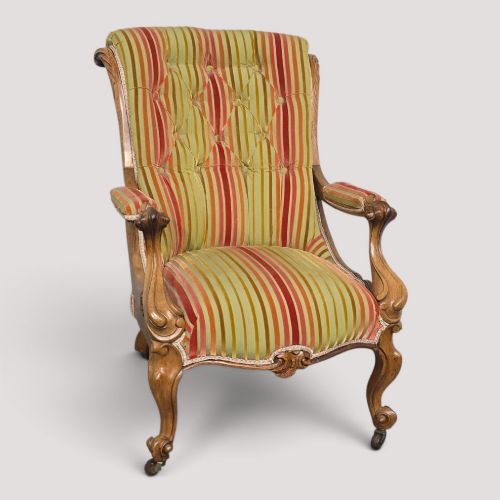
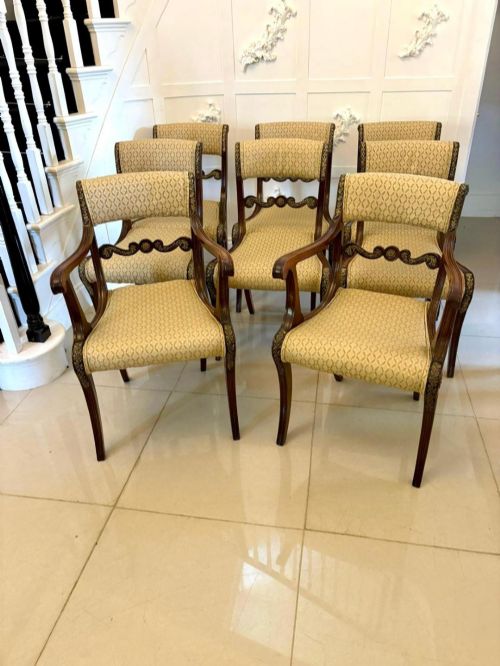
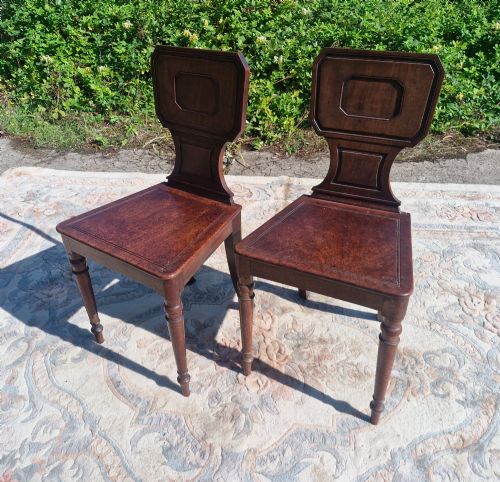
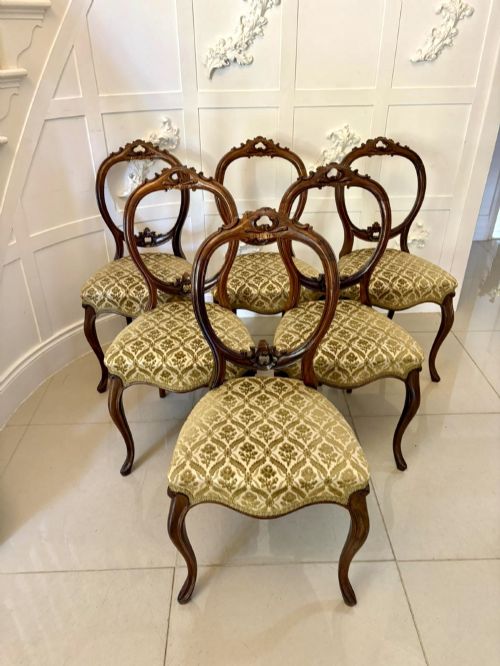
Buyers browsing 19th century carved seating encounter diverse forms ranging from sets of dining chairs and library armchairs to hall benches, settles and stools. The most prevalent versions on this page are mahogany dining chairs from the Victorian and Regency periods, alongside sturdy oak hall chairs and walnut saloon seats.
Makers utilised styles such as Gothic Revival, William IV, and Louis XV to shape timber frames, incorporating shield backs, ladderbacks and balloon backs. Pieces frequently originate from English, French, and regional workshops, reflecting the domestic and reception needs of past households.
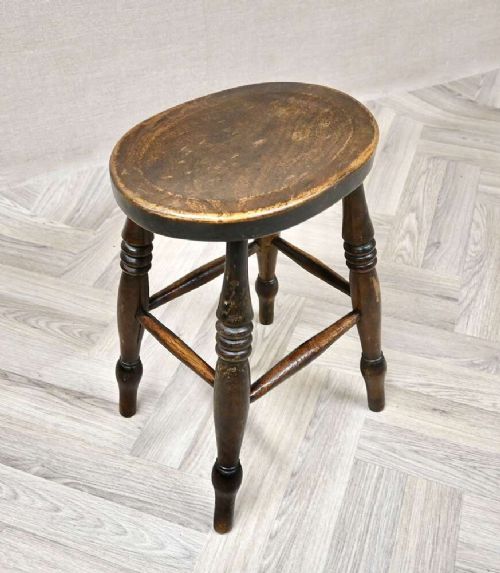
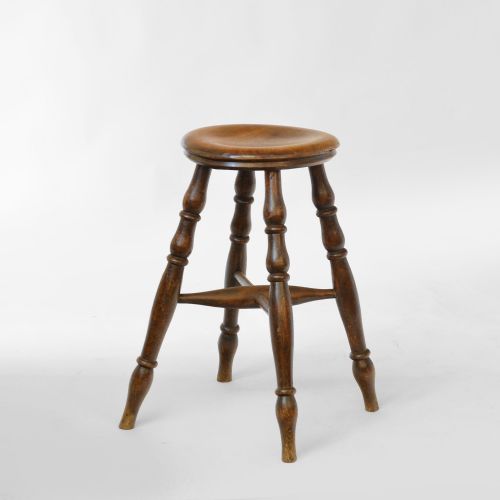
Seating arrangements span individual stools and pairs of reception chairs up to large matched sets numbering six, eight, or ten dining chairs. Forms like the window seat and the pub stool illustrate the variety of domestic and commercial functions fulfilled by these carved wooden seats.
Materials and construction methods
Craftsmen shaped these frames from dense hardwoods including mahogany, oak, walnut, and rosewood, applying deep relief carving to rails, splats, and legs. Secondary timbers and structural joints relied on traditional joinery techniques to support daily weight.
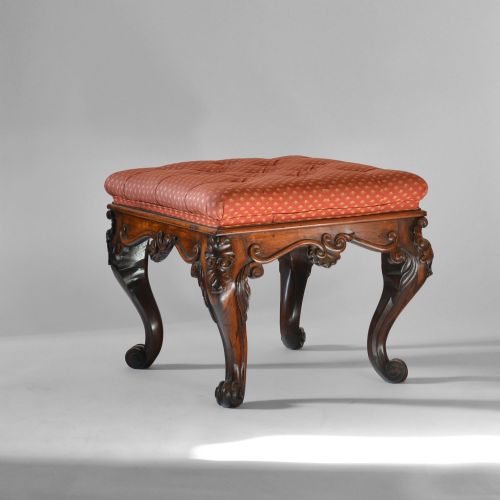
Upholstered variants incorporate materials such as leather, fabric, velvet, and tapestry secured over padding, while other items utilise cane webbing or carved solid wood panels for seats. Brass elements occasionally provide structural reinforcement or decorative accents on footings and castors.
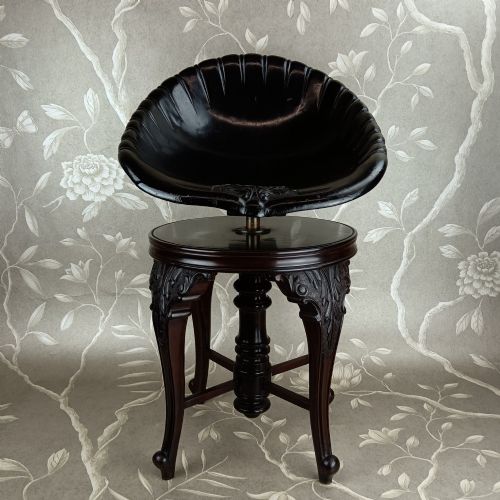
Object types span practical dining chairs and desk chairs alongside specialised forms like music stools, pub stools, and library armchairs.
Distinctions in quality
The refinement of the hand carving separates standard utility seating from exhibition pieces, where crisp undercut foliage, linenfold panels or figural motifs display exceptional chisel work. Timber selection similarly dictates standard, with dense, well-figured mahogany or quarter-sawn oak outperforming plain secondary woods.
Structural integrity depends on the original tightness of joints and the retention of matching elements within larger sets, as composite groups lack the harmony of pieces produced together. Original upholstery webbing, intact cane panels, and preserved surface patination elevate the standing of a seat.
Jennens and Bettridge·W.A. Willcocks·Gillows
The 19th Century Carved Seating Glossary
- Shield back
- A chair back shaped in the outline of a heraldic shield, popular in dining chair designs.
- Balloon back
- An upholstered chair back formed in a continuous rounded loop resembling a balloon, characteristic of Victorian seating.
- Hall chair
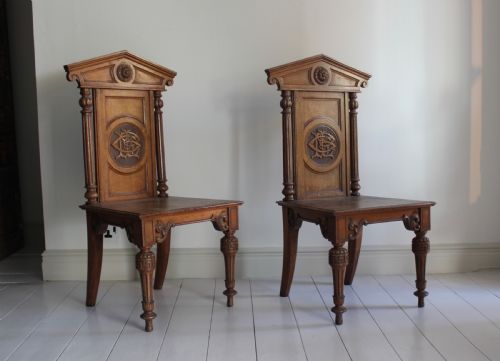
- A rigid wooden seat placed in an entrance hall, often featuring a carved crest or shield on a solid back.
- Settle
- A wooden bench with high backs and arms, sometimes incorporating a box seat beneath the cushion.
- Gothic revival
- An architectural and decorative style drawing on medieval pointed arches and tracery, prevalent on mid-century frames.
19th Century Carved Seating: Frequently Asked Questions
How do I identify a Regency dining chair?
Regency dining chairs typically exhibit classical influence with turned legs, sabre legs, and dark mahogany timbers.
Carved details on these pieces often draw on ancient Greek or Roman motifs rather than the heavier floral patterns seen later in the century.
Where were hall benches used in the house?
Hall benches and settles sat in entranceways and corridors to provide temporary seating for visitors waiting to be received.
Their solid wood construction and carved backs made them durable enough for high-traffic public areas of the home.
Are oak and mahogany common for these seats?
Oak and mahogany dominate the timber choices recorded across these listings, alongside walnut and rosewood for finer reception pieces.
Cabinet makers matched the wood density to the intended room, using robust oak for country and hall seating while reserving mahogany for formal dining sets.