






Carved Wood Folding Chair
These carved wood folding chair examples are portable seats built for function and display, prized for intricate ornament and clever collapsible frames.
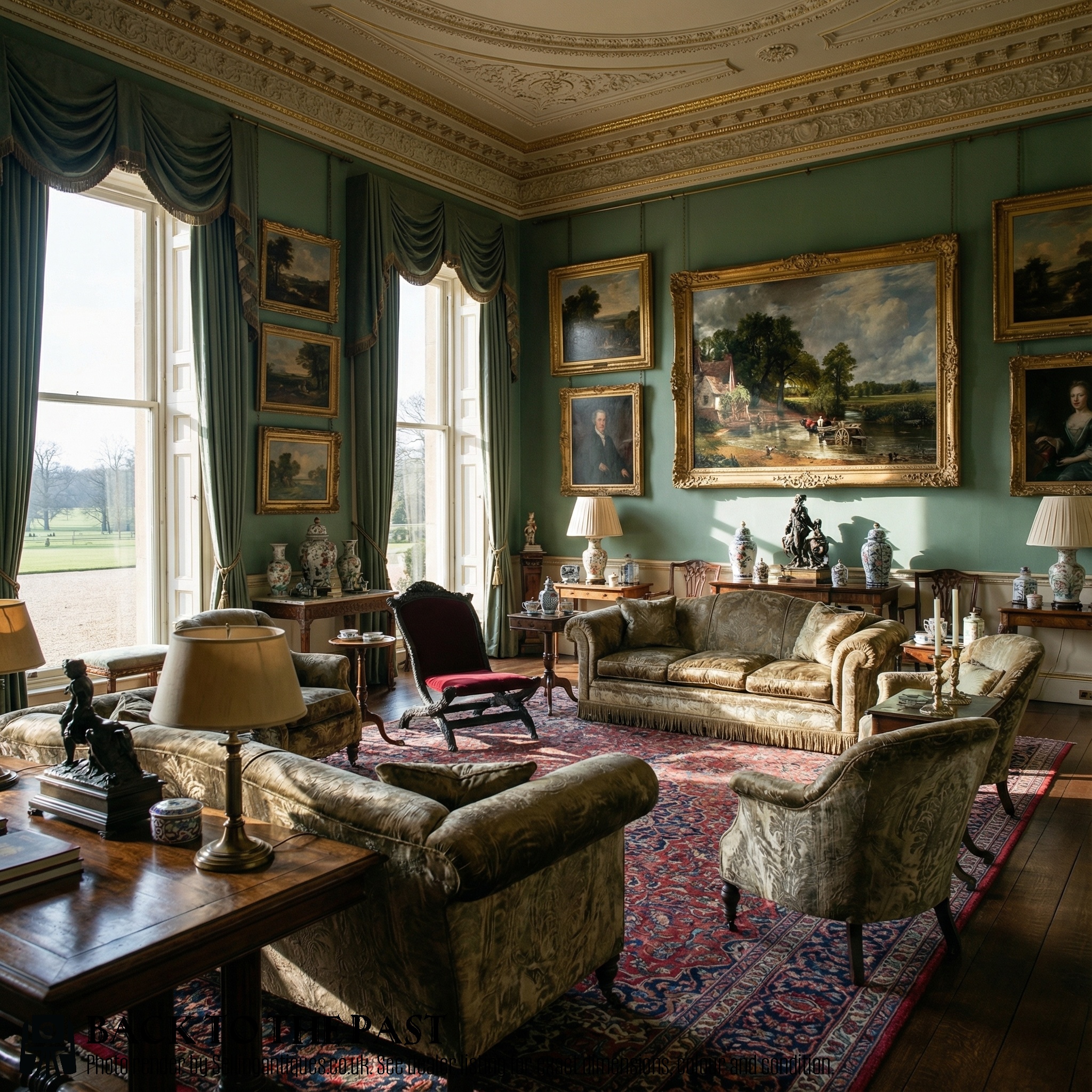
Carved Wood Folding Chair
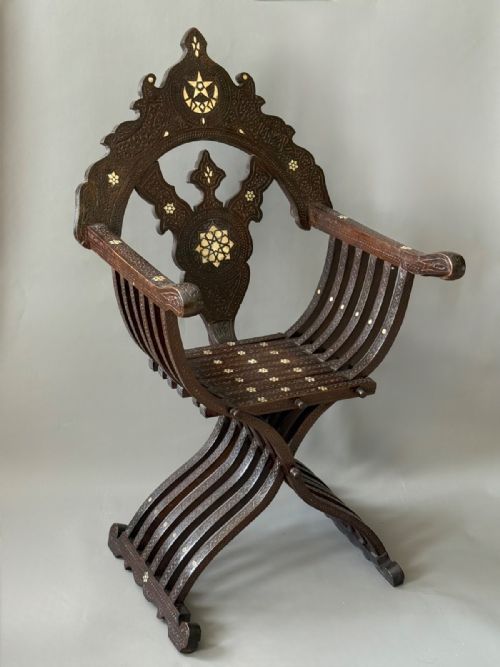
When you search for a carved wood folding chair, you encounter portable seating built across various global traditions during the nineteenth century. These items include armchairs, accent chairs, occasional chairs, and campaign chairs designed for easy transport or stylish interior placement.
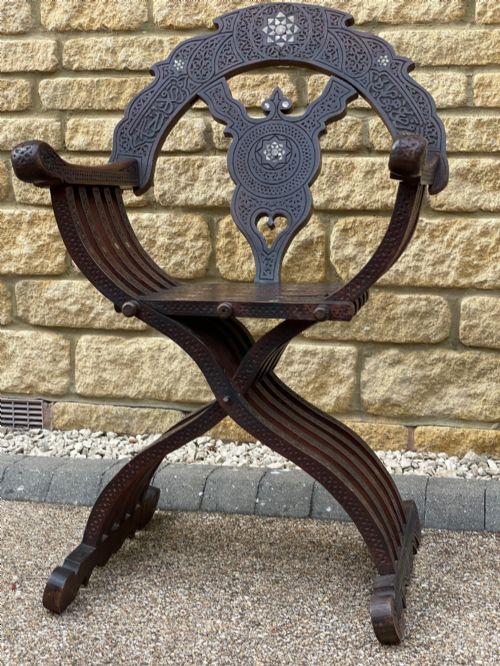
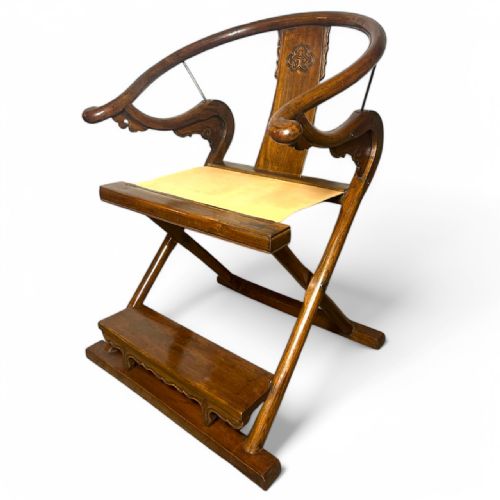
The most common versions on this page originate from nineteenth century workshops, spanning Qing Dynasty China, the Victorian period, and Moorish Revival or Syrian Ottoman traditions. They range from horseshoe-back throne chairs to Savonarola and Glastonbury forms.
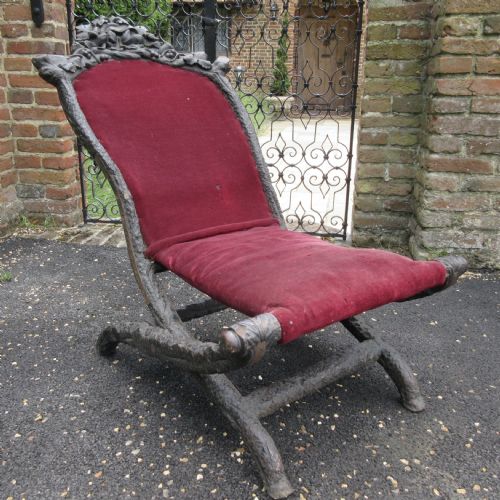
Makers utilised diverse regional aesthetics, incorporating folding mechanisms into forms like the colonial campaign chair, the Black Forest carved seat, and the Andalucia inlaid chair. Each piece merges structural folding capability with elaborate surface carving.
How they were made
Artisans carved these chairs from dense hardwoods such as oak and walnut, shaping folding X-frames and horseshoe backs that collapse smoothly. The structure relies on precise joinery to ensure stability when open.
Many examples feature surface embellishments including mother-of-pearl, bone inlay, and brass details set directly into the wood. Other pieces utilise leather inserts or carved figural motifs characteristic of Black Forest and Gothic Revival styles.
Carved Wood Folding Chair Retail Price Guide 2026
Typical asking prices for carved wood folding chair among the pieces listed under this phrase on Sellingantiques today, from the lower quarter to the upper quarter. They describe what is for sale here now, not the wider market.
Materials documented across the inventory include hardwood, walnut, brass, mother-of-pearl, bone inlay, leather, oak, and carved wood.
What varies in quality
The standard of a carved wood folding chair depends on the depth and crispness of the carving across the frame, alongside the complexity of the folding mechanism. Finer pieces maintain tight joints and fluid movement in the collapsible X-frame.
Material selection and inlay work dictate the upper tier of the range, particularly where dense hardwoods meet intricate mother-of-pearl or bone inlay. Simpler regional forms rely entirely on the proportion and execution of the carved woodwork.
The Carved Wood Folding Chair Glossary
- Glastonbury chair
- A medieval-revival folding chair with a panel back and flat armrests, often constructed from oak. This form derives from ancient ecclesiastical seating traditions.
- Horseshoe-back throne chair
- A traditional Chinese seating form featuring a continuous curved back rail that sweeps forward to form armrests. In folding variants, this upper frame sits atop a collapsible base.
- Moorish Revival
- An architectural and decorative style popular in the nineteenth century that reinterprets Islamic design elements. Pieces in this style frequently display geometric wood carving and extensive inlay.
- Campaign chair
- A portable piece of furniture engineered for military officers or travellers during the nineteenth century. These items fold compactly for transit without sacrificing structural integrity.
Carved Wood Folding Chair: Frequently Asked Questions
How do these folding chairs operate?
The frames utilise intersecting wooden X-braces or hinged pivots that allow the seat to collapse flat. This mechanism was engineered for easy storage and transport.
Most traditional examples maintain stability through tight joints and locking pins when fully opened for use.
Where were these chairs used historically?
These seats served dual purposes as portable campaign furniture for travel and as decorative occasional seating within formal drawing rooms. Their collapsible nature made them practical for temporary assemblies.
Later Victorian interiors also welcomed them as exotic accent pieces reflecting global revival styles.
How do I identify a Victorian folding chair?
Victorian examples often incorporate specific revival aesthetics such as Gothic tracery, Black Forest animal carvings, or campaign brass hardware. They date from the nineteenth century and reflect British tastes of the era.
Upholstered elements and darker oak or walnut timbers are also common indicators of this period.
What materials are typical for these chairs?
The primary structure consists of hardwoods like oak, walnut, and general regional hardwoods. Surface decoration frequently includes mother-of-pearl, bone inlay, and brass.
Some variations also feature integrated leather seats or carved wooden panels displaying intricate floral and geometric motifs.