

Victorian Armchair Frame
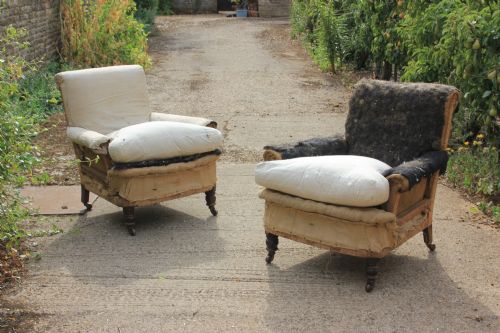
A victorian armchair frame offers an unbolstered skeleton of walnut, mahogany, or oak, waiting for new webbing, springs, and upholstery to complete its revival.
Victorian Armchair Frame
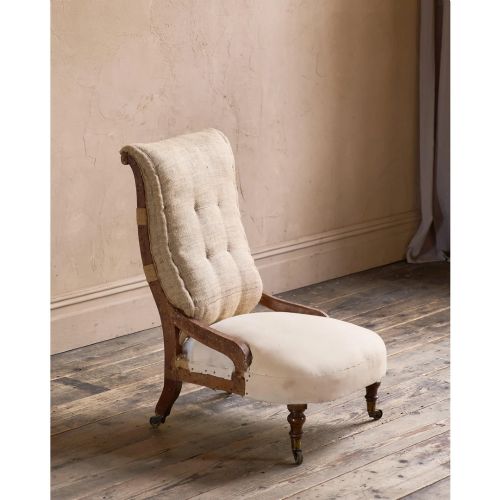
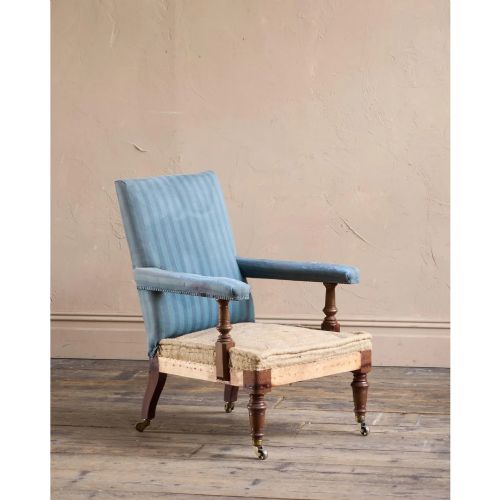
A victorian armchair frame comprises the exposed timber structure of a nineteenth-century seat, stripped down or preserved ahead of re-upholstery. These skeletons reveal the underlying joinery and cabinet-maker craft of the period without the distraction of top covers.
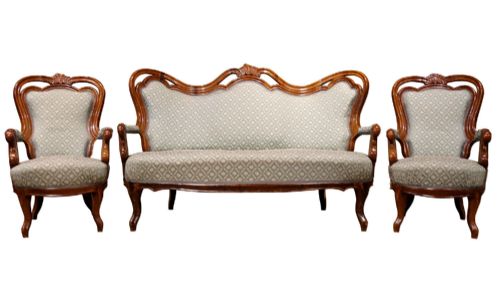
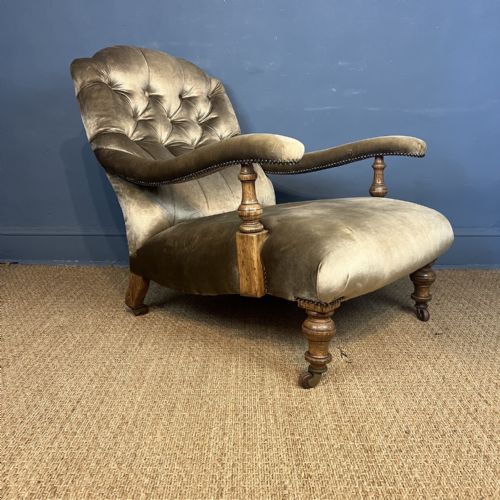
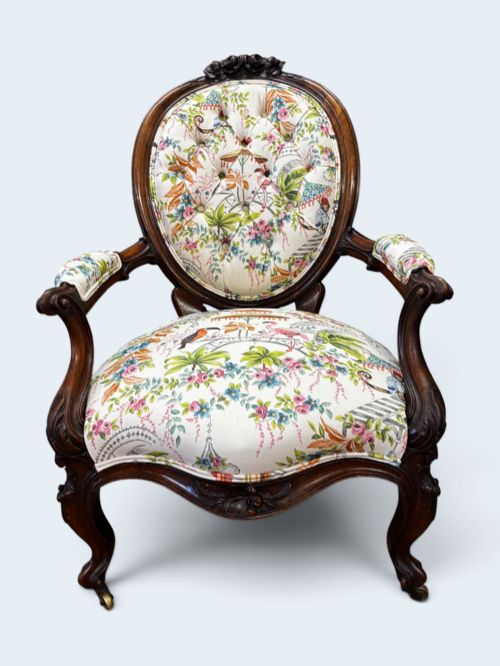
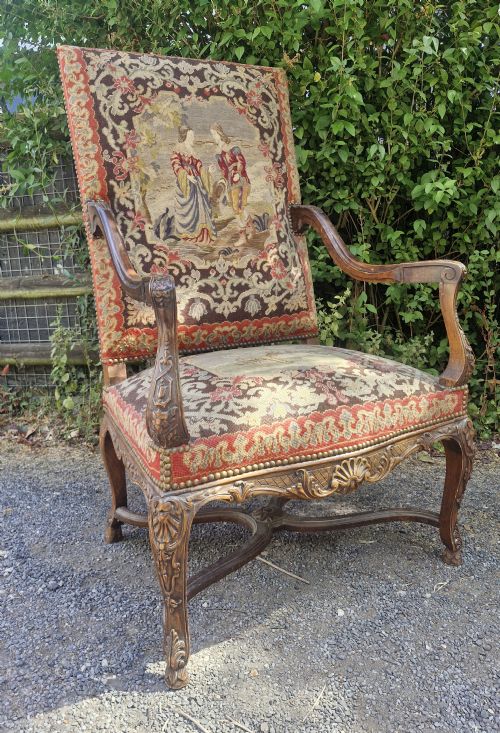
The most frequent examples encountered on this page are mahogany, walnut, or oak structures originating from the mid to late nineteenth century. Forms range from library armchairs and nursing chairs to button-backed iron-framed models and open armchairs.
Buyers look for these frames to undertake bespoke reupholstery projects, matching historic seating to modern interiors using traditional materials like hessian and horsehair. The surviving woodwork provides a sturdy, shapely base superior to many modern alternatives.
Timber and Construction Techniques
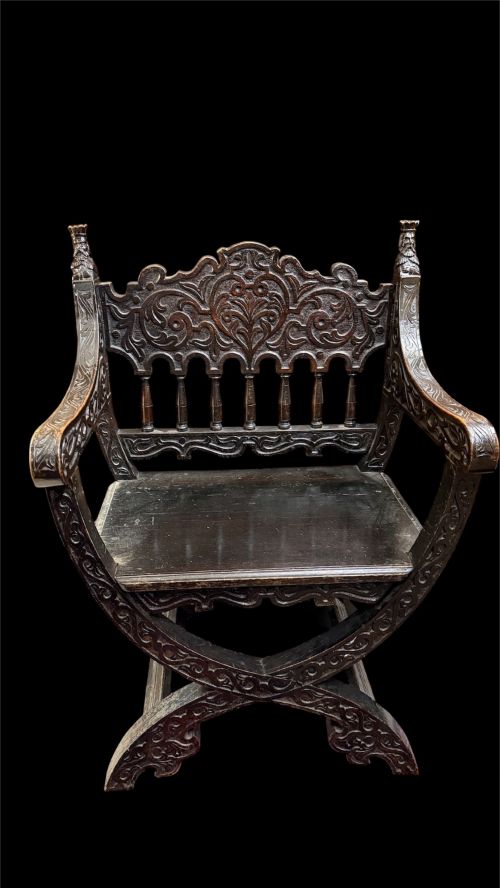
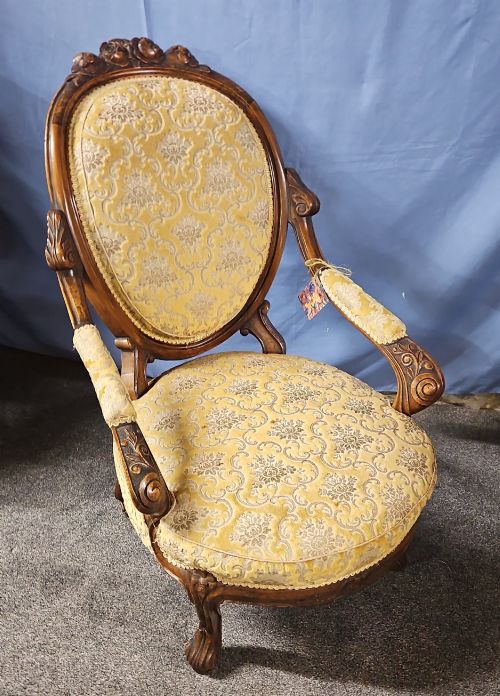
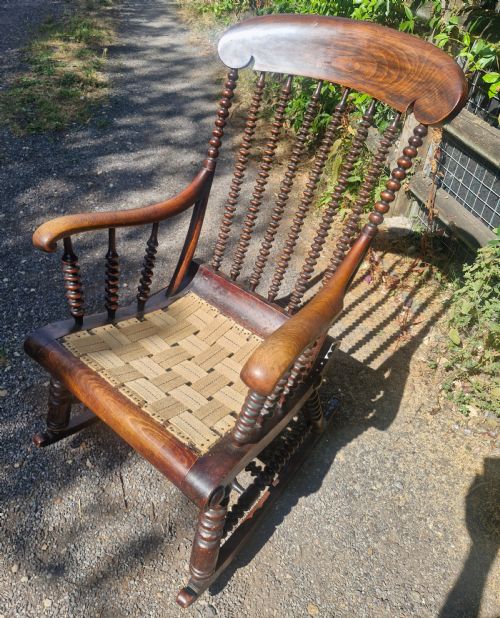
Cabinet makers utilised dense hardwoods such as mahogany, walnut, rosewood, and oak to construct the structural skeletons. These timbers were carved, turned, or steam-bent into elaborate shapes including cabriolet legs, barley twists, and scroll arms.
Structural integrity relied upon traditional mortise and tenon joinery, occasionally reinforced with cast iron frameworks in later button-backed models. Webbing and coil springs were subsequently tied into the wooden carcass to support the layered padding.
Some rocking chairs manage to look sternly Victorian while offering an illicitly cheerful afternoon nap.
Judging the Skeleton
Quality in a structural frame rests upon the selection of timber and the crispness of the hand-carved ornament. Denser, well-figured walnut and mahogany command greater respect than plain utility woods.
The integrity of the joinery dictates the enduring value of the piece. Frames that retain tight joints without excessive movement or historic timber shrinkage offer a superior foundation for restoration.
Howard and Sons·Morison and Co·Gillows·Cornelius V Smith
The Victorian Armchair Frame Glossary
- Show frame
- A wooden structural skeleton where polished timber remains visible around the upholstered pads. This design showcases the carved woodwork of the cabinet maker.
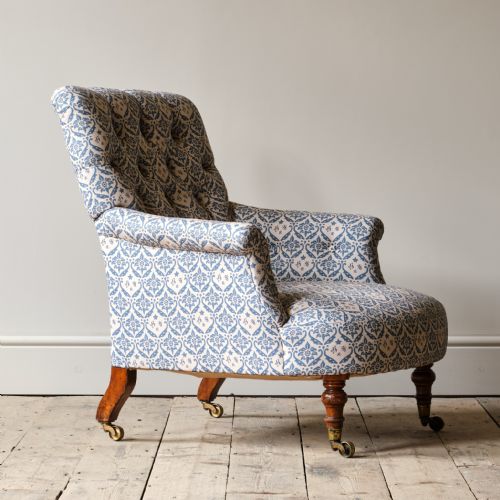
- Iron frame
- A metal internal chassis utilised in nineteenth-century button-backed chairs to provide rigid support. This innovation allowed for deep springing without heavy timber rails.
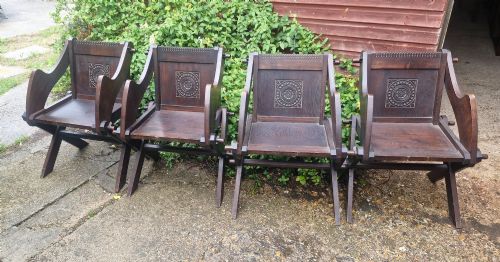
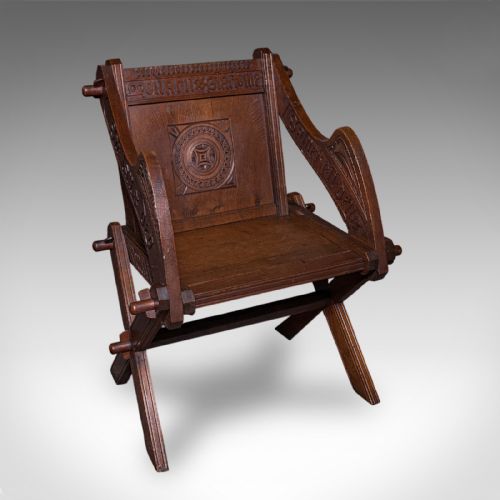
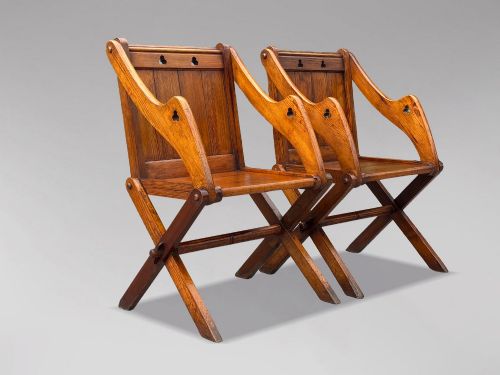
- Glastonbury chair
- A distinctive medieval revival armchair design featuring an X-frame construction with sloping armrests. Examples in oak appear frequently across nineteenth-century listings.
- Nursing chair
- A low-seated armchair designed without high arms to facilitate holding infants or assisting with attire. These often feature slender mahogany or walnut show frames.
Victorian Armchair Frame: Frequently Asked Questions
How do I choose the right frame?
Select a frame based on the proportions and wood type that suit your intended room layout. Examine the exposed timber for carving quality and overall structural soundness.
Consider whether you prefer an open armchair style or a fully sprung iron-backed chassis for your upholstery project.
Can I reupholster these frames myself?
Restoring a Victorian skeleton requires traditional upholstery skills, including webbing, spring tying, and stitching layers of hessian and stuffing. Many buyers commission professional upholsterers to complete the work.
Sourcing appropriate historic fabrics ensures the finished piece respects its nineteenth-century origins.
How do I date a Victorian frame?
Dating relies on stylistic clues such as cabriolet legs, barley twist turnings, or heavy Gothic Revival ornamentation. Walnut and rosewood dominate mid-century examples, while oak and pitch pine appear frequently in later decades.
Maker stamps on the timber rails can occasionally provide precise attribution to workshops like Gillows or Howard and Sons.
Are iron-backed frames comfortable?
Iron-backed chairs were engineered to support deep button-upholstered padding, creating a rigid and supportive sit. Once properly sprung and padded, they offer exceptional lumbar support.
The metal chassis provides a remarkably durable core that resists the loosening over time sometimes seen in all-wood joints.