

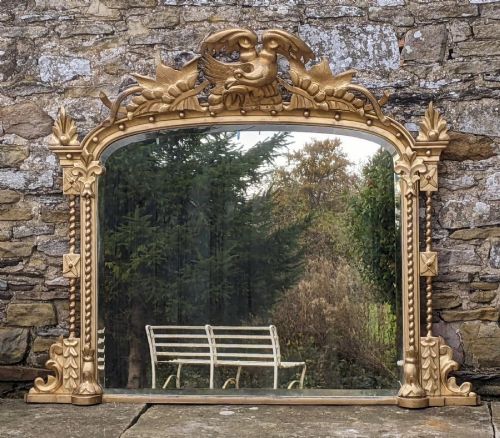


19th Century Carved Eagles
These 19th century carved eagles bring fierce classical presence to a room, most often crowning convex giltwood mirrors or standing as distinct timber sculptures.
19th Century Carved Eagles
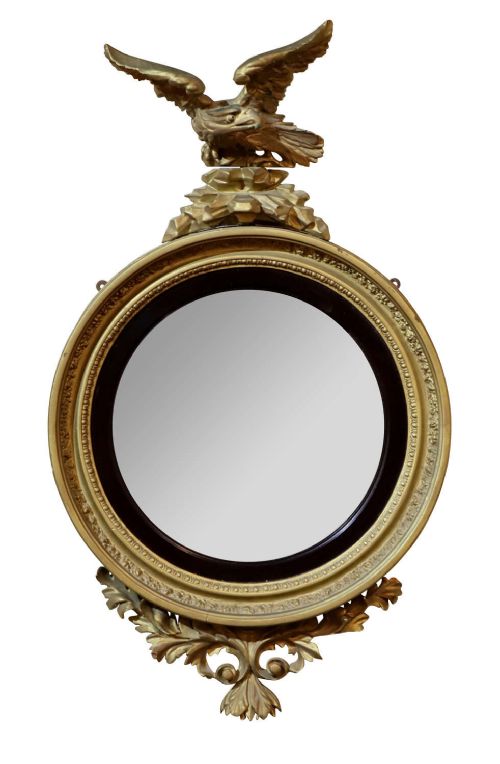
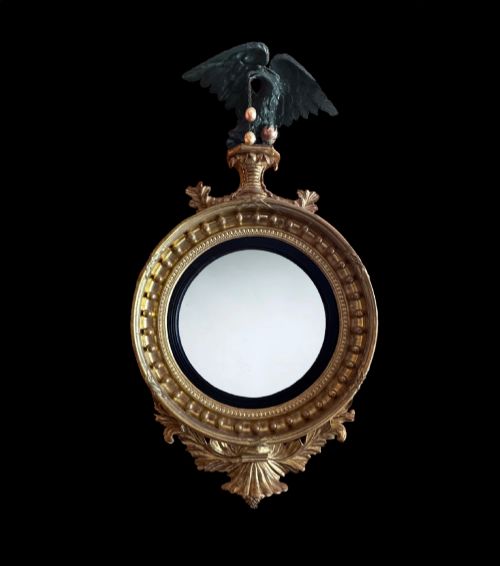
When you search for 19th century carved eagles, you encounter a striking array of mirror crests, statues, wall brackets, and clocks. The most common form by far is the circular convex wall mirror featuring a spread-winged bird perched atop the gilded frame, a motif spanning the Regency and Victorian eras.
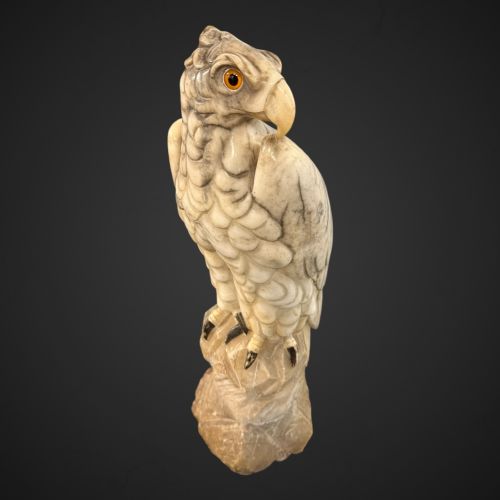
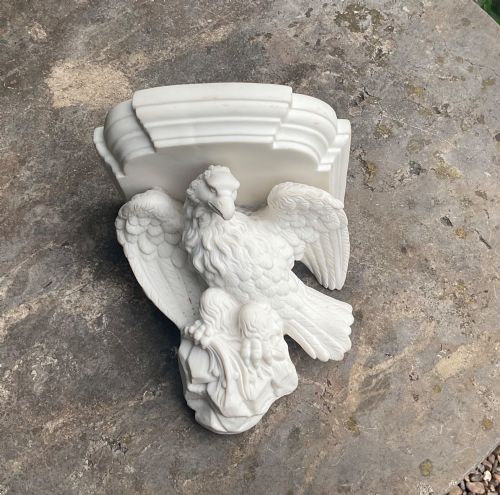
The objects also appear as freestanding statues in veined Carrara marble, Black Forest timber carvings, wall brackets, and carved lecterns. These pieces draw on Regency, William IV, and George II revival styles, reflecting a long-running fascination with powerful avian symbolism.
Beyond mirrors and statues, the selection includes functional items such as coat racks, armchairs, and wall clocks worked in walnut and mahogany. Each piece uses the sharp eye and outspread wings of the bird to command attention on a wall or tabletop.
Materials and Construction
Carvers shaped these birds primarily from timber such as walnut, oak, and mahogany, applying gesso and heavy gold leaf to the prominent convex mirror crests and wall brackets. Giltwood and ebonised wood provided the rich surfaces favoured during the Regency period.
More naturalistic renderings utilised solid woods and veined Carrara marble, particularly in the Black Forest carvings and statues. Parian ware also appears, capturing the form in a smooth, ceramic material resembling carved marble.
Materials span giltwood, ebonised wood, gesso, walnut, brass, mahogany, glass, and Parian ware.
Evaluating Quality
Quality rests entirely in the crispness of the carving and the depth of the timber or gesso work. A superior eagle shows sharp feather detailing, anatomical conviction, and powerful tension in the wings rather than soft, rounded edges.
The integration between the bird and its mount separates standard pieces from exceptional ones. On mirrors and brackets, the carving of the eagle should feel structural and balanced, with gilding or polished wood preserved in strong condition.
Luigi Frullini
The 19th Century Carved Eagles Glossary
- Convex Mirror
- A circular wall mirror featuring a curved glass surface that reflects a wide, distorted field of room. These glasses are almost universally crowned by a carved eagle surmount during the Regency period.
- Giltwood
- Timber coated with gold leaf over a prepared gesso base. It forms the shimmering surface of many classical mirror frames and wall brackets.
- Black Forest
- A style of deeply carved wooden decorative objects originating from Switzerland and Germany. These pieces typically depict natural subjects like birds and foliage in dark walnut.
- Parian
- A fine white ceramic material developed in the nineteenth century to imitate carved marble. It provides a smooth surface for sculptural figures and wall brackets.
19th Century Carved Eagles: Frequently Asked Questions
What rooms suit a convex mirror with an eagle surmount?
These mirrors demand a wall with adequate clearance to let the circular frame and outspread wings command the space. They function best in reception rooms, hallways, or above mantelpieces where the curved glass can capture the room.
Because the convex glass shrinks reflections, placing the mirror opposite a window or light source maximises its ability to brighten a darker corner.
How do I tell a Regency eagle mirror from a later revival piece?
Regency pieces typically display the deep, heavy gilding, original convex glass plates, and construction methods characteristic of the early nineteenth century. The timber backing and the specific manner of carving the bird's feathers offer clues to the exact decade.
Later Victorian revivals often utilise machine-prepared mouldings or softer gesso applications, whereas genuine Regency carvings retain a hand-tooled vigour.
Were these eagles meant for display or practical use?
While mirror crests and statues served primarily decorative and symbolic purposes, many items combined form with function. The category includes wall clocks, coat racks, armchairs, and lecterns where the carved bird integrated directly into a useful object.
This duality allowed nineteenth-century interiors to incorporate classical motifs into everyday furnishings without sacrificing utility.
How should I care for antique giltwood and carved wood?
Giltwood surfaces require gentle dusting with a soft, dry brush to avoid disturbing the delicate gold leaf. Moisture and chemical cleaners must be kept away from the gilded areas entirely to prevent flaking.
Unfinished walnut and mahogany benefit from occasional light treatment with appropriate natural waxes to maintain the timber's moisture and sheen over time.