



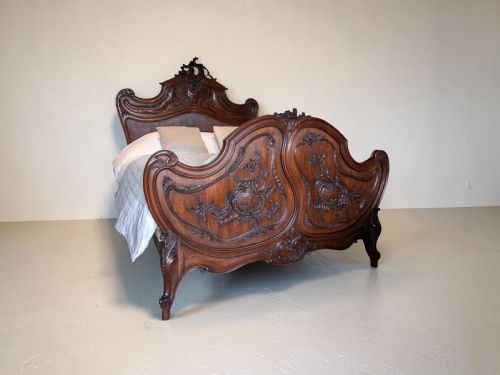
19th Century Carved Bed
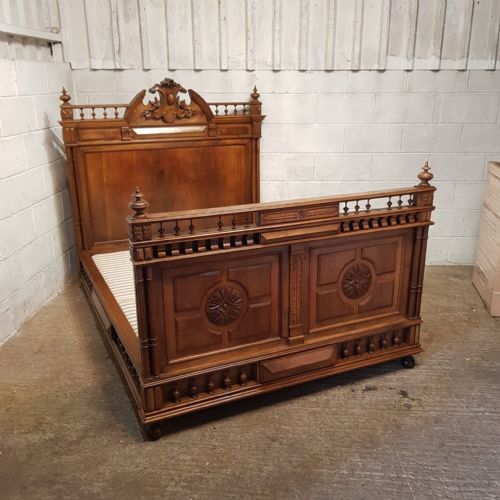
A 19th century carved bed brings sculptural warmth to a bedroom through deep timber mouldings and panel work.
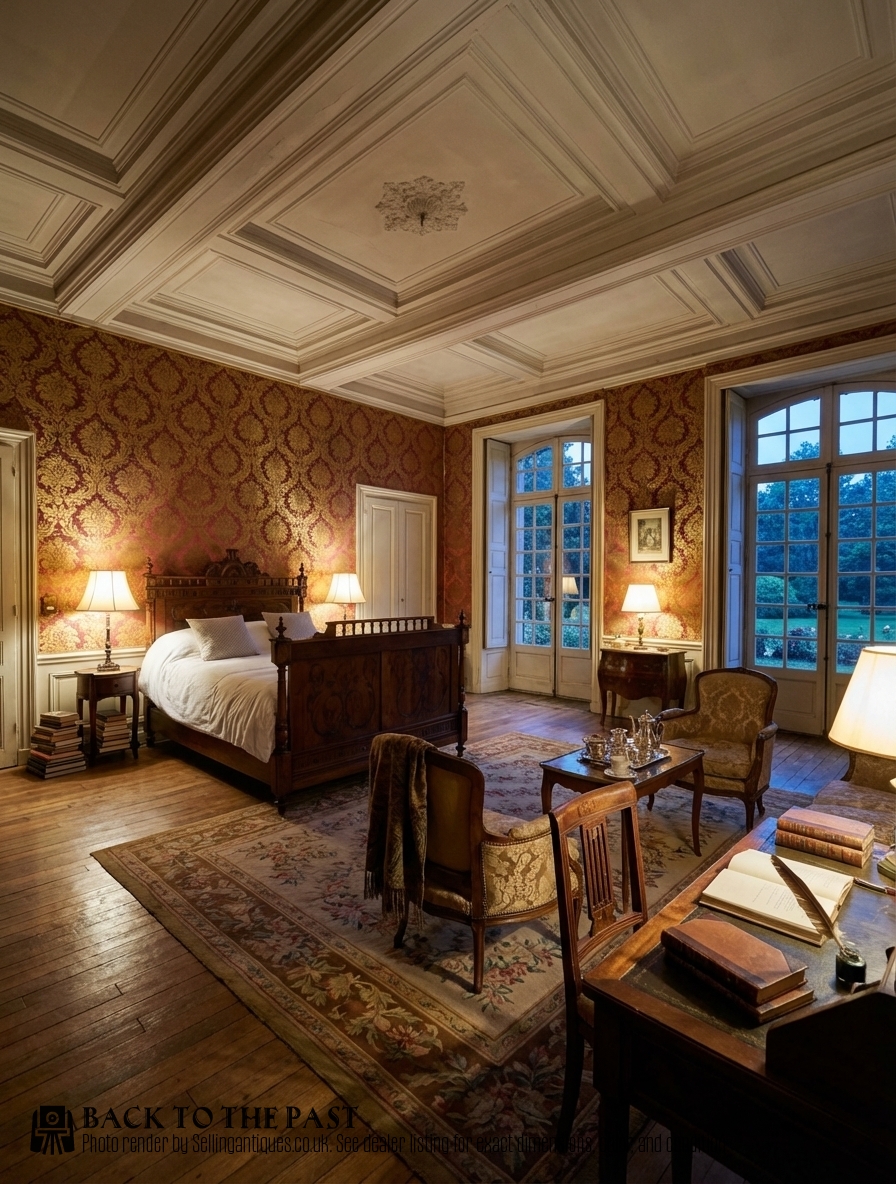
19th Century Carved Bed
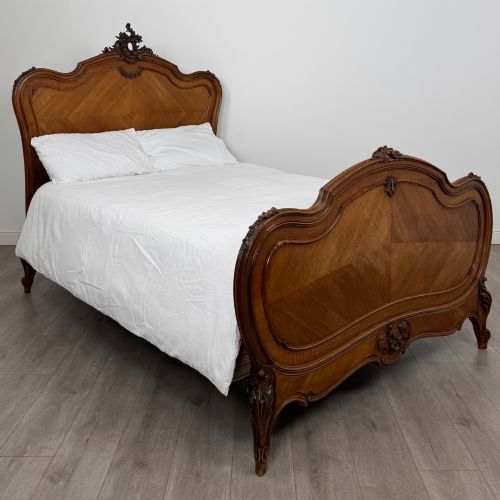
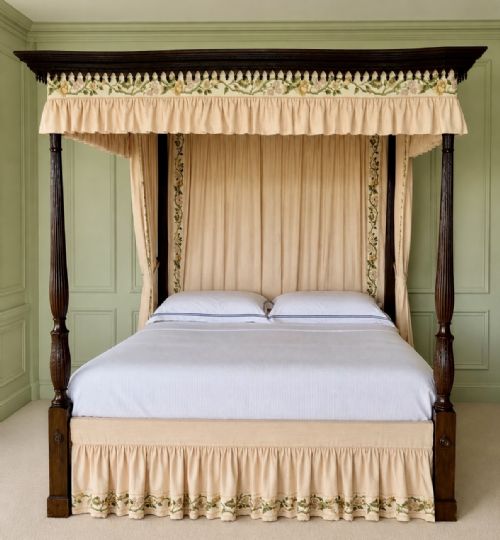
A 19th century carved bed encompasses substantial sleeping furniture produced across Europe and beyond during the 1800s. These pieces range from grand French walnut bedsteads to Chinese hardwood four-poster structures.
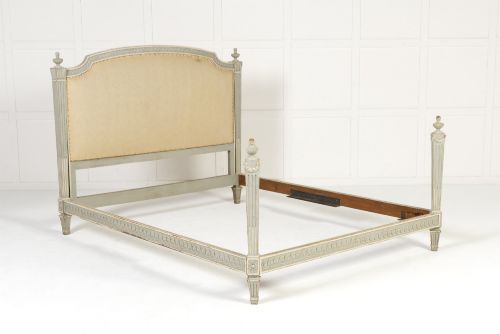
The selections frequently manifest distinct regional design movements such as French Renaissance Revival, Louis XVI, and Italian Rococo. Buyers often encounter large double or king sizes alongside specialised forms like tester beds and canopy frames.
Makers from this era utilised solid timbers and applied extensive hand-carved ornamentation to headboards and footboards. The resulting frames serve as both functional furniture and substantial architectural focal points.
How they were made
Cabinetmakers constructed these frames primarily from dense hardwoods like walnut, mahogany, and oak, often enhancing surfaces with quarter veneers. Skilled artisans carved decorative motifs directly into the timber or applied gesso details to wooden structures.
Selected pieces incorporate painted finishes, giltwood elements, or fabric components to align with specific historical revival styles. Traditional joinery techniques secured the heavy headboards, side rails, and footboards together without modern metal fasteners.
Periods represented span the Victorian era, Regency, and late nineteenth century.
What varies in quality
The depth, crispness, and hand-carved precision of the wooden ornamentation dictate the baseline standard of each frame. Relief work executed with sharp detail and botanical depth separates superior examples from simpler production pieces.
The choice of primary timber, such as figured walnut or dense mahogany, influences the structural integrity and visual weight of the bed. Original surfaces and authentic period finishes retain higher aesthetic integrity than later modifications or over-painted coats.
H. Goodall & Sons
The 19th Century Carved Bed Glossary
- Bedstead
- The structural framework of a bed, consisting of the headboard, footboard, and side rails. This term specifically excludes the mattress and bedding foundations.
- Tester
- A wooden canopy or ceiling suspended above a four-poster bed. These canopies often display elaborate architectural carvings or fabric drapery.
- Giltwood
- Timber that has been coated with a thin layer of gold leaf or gilt gesso. This technique highlights carved mouldings on revival style furniture.
- Quarter veneered
- A method of arranging four matching slices of wood veneer symmetrically across a panel to create a grain pattern. This technique showcases the natural figuring of walnut or mahogany.
- Gesso
- A plaster-like mixture applied to wood surfaces and carved into decorative relief before gilding or painting. Artisans used this material extensively on 19th-century frames.
19th Century Carved Bed: Frequently Asked Questions
What sizes are available in these beds?
The inventory includes double, king, super king, and occasional custom proportions typical of the period. Dimensions often vary slightly from modern standard mattress sizes due to historical manufacturing norms.
Buyers should verify internal rail measurements to ensure a proper fit for contemporary mattress bases.
How do I assemble an antique bedstead?
Most historical frames rely on traditional wooden wedges, iron bolts, or interlocking side rail slots. Assembling these heavy timber components generally requires two people to protect the carved joints.
Careful alignment prevents strain on the antique side rails and headboard tenons.
Are mattresses included with these bedsteads?
These listings comprise the antique wooden or brass frames and headboards alone. Modern slats or supportive bases are frequently integrated by owners to accommodate standard mattresses.
Custom bedding supports can be adapted to fit within the original side rails discreetly.
How do I identify the stylistic period?
Stylistic indicators such as Rococo curves, Neoclassical symmetry, or French provincial lines point toward specific design eras within the 1800s. Wood choices and carved motifs align with prevailing decorative arts movements of the manufacturing decade.
Comparing structural joinery helps confirm the approximate production period.