

19th Century Brass Figures
19th century brass figures bring substantial weight and rich metallic lustre into a room, spanning animal subjects, human portraits and mythological studies.
19th Century Brass Figures
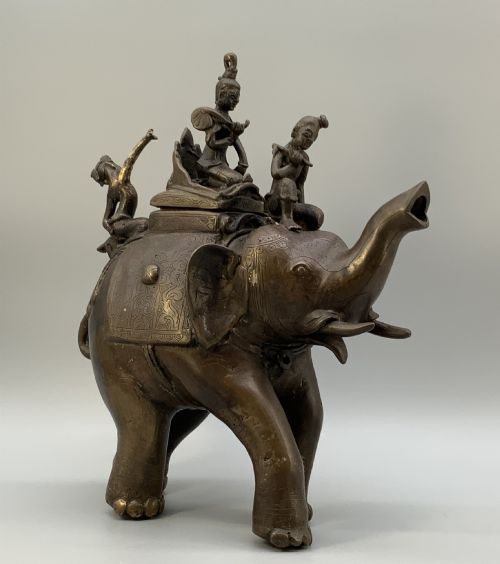
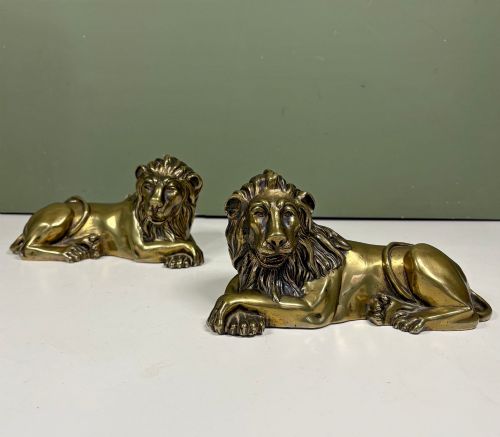
When searching for 19th century brass figures, collectors encounter an eclectic mix of decorative objects, animals and sculptural groups originating from English workshops, continental European foundries and international makers. The selection includes domestic brass animals such as lions and pigs, alongside utilitarian items incorporating heavy cast metal components.
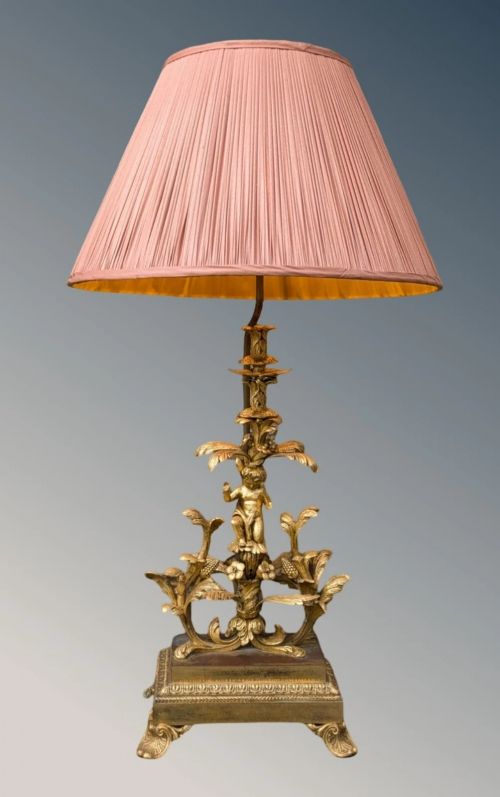
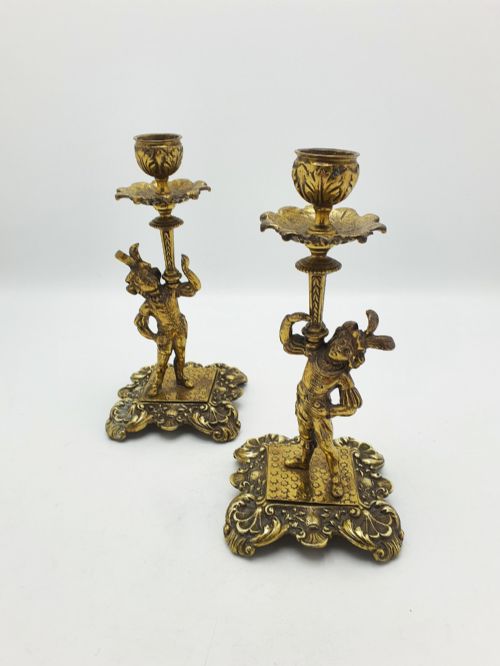
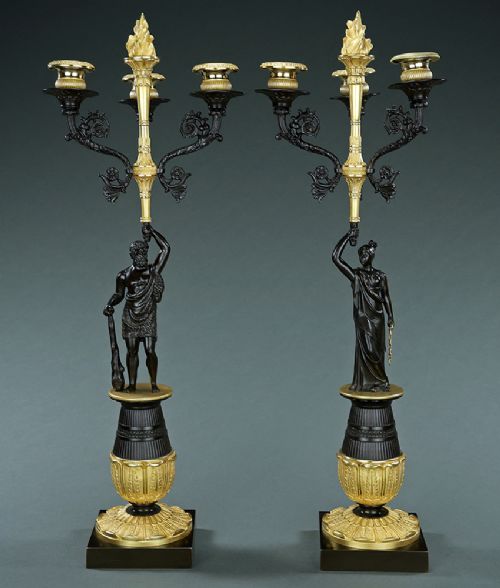
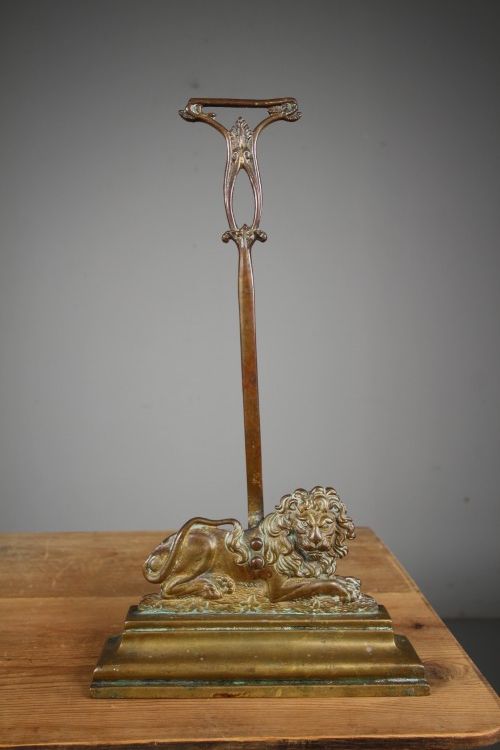
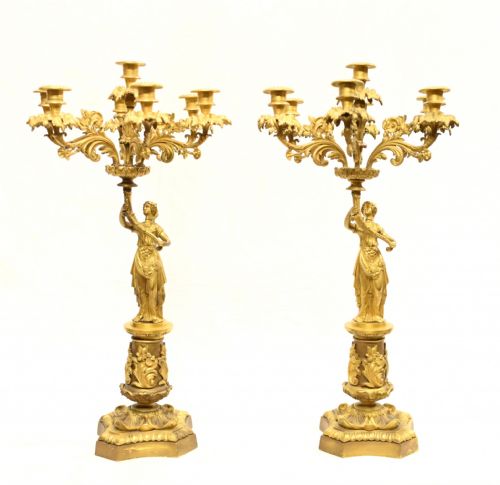
The objects frequently overlap with related cast metal categories, merging functional items like door porters, candelabras and table lamps with standalone sculptural works. Pieces manifest in distinct historical revivals, ranging from French Empire and Rococo styles to Victorian domestic folk art and regional international aesthetics.
Materials and construction methods
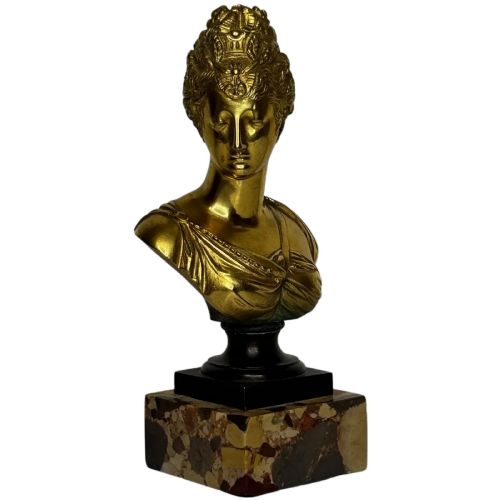
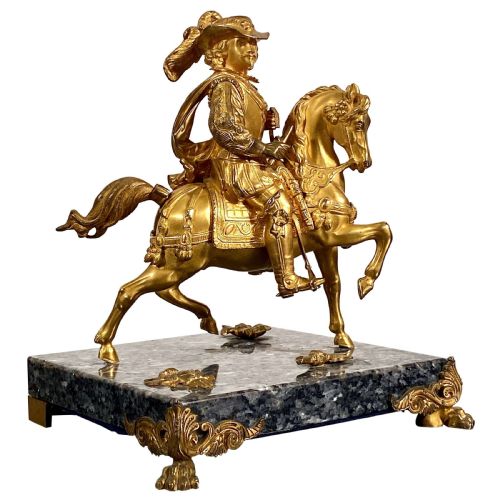
Foundries utilised traditional casting techniques to shape raw metals, often combining yellow brass with darker bronze alloys and gilt ormolu surfaces. Artisans chased and engraved the cooled metal by hand to define fine details in hair, drapery and facial expressions.
Many sculptural works integrate mixed media elements such as marble bases, porcelain details or glass components, fastened securely to the primary metal structure using threaded pins or traditional joinery.
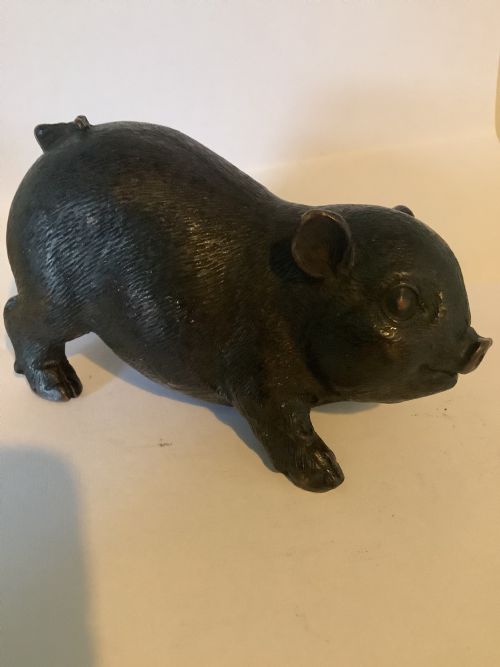
Among the menagerie of heavy metal beasts, a solid brass pig stands ready to hold open an office door.
Assessing quality and craftsmanship
Proportion and stance dictate the visual success of figurative pieces, where balanced weight distribution and anatomical conviction reveal the skill of the original modeller and caster.
The 19th Century Brass Figures Glossary
- Ormolu
- Gilt bronze produced by applying a finely ground mercury and gold amalgam to a bronze object before firing. This technique creates a rich, durable golden surface finish.
- Candelabra
- A branched candlestick designed to hold multiple taper candles at once. These fixtures frequently incorporate sculptural human or animal figures as the central stem.
- Patina
- The surface sheen and colour acquired by metal through age, handling and environmental exposure over decades. A natural patina demonstrates untouched historical surface evolution.
- Door porter
- A heavy weighted object placed on the floor to hold interior doors open. Nineteenth-century examples often take the form of cast brass animals or heraldic figures.
19th Century Brass Figures: Frequently Asked Questions
How do I clean 19th century brass?
Dust the surface regularly with a soft dry cloth to prevent grime accumulation in recessed chased details. Avoid aggressive chemical polishes that strip away historical surface patina.
Gentle cleaning with mild soap and warm water suffices for stable metal surfaces. Dry the piece thoroughly immediately afterwards to prevent oxidation.
Are these figures solid brass?
Many items utilise hollow sand-casting methods to manage weight and material costs during production. Heavier pieces, particularly smaller animals and door porters, often employ solid cast construction.
Internal cores or threaded assembly rods may also be present inside larger sculptural compositions and candelabra bases.
How can I date a brass figure?
Examine the casting seams, tool marks and mounting screws for indicators of period manufacturing techniques. Hand-filed surfaces and traditional slot-head fixings generally point towards nineteenth-century production.
Stylistic cues such as French Empire drapery or Victorian naturalism also help narrow the active decade of creation.
Where were these pieces made?
Manufacturing centres spanned across Victorian England, continental European foundries in France and Germany, and international regions including China and India. European pieces frequently align with prevailing revival styles of the era.
Local foundries produced domestic items like door porters while specialised workshops created intricate gilt bronze clocks and candelabras.