


19th Century Bombe Commode
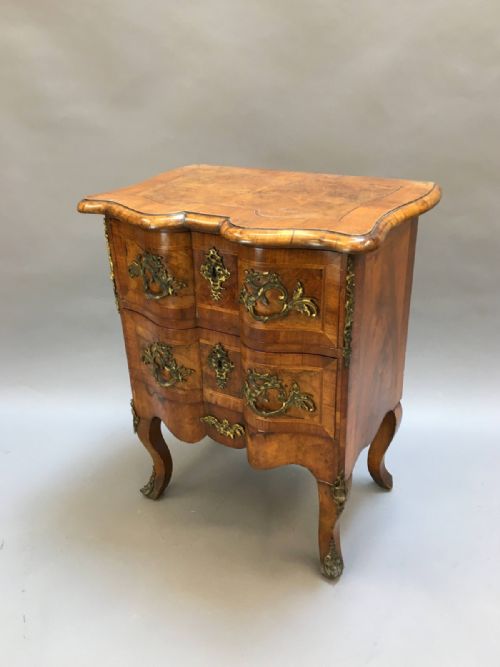
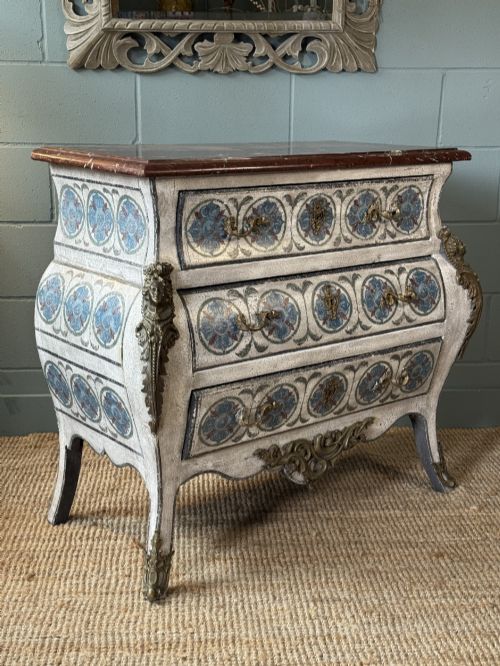
A 19th century bombe commode offers curvaceous lines and substantial storage, bringing dramatic continental flair to any interior.
19th Century Bombe Commode
A 19th century bombe commode is a distinctively swelling chest of drawers or cabinet rooted in continental cabinetmaking traditions, most frequently seen in French and Dutch designs of the period.
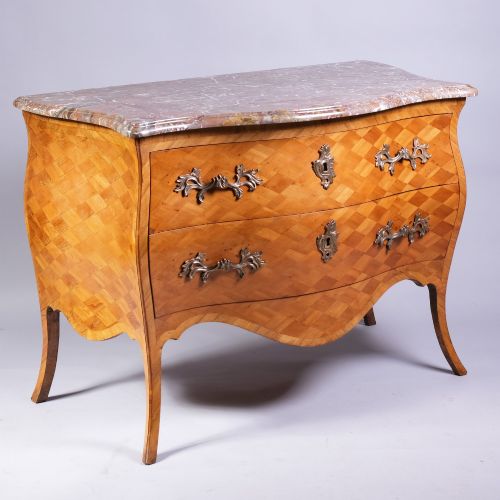
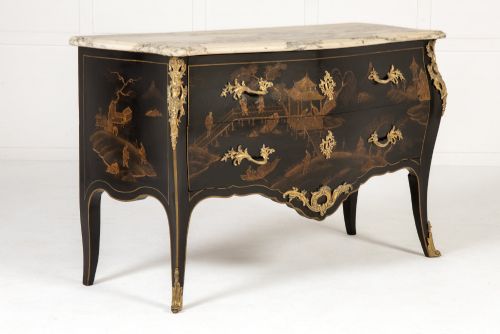
The pieces on this page span the 19th century, incorporating revived Louis styles, Dutch marquetry, and Chinoiserie japanned lacquer finishes alongside marble-topped variants.
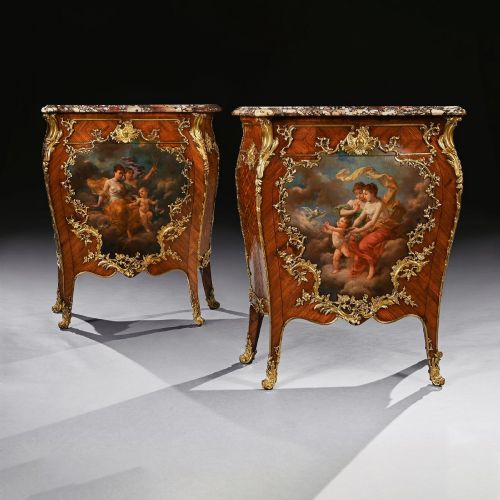
Forms range from grand bedroom chests and small bedside tables to occasional bureaux, all defined by their sweeping, bulging fronts and sides.
Assessing Quality and Execution
Quality rests in the precision of the timber matching and the crispness of the marquetry inlay, where superior execution follows the complex curves without distortion.
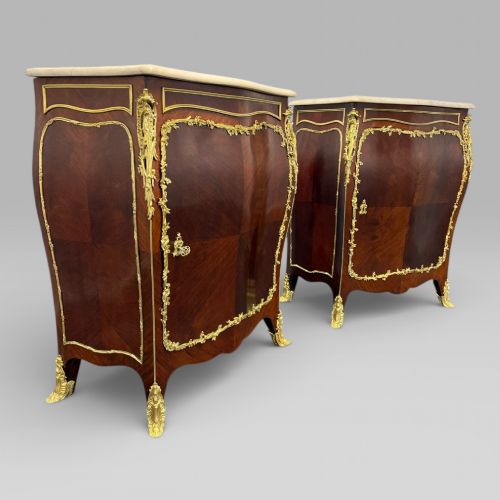
The weight and detail of the ormolu mounts, together with the quality of the marble top and the integrity of the curved carcase joinery, separate standard production from finer workshop pieces.
Listings feature walnut, kingwood, mahogany, and sabicu timbers, alongside painted finishes and marble tops.
E. Kahn
The 19th Century Bombe Commode Glossary
- Bombe
- A swelling, outward-curving contour found on the front and sides of furniture, characteristic of mid-eighteenth-century revivals in the nineteenth century. This shape requires advanced veneer work to follow the complex three-dimensional curves.
- Ormolu
- Gilded bronze mounts and decorative accents applied to the corners, feet, and handles of fine furniture. These cast metal additions protect vulnerable edges and accentuate the sweeping lines.
- Marquetry
- Decorative patterns created by fitting different coloured wood veneers onto a structural carcase. Craftsmen arrange these thin wood slices to form floral or geometric scenes.
- Japanned
- European imitation of East Asian lacquering techniques, featuring painted and raised decorative motifs on a dark or pale ground. This surface treatment appears on Chinoiserie commodes.
- Parquetry
- Geometric wood inlay forming repeating patterns such as cubes or chequers across the surface of the commode. It showcases the natural grain contrasts of timbers like kingwood and walnut.
19th Century Bombe Commode: Frequently Asked Questions
What is a bombe commode?
A bombe commode is a chest of drawers characterised by convex, swelling fronts and sides that taper towards the base. These pieces originated in earlier continental design traditions and saw widespread revival throughout the nineteenth century.
Cabinetmakers utilised shaped carcases to create a sense of movement and volume, making these commodes prominent decorative items in formal rooms.
Where were these commodes made?
The majority of these commodes originate from French and Dutch workshops, with additional examples coming from Italian makers. French pieces frequently display Louis revival styles and intricate marquetry, while Dutch examples often feature pronounced bulbous shaping and floral inlay.
Regional differences are visible in the choice of veneers, the profile of the marble tops, and the style of the cast metal mounts.
How do I style a commode at home?
A 19th century bombe commode works well as a focal point in a hallway, bedroom, or living room, offering surface space for lamps or decorative objects. Their strong silhouette pairs effectively with both traditional and contemporary interiors.
Ensure adequate floor clearance around the piece to allow the swelling sides and curved legs to remain fully visible.
How do I identify the period?
Dating relies on examining the construction methods of the drawers, the timber species utilised, and the specific revival style of the mounts and veneers. Nineteenth-century interpretations often blend Louis XV or Louis XVI aesthetic elements with Victorian production techniques.
Secondary woods inside the carcase and the ageing of the internal drawer linings provide additional clues to the age of the piece.