



19th Century Apothecary Glass
19th century apothecary glass encompasses utilitarian glass vessels, jars and bottles originating from medical dispensaries and pharmacies.
19th Century Apothecary Glass
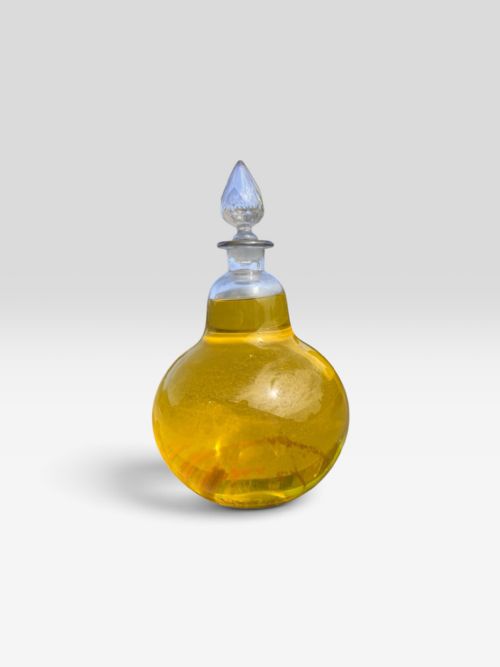
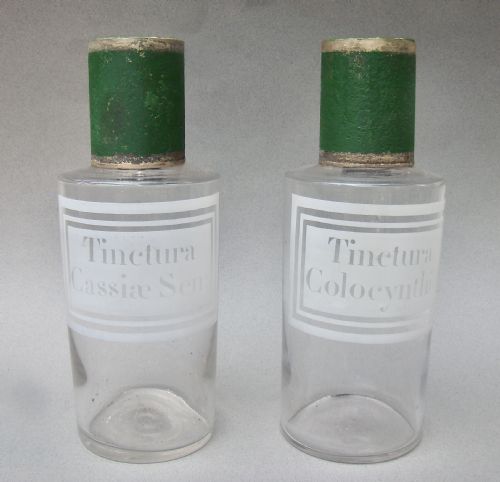
19th century apothecary glass comprises utilitarian vessels, jars, and bottles created for medical dispensaries, chemists, and domestic medicine chests during the Victorian, Regency, and Georgian eras. These pieces range from large shop display carboys and jars to small tincture bottles and medicine glass measures designed for measuring and storing remedies.
French examples often feature detailed etched decorations and gilt labels alongside coloured glass bodies in amber, turquoise, and Bristol blue. English pieces frequently appear within fitted mahogany travelling cases complete with internal drawers, scales, and original bottles.
The material record also encompasses feeding cups, pickling jars, and vanity bottles that reflect the broader medical and domestic habits of the 19th century. Buyers encounter these items as individual display objects, pairs, or complete matched sets intended for functional storage or shelf decoration.
How 19th century apothecary glass was made
Glassmakers utilised traditional hand-blowing techniques to shape molten material into robust carboys, jars, and bottles, often resulting in characteristic bubbles and surface undulations. Artisans then applied applied finishes such as etched lettering, gold leaf inscriptions, and painted details directly onto the glass surface or onto paper labels.
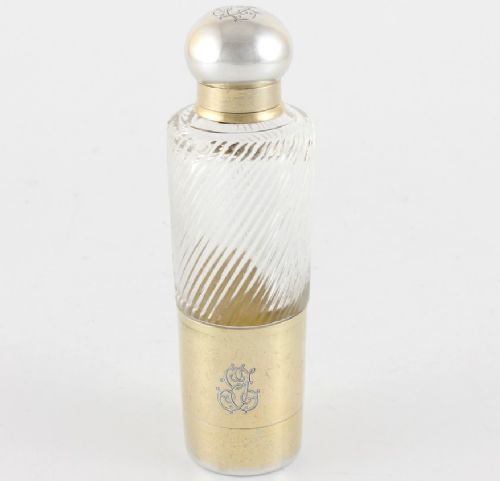
Woodworkers constructed fitted cabinets, boxes, and chests using mahogany, lining the interiors with velvet or paper to secure fragile glass vessels during transit. Metal components, including brass hinges, clasps, and occasionally silver mounts, were integrated to complete the portable medicine chests and flask assemblies.
Listings feature mahogany apothecary boxes fitted with velvet interiors, alongside hand-blown glass carboys and etched Bristol blue storage jars.
What varies in quality
Quality depends upon the survival of original components, such as matching glass stoppers, internal contents, and fitted leather or mahogany cases. Complete sets of matching jars or boxes retaining their original gilt or etched labels command greater interest than assembled groups.
The clarity and colour of the glass itself, alongside the crispness of etched designs or gold leaf work, distinguish finer decorative wares from standard utilitarian containers. Superior examples exhibit intact labels under glass and undamaged rims on delicate items like feeding cups and medicine measures.
Tonnel Paris
The 19th Century Apothecary Glass Glossary
- Carboy
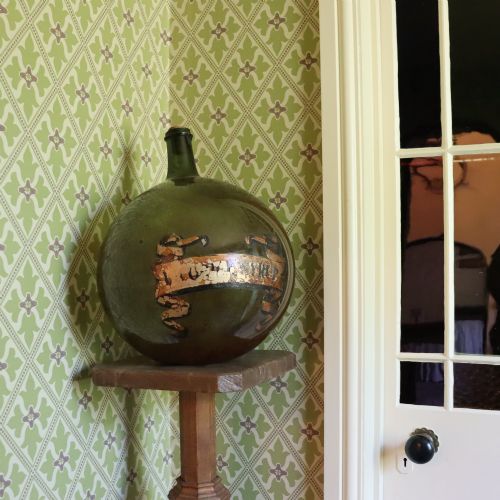
- A large spherical glass bottle or jar used in dispensaries for storing bulk liquids or displaying contents in chemist windows. These impressive vessels often stood on counters or in shop windows.
- Tincture bottle
- A small glass container specifically designed to hold alcoholic solutions of medicinal substances. They typically feature tight-fitting stoppers to preserve the volatile contents.
- Medicine glass
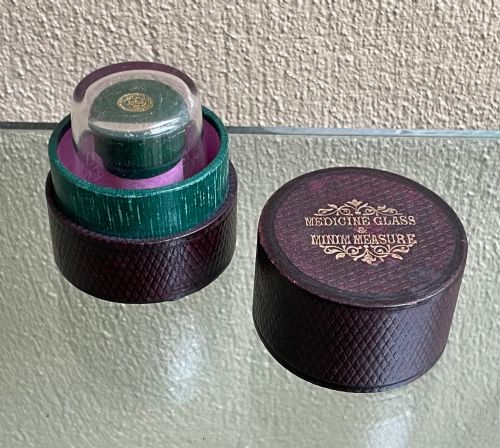
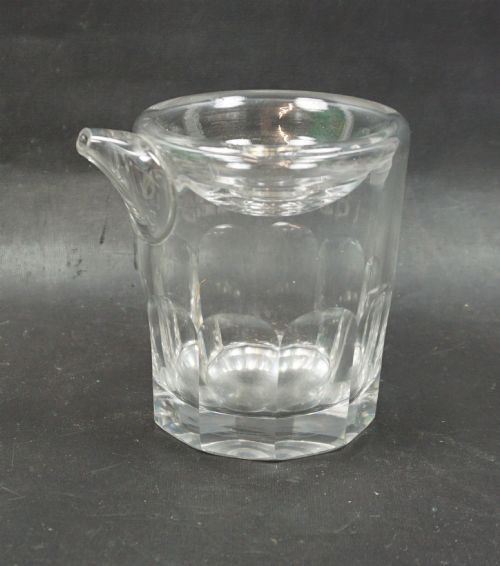
- A small graduated glass measure utilised for administering precise liquid doses to patients. They frequently survive inside protective leather or card cases.
- Gold leaf
- Extremely thin sheets of beaten gold applied to glass surfaces to form decorative lettering and apothecary labels. This technique provides a brilliant metallic finish against coloured glass.
- Etched glass
- Glass decorated by applying acid to eat away exposed areas, creating permanent frosted designs and pharmacy labels. This method ensures the lettering remains impervious to chemical spills.
19th Century Apothecary Glass: Frequently Asked Questions
How were apothecary jars used?
Apothecary jars served to store dry drugs, herbs, and liquid compounds safely within professional dispensaries and pharmacies. Pharmacists relied on these vessels to protect sensitive medical ingredients from light and moisture.
Larger carboys sat in shop windows to attract customers, while smaller bottles held specific tinctures for daily dispensing. Their robust construction ensured they could withstand regular handling in busy medical environments.
What are apothecary boxes?
Apothecary boxes are portable wooden chests, usually fashioned from mahogany, designed to transport medical supplies securely. They opened to reveal fitted interior compartments lined with velvet or paper.
Inside, these chests held rows of small glass bottles, scales, mortars, and drawers for powders. Doctors and wealthy households utilised them for medical emergencies while travelling.
How do I clean antique glass jars?
Cleaning antique apothecary glass requires gentle warm water and mild soap to protect fragile surfaces and original labels. Harsh scrubbing must be avoided to prevent damage to gold leaf inscriptions and etched designs.
Paper labels mounted under glass should be kept completely dry during any maintenance. Many collectors prefer to leave internal residue undisturbed if it bears witness to the original medical contents.
Are bottle stoppers usually original?
Original stoppers often match the exact tint and blow-mark characteristics of the associated bottle or jar. Finding a piece retaining its matching ground-glass stopper enhances its historical integrity.
Replacements do occur due to breakage over decades of utilitarian use. Close inspection of the neck and stopper ground surfaces helps confirm whether they started life together.