
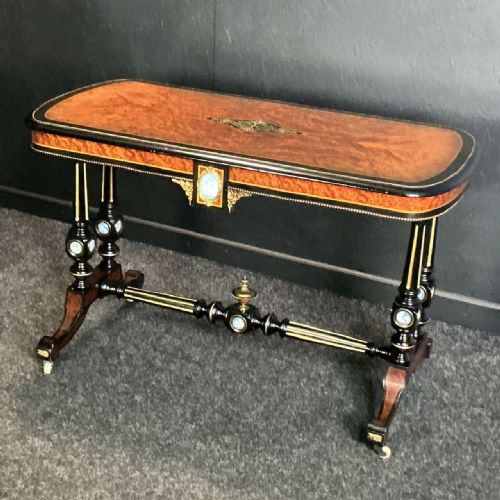
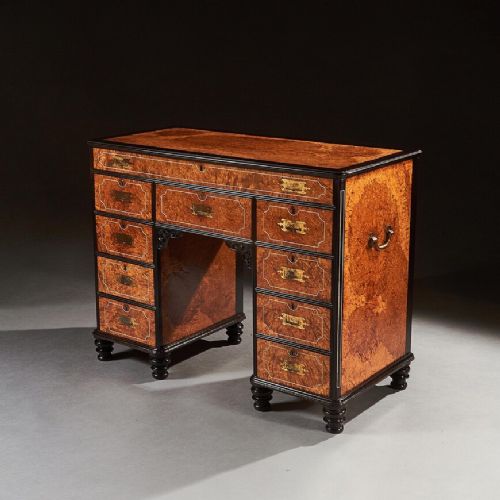
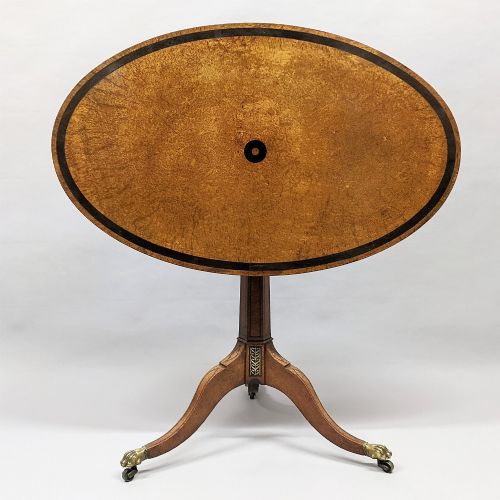
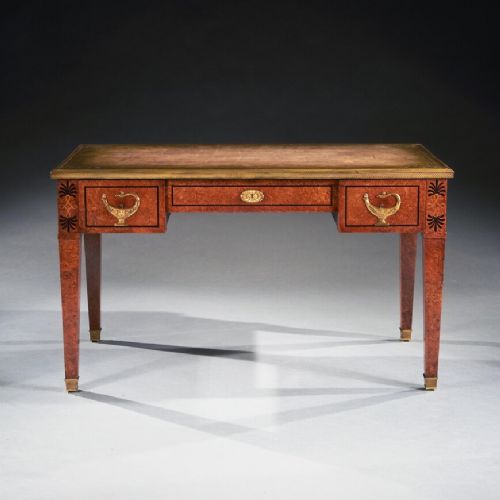


19th Century Amboyna Table
These pieces gather the rich burl and warm tone of a 19th century amboyna table, offering rich surfaces for a sitting room or study.
19th Century Amboyna Table
A 19th century amboyna table appears in forms ranging from small occasional tables and wine tables to large centre tables and card tables. The selection also includes writing desks, bonheur du jour desks, and occasional pieces that showcase this exotic timber.
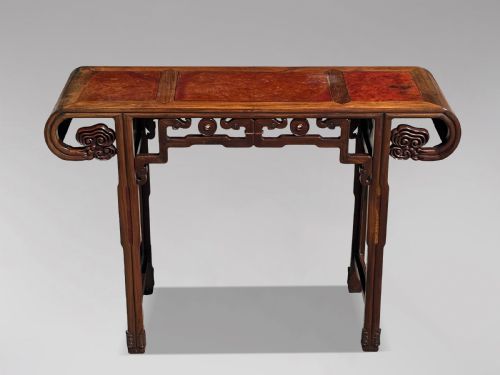
Victorian and French Napoleon III designs dominate the available selection, often incorporating revival styles such as French Neoclassical and Louis XVI. Pieces frequently originate from English workshops or French cabinet makers, alongside Chinese Export examples in Hongmu and amboyna.
Makers and retailers from the period utilised the striking grain to create statement furniture for formal interiors. Buyers encounter everything from tilt top tables to multi-tiered etageres and bedside cabinets.
How They Were Made
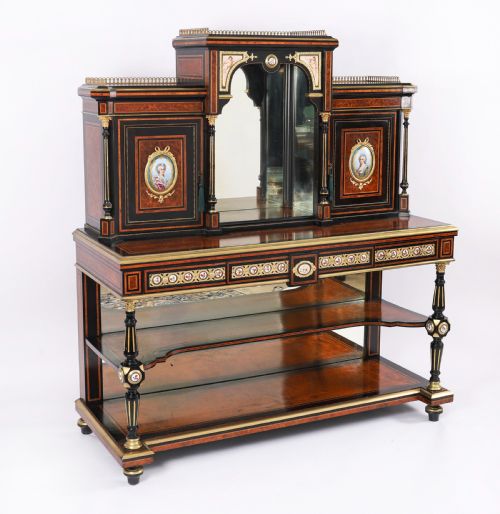
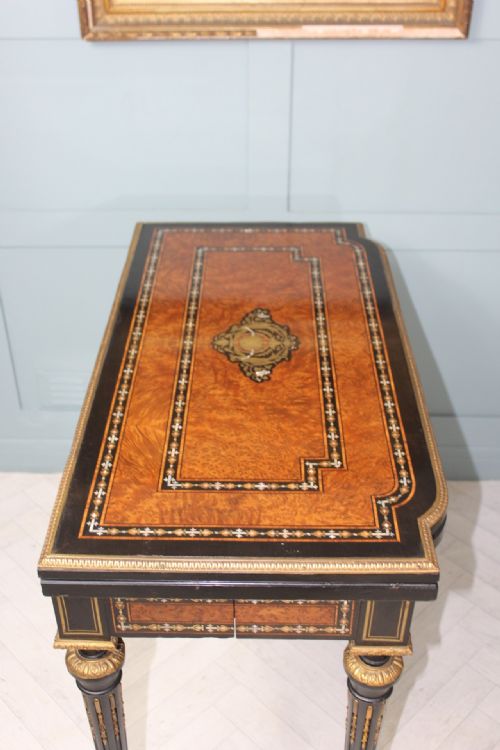
Cabinet makers applied highly figured amboyna veneer over solid secondary timbers to display the intricate, swirling burl pattern of the wood. Ebonised wood and ebony frequently frame the amboyna panels to create sharp contrast.
Mounts in ormolu, gilt bronze, and brass provide structural accent and decorative edge detail. Certain examples incorporate porcelain plaques, marble tops, and mother-of-pearl detail alongside marquetry inlay.
What Varies in Quality
The intensity and natural figure of the amboyna veneer set the visual standard for each piece. Highly figured burr surfaces command attention through complex grain patterns rather than plain timber.
The integration of secondary materials dictates the standard of execution. Finely chased ormolu mounts, crisp ebonised contrasting elements, and well-executed marquetry separate standard production from exceptional cabinet work.
Edward and Robert·Paul Sormani·Gregory and Co·Holland and Son·Gillows
The 19th Century Amboyna Table Glossary
- Amboyna
- An exotic, highly figured burl timber prized for its rich, warm brown tone and swirling grain. It is typically used as a veneer on fine 19th-century furniture.
- Ormolu
- Gilded bronze mounts applied to furniture for decorative effect. The technique involves applying a gold amalgam to bronze.
- Bonheur du jour
- A small ladies writing desk featuring a set of drawers and compartments on the top surface. These desks often incorporate porcelain plaques and intricate marquetry.
- Ebonised
- Wood treated to imitate ebony through staining or painting. This dark finish provides strong contrast against lighter amboyna veneer.
19th Century Amboyna Table: Frequently Asked Questions
What is amboyna wood?
Amboyna is an exotic burl timber known for its dense, swirling grain patterns and warm golden-brown colour. It is native to Southeast Asia and was imported for high-end cabinet making.
Craftsmen sliced the wood into thin veneers to wrap around furniture surfaces, highlighting the natural irregularities of the burl.
How do I clean an amboyna table?
Dust the surface regularly with a soft, dry cloth to prevent particle accumulation. Avoid modern sprays and chemical polishes that can degrade the historic finish.
Maintain stable humidity levels in the room to protect the delicate veneer from lifting or cracking over time.
Are these tables English or French?
The selection includes pieces from both English workshops and French makers, alongside Chinese Export examples. English pieces often reflect Regency and Victorian cabinet making traditions.
French items frequently showcase Napoleon III and Louis XVI revival styles, often featuring elaborate ormolu mounts and porcelain plaques.
How do I date a 19th century table?
Dating relies on stylistic clues, construction methods, and materials used within the piece. Victorian examples often blend revival aesthetics with dark contrasting ebonised woods.
Documentation, stamps, or attributions to known makers like Gillows or Paul Sormani help narrow down the manufacturing decade.