



19th Century Amber Glasses
These 19th century amber glasses bring rich, warm hues and historic craft to the table, offering a distinct decorative presence.
19th Century Amber Glasses
When searching for 19th century amber glasses, a buyer encounters a diverse selection of tableware and decorative objects spanning the Victorian, Georgian, and later periods. The inventory ranges from sets of drinking vessels to punch bowl sets and individual roemer glasses featuring amber bowls.
Makers and workshops from Bohemia, Venice, France, and England shaped these pieces using varied techniques across the century. Most commonly, a buyer meets Victorian amber glasses alongside European variants that highlight the rich tones characteristic of the period.
How they were made
Glassmakers utilised hand-blown glass and lead crystal as the primary foundations for these objects, frequently incorporating enamelling, gold leaf inclusions, or intaglio engraving. Artisans achieved the distinct amber colour through specific mineral oxides added during the melting process.
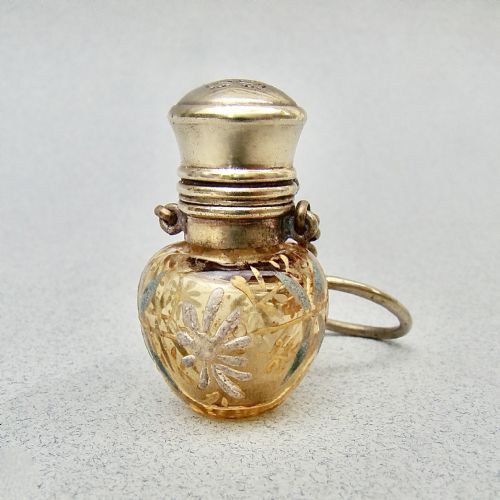
Many examples display additional craftsmanship such as cut facets, silver mounts, or latticinio decoration. These techniques required skilled manipulation while the glass was hot, followed by meticulous cooling and surface work.
19th Century Amber Glasses Retail Price Guide 2026
Typical asking prices for 19th century amber glasses among the pieces listed under this phrase on Sellingantiques today, from the lower quarter to the upper quarter. They describe what is for sale here now, not the wider market.
What varies in quality
Quality separates through the precision of the glassblower's hand and the clarity of the material itself. Heavier lead crystal and deeply saturated amber tones indicate superior production standards compared to lighter, more opaque alternatives.
The sophistication of surface decoration also dictates value. Finely executed polychromatic enamelling, intricate intaglio engraving, and precise mounting in silver or gilded metal elevate the status of an individual piece or set.
Moser·Salviati Venice·Stevens & Williams·Baccarat·François-Eugène Rousseau
The 19th Century Amber Glasses Glossary
- Roemer
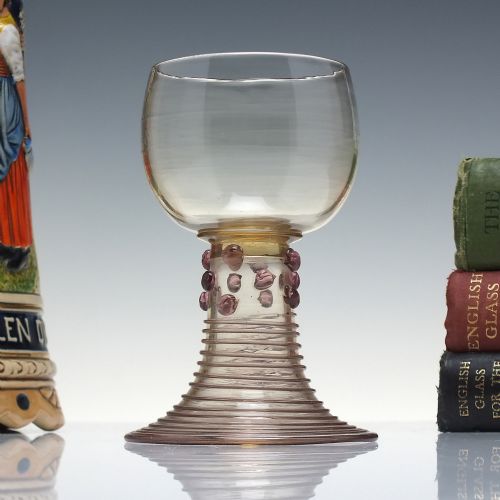
- A traditional Germanic drinking glass featuring a wide bowl atop a cylindrical stem adorned with prunts. This form frequently pairs an amber bowl with a contrasting foot.
- Latticinio
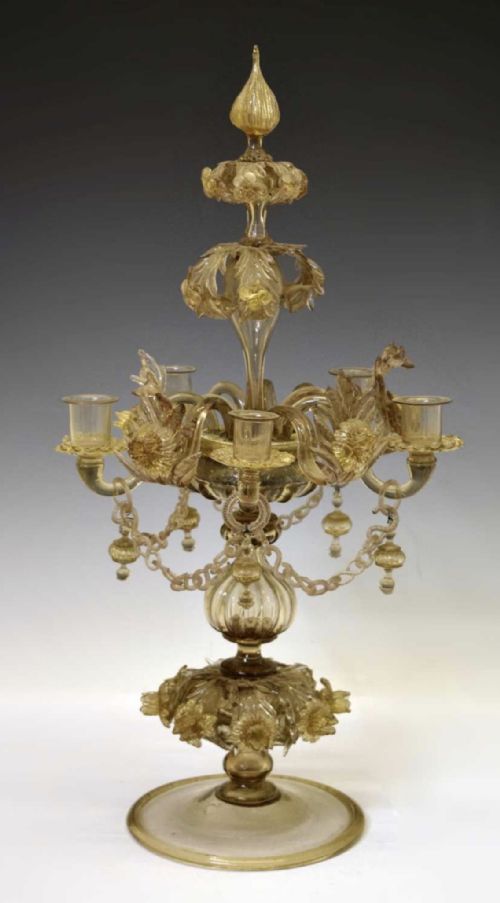
- A Venetian glass technique involving intertwined opaque white or coloured glass threads encased within clear glass. Salviati workshops famously employed this method.
- Historismus
- A 19th-century European revival style drawing inspiration from historical eras, notably German Renaissance and Baroque glass forms.
- Intaglio
- A technique where designs are carved into the surface of the glass rather than raised in relief. It produces a frosted, recessed motif.
- Prunt
- An applied blob of molten glass shaped into a raspberry or thorn pattern on the stem of a historical drinking vessel. It provided a secure grip for greasy hands.
19th Century Amber Glasses: Frequently Asked Questions
How do I clean antique amber glasses?
Wash these pieces gently by hand using lukewarm water and mild washing liquid. Avoid soaking items with silver mounts or delicate enamel work.
Dry them immediately with a soft lint-free cloth to prevent water spots and protect the historic glass surface.
Are 19th century amber glasses safe for drinking?
Most pieces from this era function safely for holding beverages, provided the glass shows no internal cracking or structural decay.
Historic lead crystal may contain trace elements, so casual use is generally preferred over daily consumption.
What is a roemer glass?
A roemer is a historical German and Dutch drinking vessel type characterised by a large spherical bowl sitting on a decorated stem. The stem usually has applied glass prunts for grip.
In 19th-century examples, these bowls often showcase rich amber or amethyst coloration.