




19th Century African Art
These pieces of 19th century african art carry the weight of distinct regional ceremonies, fierce tribal heritage and European encounters.

19th Century African Art
When you examine 19th century african art, you encounter a remarkable diversity of objects ranging from functional tribal weaponry to ritual masks and European framed artworks. The listings here frequently feature carved wooden masks from the Congo and Gabon alongside utilitarian items like iron currency pieces and ceremonial axes.
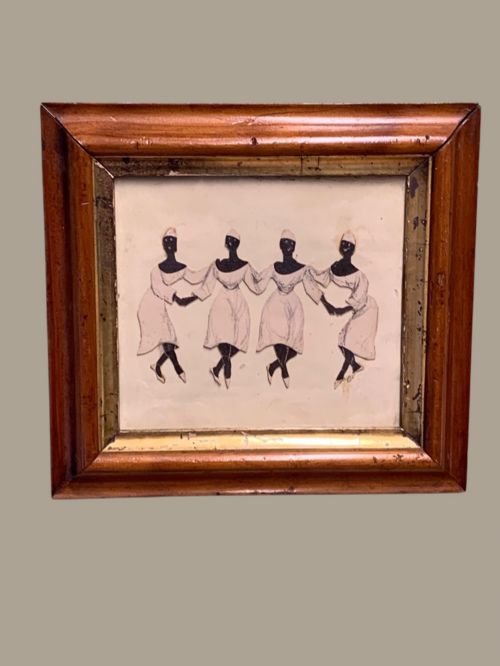
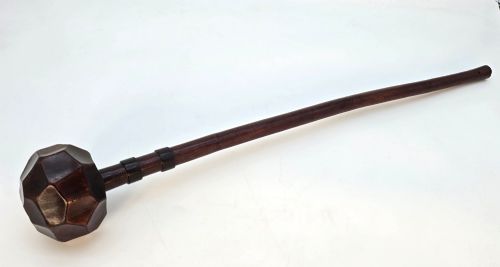
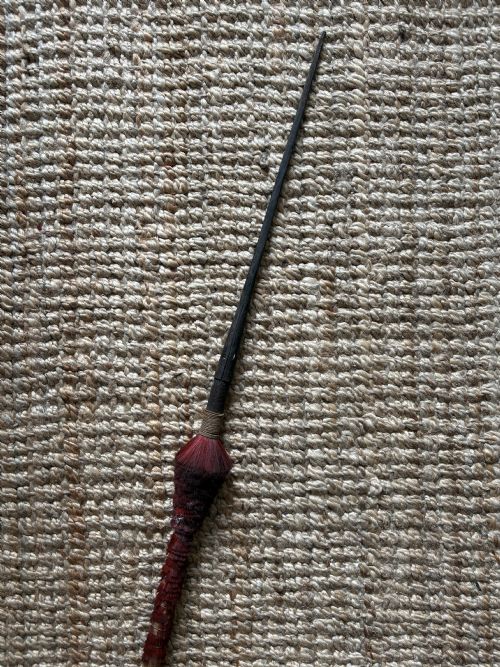
Southern African pieces such as Zulu knobkerries and iron spears appear alongside West African bronze figures and North African folk art screens. Buyers will also find framed prints, portrait paintings, and collage works reflecting both indigenous traditions and external perspectives.
The objects bridge domestic utility, spiritual practice, and the visual record left by nineteenth-century travellers and artists. Each piece reflects specific regional provenance and the material culture of its creators.
Materials and construction
The makers of 19th century african art relied heavily on native hardwoods and indigenous hardwoods, shaping them with hand tools into masks, weapons, and ceremonial objects. Pigments and vegetable dyes were often applied to surfaces to enhance the visual impact of wood and bristle shafts.
Metalworking played a crucial role, producing forged iron weaponry, cast iron currency pieces, and bronze figures such as the Janus forms from West Africa. Paper, glass, and gold leaf also appear in the framed prints, collage works, and oil panel paintings preserved from the period.
Materials documented across these listings include hardwood, glass, gold leaf, pigment, and forged iron.
Distinctions in quality
The standard of 19th century african art depends heavily on the crispness of the carving, the integrity of the original surface patina, and the balance of form. Objects showing deep wear from active ceremonial use often command greater respect than purely decorative or later tourist pieces.
Execution matters profoundly, whether in the precision of the iron forge work on a spearhead or the expressive detail captured in a signed oil portrait. Completeness of original components, such as bristle shafts or pigment layers, further elevates an individual example.
The 19th Century African Art Glossary
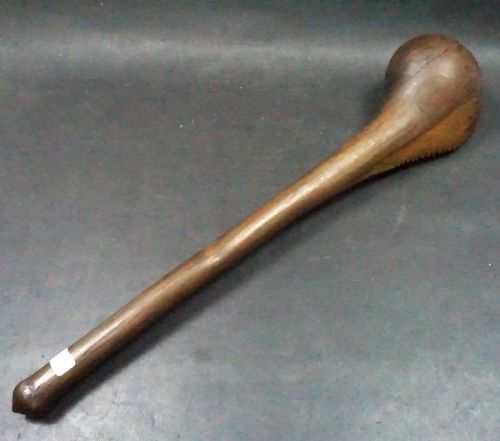
- Knobkerrie
- A traditional southern African club featuring a heavy knob at the end of a wooden shaft. These were utilised both as throwing weapons for hunting and as close-combat fighting sticks.
- Janus figure
- A sculptural representation featuring two faces looking in opposite directions. This motif frequently appears in ritual bronze and wooden figures to symbolise watchfulness.
- Récade
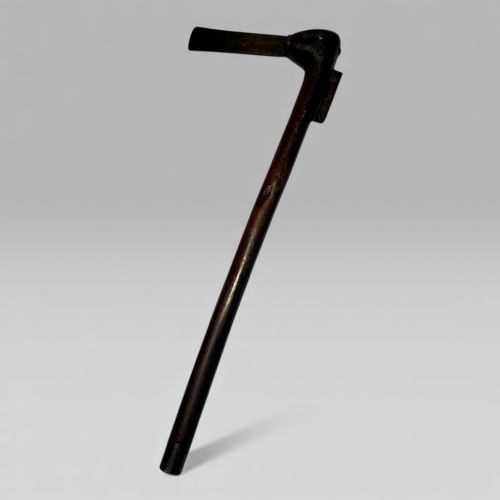
- A ceremonial axe associated with the Kingdom of Dahomey, serving as an emblem of royal authority for messengers. The blade and wooden handle are often adorned with symbolic brass or metal work.
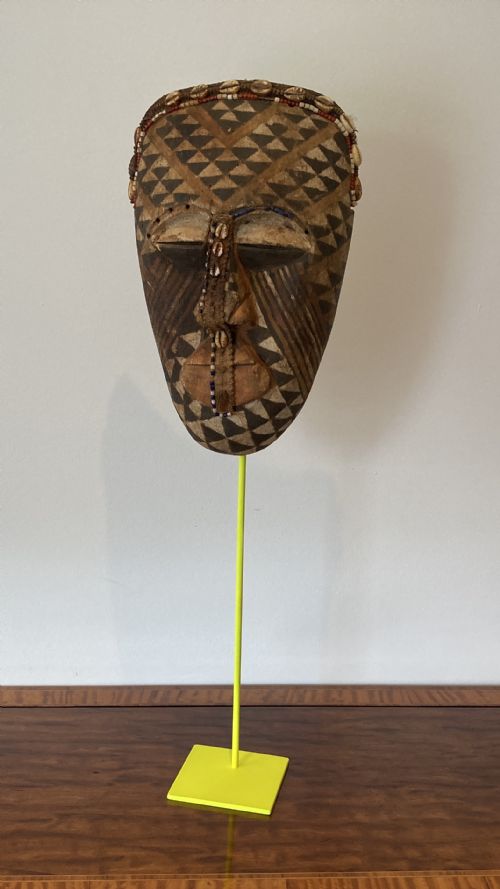
- Kifwebe
- A distinct style of mask originating from the Songye people of the Congo, characterised by striated linear patterns. These masks were worn during tribal ceremonies and secret society dances.
- Currency pieces
- Heavy metal objects, such as cast iron items from the Congo, used traditionally as a medium of exchange or store of wealth. Their standardised forms reflect regional economic systems.
19th Century African Art: Frequently Asked Questions
How do I care for wooden tribal art?
Keep wooden masks and weapons away from direct sunlight and dramatic humidity changes to prevent the material from splitting. Dust them gently with a dry, soft cloth rather than applying liquid polishes or oils.
Allow the natural surface patina and any historic pigment to remain undisturbed by harsh cleaning methods.
Are these items authentic nineteenth century?
The pieces recorded here are catalogued to the nineteenth century or around nineteen hundred based on material analysis, wear patterns, and stylistic markers. Provenance and regional attribution help confirm their historical context.
Examine the tool marks and surface ageing to understand the object's creation period.
What is a knobkerrie used for?
A knobkerrie served primarily as a traditional southern African walking stick, throwing club for hunting, and weapon in warfare. Its weighted wooden head made it an effective implement in skilled hands.
Many examples also held status value within the community.
Why do some items feature European styles?
Certain works reflect the interaction between African makers and European travellers, traders, or colonial artists during the nineteenth century. This exchange produced oil paintings, lithographs, and folk art screens depicting cross-cultural perspectives.
These pieces document how outsiders viewed and recorded the continent.