




1960s Vintage Engagement Ring
A 1960s vintage engagement ring brings mid-century character and distinctive gemstone clusters to the hand.
1960s Vintage Engagement Ring
A 1960s vintage engagement ring typically manifests as a cluster, solitaire, or crossover design reflecting mid-century and Art Deco revival styles. Buyers encounter pieces from around 1960 and slightly later periods that showcase the era's distinct penchant for expressive stone arrangements.
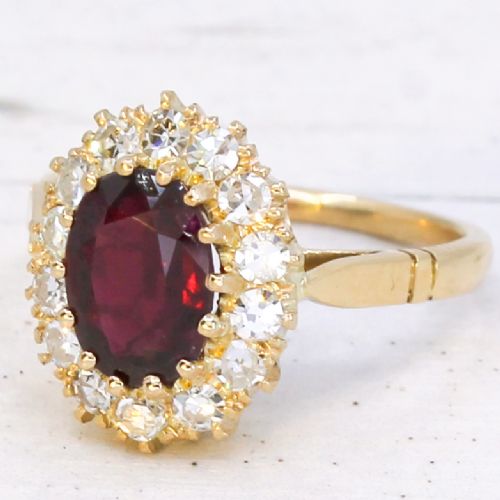
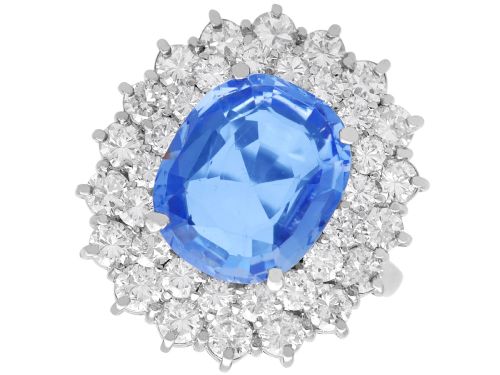
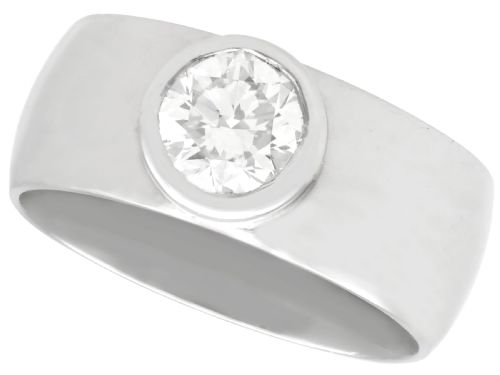
Cluster configurations dominate the selection, pairing central sapphires or diamonds with smaller diamond borders to form floral or geometric motifs. Solitaires and trilogy rings also appear frequently, utilising yellow gold, 18ct white gold, and platinum as foundational bands.
Materials and Construction
These rings combine precious metals such as platinum, 18ct white gold, and yellow gold with diamonds and sapphires. Settings frequently integrate platinum heads with gold bands to secure stones while maintaining a bright white backdrop for diamonds.
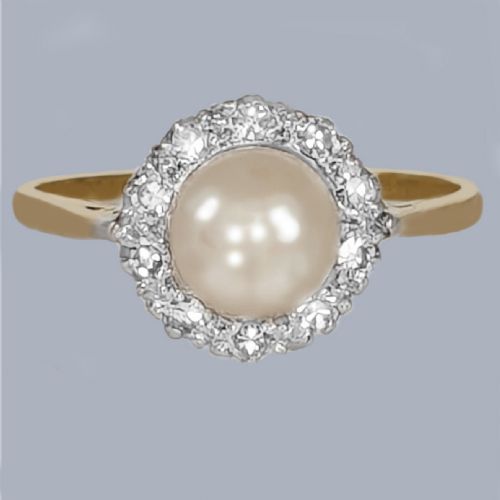
Gems include old cut, brilliant cut, and rose cut diamonds alongside natural sapphires originating from sources like Burma and Ceylon, sometimes accompanied by pearls. Metalwork utilises traditional casting and setting techniques characteristic of mid-century British, Italian, and international workshops.
Burmese and Ceylon sapphires from this decade bring a touch of mid-century jet-set romance straight to your finger.
Evaluating the Pieces
Quality rests upon the proportion and natural state of the central gemstones, particularly in unheated sapphires and substantial diamond solitaires. Superior examples display harmonious stone sizing and precise claw or cluster work that enhances the overall silhouette.
The choice of metal and setting integrity also dictate the calibre of the ring, with platinum and 18ct white gold combinations offering robust durability alongside refined aesthetic contrast.
The 1960s Vintage Engagement Ring Glossary
- Cluster ring
- A ring featuring a central gemstone surrounded by a border of smaller stones, frequently diamonds framing a sapphire. This layout maximises visual impact and typifies mid-century engagement jewellery.
- Old cut diamond
- A diamond cut with facets designed before modern brilliant standards, possessing a smaller table and higher crown that yields a distinctive, softer scintillation.
- Trilogy ring
- A ring set with three stones in a row, traditionally symbolising the past, present, and future. These pieces often balance central diamonds with flanking side stones.
- Crossover ring
- A ring design where the shank wraps or crosses over itself as it approaches the centre stone. This style introduces dynamic movement to the finger.
- Unheated sapphire
- A natural sapphire that has undergone no thermal enhancement to improve its colour or clarity. Such stones hold particular appeal for collectors seeking untouched geological specimens.
1960s Vintage Engagement Ring: Frequently Asked Questions
How do I identify a 1960s ring?
Look for mid-century design cues such as dense diamond and sapphire clusters, crossover shanks, and the use of 18ct white gold paired with platinum settings. Hallmarks and stylistic markers often help narrow down the production era to the mid-twentieth century.
Examinations of the cut of the diamonds, ranging from old cut to early brilliant cuts, also provide helpful context regarding the date of manufacture.
Are these rings suitable for daily wear?
Many pieces utilise robust metals like platinum and 18ct gold alongside durable gemstones like diamonds and sapphires, making them well-suited for everyday engagement wear. Regular checks of the settings help ensure the stones remain secure over time.
Pearl and lower carat configurations require more careful handling to protect softer organic materials from knocks and daily abrasions.
What is a cluster engagement ring?
A cluster ring arranges multiple smaller gemstones around a prominent central stone, often creating a floral or geometric silhouette. This style gained immense popularity during the mid-century period for its ability to maximise perceived stone size and sparkle.
The layout allows jewellers to combine contrasting colours, such as deep blue sapphires framed by bright white diamonds.
What is an unheated sapphire?
An unheated sapphire is a natural gemstone that has not been subjected to artificial heat treatment to alter its natural colour or clarity. These stones are valued for their geological authenticity and natural formation.
Laboratory certifications often accompany significant unheated specimens originating from regions like Burma or Ceylon.