


1960s Diamond Dress Ring
A 1960s diamond dress ring brings statement gemstone weight and mid-century design to the hand.
1960s Diamond Dress Ring
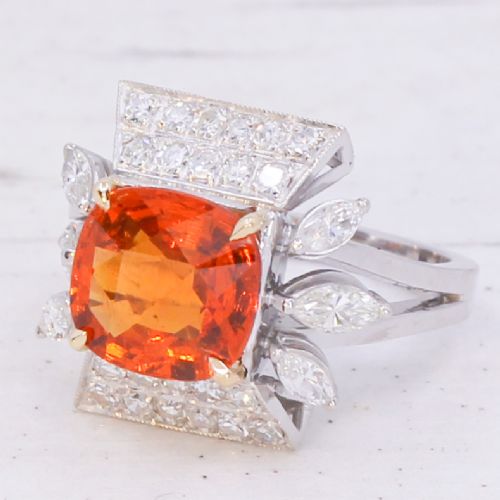
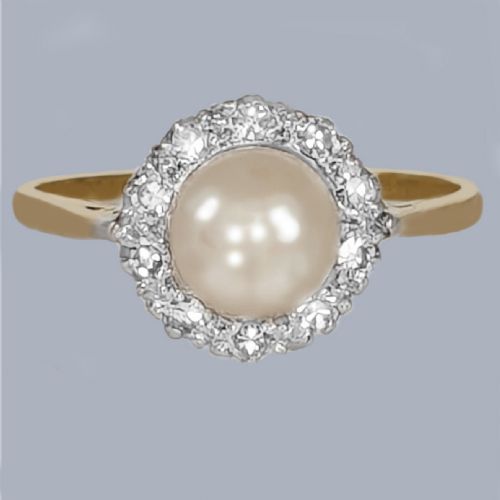
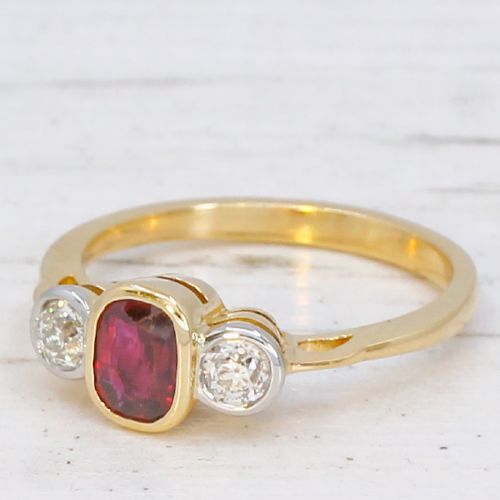
A 1960s diamond dress ring embodies the bold aesthetic of mid-century jewellery, often taking the form of a substantial cocktail ring or a detailed cluster ring. These pieces frequently pair brilliant diamonds with large coloured stones such as sapphires, emeralds, and garnets.
The selections encountered here span mid-century modern idioms, art deco revivals, and retro styles. Origins range from domestic British workshops, indicated by hallmarks such as Birmingham 1962, to distinct mid-century Italian creations.
How they were made
Goldsmiths of the period utilised a mix of yellow gold, white gold, and platinum, often combining white and yellow gold within a single mounting. Platinum settings frequently secure the diamond highlights, providing a bright contrasting frame for the stones.
Construction techniques include scrolled open work, modernist lattices, and dense cluster arrangements. Stones are secured using traditional claw and collet settings alongside paved surfaces that emphasise the volume of the central gems.
Some rings carry hallmarks from Birmingham dated 1962, preserving a precise British moment inside mid-century glamour.
What varies in quality
The calibre of a 1960s diamond dress ring rests upon the presence and provenance of unheated or no oil natural gemstones, alongside the weight and cut of the surrounding diamonds. Substantial carat weights in sapphires, emeralds, and aquamarines elevate the status of the piece.
Execution of metalwork further distinguishes the tier of manufacture, from heavy cast 18ct gold mounts to intricate scrolled open work and tailored platinum settings. Certification by gemological laboratories adds documented authority to the primary stones.
The 1960s Diamond Dress Ring Glossary
- Cluster ring
- A ring design featuring a central stone encircled by a border of smaller gemstones, typically diamonds. This layout maximises visual impact on the finger.
- Ballerina ring
- A distinctive cocktail ring style where tapered baguette cut diamonds surround a central stone like a tutu. The resulting silhouette is notably dynamic and sculptural.
- Old cut diamond
- A diamond cut by hand before modern symmetrical standards, featuring a smaller table and larger culet. These stones display a softer, candlelit sparkle.
- Hallmark
- An official stamp applied to precious metals indicating purity and origin. British examples often record the assay office, city, and date letter.
1960s Diamond Dress Ring: Frequently Asked Questions
How do I wear a cocktail ring?
Cocktail rings were originally designed for evening wear and social gatherings where bold gestures displayed the jewellery. Today, they suit both special occasions and daily wear when paired with simpler attire.
Because these rings feature prominent central stones and substantial settings, care should be taken to avoid heavy impact against hard surfaces during daily tasks.
What defines mid-century modern style?
Mid-century modern design embraces clean lines, abstract geometry, and architectural construction. In rings, this translates to lattice work and asymmetrical cluster arrangements.
This aesthetic moved away from strict traditional symmetry, favouring organic forms and textural contrast between yellow and white gold.
Are coloured gemstones natural?
Many stones from this period are natural gems originating from regions such as Ceylon, Burma, and Colombia. Certification often confirms the absence of thermal treatments or oil enhancements.
Checking listing details helps identify natural sapphires, emeralds, and tourmalines paired with the diamond elements.
How do I care for gold and platinum settings?
Gold and platinum require gentle cleaning with warm soapy water and a soft brush to remove accumulated residue from settings. Periodic checks by a jeweller ensure claws remain secure around the diamonds and coloured stones.
Storing each ring in a separate compartment prevents scratching between pieces of varying metal and stone hardness.