


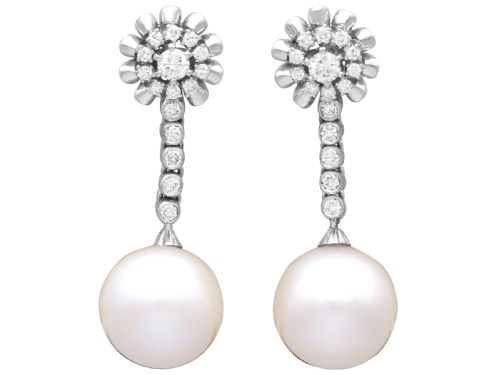


1950s White Gold Earrings
These 1950s white gold earrings combine mid-century design with precious stones, offering a classic addition to any collection.
1950s White Gold Earrings
When searching for 1950s white gold earrings, buyers encounter mid-century pieces defined by clean lines and floral or geometric motifs. These items capture the aesthetic of the period, often showcasing the era's preference for cluster and drop formations.
Mid-century modern influences appear alongside traditional floral cluster designs, demonstrating the stylistic versatility of the decade. Buyers frequently discover pairs featuring brilliant-cut and baguette-cut diamonds arranged in intricate configurations.
How they were made
Goldsmiths constructed these earrings using white gold alloys, typically 14ct and 18ct, alongside platinum for enhanced durability and a bright silver-toned finish. Stones were securely mounted using prong, bezel, and cluster settings that maximised light reflection.
Gemstones such as diamonds, aquamarines, sapphires, and pearls were hand-selected and cut into brilliant, old, or baguette shapes. Clip-on mechanisms and lever-backs were engineered for secure wear, reflecting the technical standards of mid-century jewellery workshops.
Listings feature 18ct white gold, 14ct white gold, platinum, and silver gilt alongside diamonds, aquamarines, sapphires, and pearls.
What varies in quality
The calibre of gemstones significantly influences the overall standard of each pair, with larger carat weights and superior clarity setting finer examples apart. Precision in stone cutting and the symmetry of cluster or daisy arrangements demonstrate the skill of the original maker.
The weight and purity of the white gold or platinum housing affect durability and finish. Heavier, more robust mountings and well-preserved clip-on or lever-back mechanisms indicate superior construction standards.
The 1950s White Gold Earrings Glossary
- White gold
- An alloy of gold mixed with white metals such as palladium, silver, or nickel, finished with rhodium plating. This metal provides a durable, silvery backdrop for diamonds and coloured gemstones.
- Aquamarine
- A blue or cyan variety of beryl utilised frequently in mid-century drop and cluster earrings. Its cool tone complements the bright appearance of white gold settings.
- Cluster design
- An arrangement where smaller gemstones surround a central stone, creating a floral or geometric motif. This style was prominent in mid-century jewellery production.
- Lever-back
- A type of earring closure featuring a hinged lever that snaps shut against a post behind the earlobe. It offers secure fastening for vintage drop earrings.
1950s White Gold Earrings: Frequently Asked Questions
How do I care for 1950s white gold earrings?
Clean white gold pieces gently using warm soapy water and a soft cloth, avoiding harsh chemicals that might strip the rhodium plating. Store them individually in a lined box to prevent scratches on softer stones like pearls and aquamarines.
Regularly check the security of prong and cluster settings by a professional jeweller to ensure stones remain firmly anchored in their mountings.
Are clip-on earrings common from this period?
Clip-on fasteners were widely utilised during the mid-century era, accommodating the heavy cluster and button designs popular at the time. They allowed substantial gemstone arrangements to be worn comfortably without requiring pierced ears.
Many surviving pairs retain their original functional clip mechanisms, which should operate with a firm and secure spring tension.
What gemstones were popular in the 1950s?
Diamonds were the primary choice for mounting in white gold and platinum, often paired with pearls or large aquamarines. Sapphires also appeared as striking centre stones in floral cluster configurations.
These combinations reflected the elegant evening wear trends of the mid-century decade.
How can I tell a mid-century piece apart?
Mid-century earrings display distinct geometric and floral motifs, such as daisy designs and stylised drop formations. The predominant use of 18ct white gold, 14ct white gold, and platinum sets them apart from earlier antique eras.
Examining the stone cuts, such as baguette and brilliant cuts, helps confirm the 1950s timeframe of manufacture.